

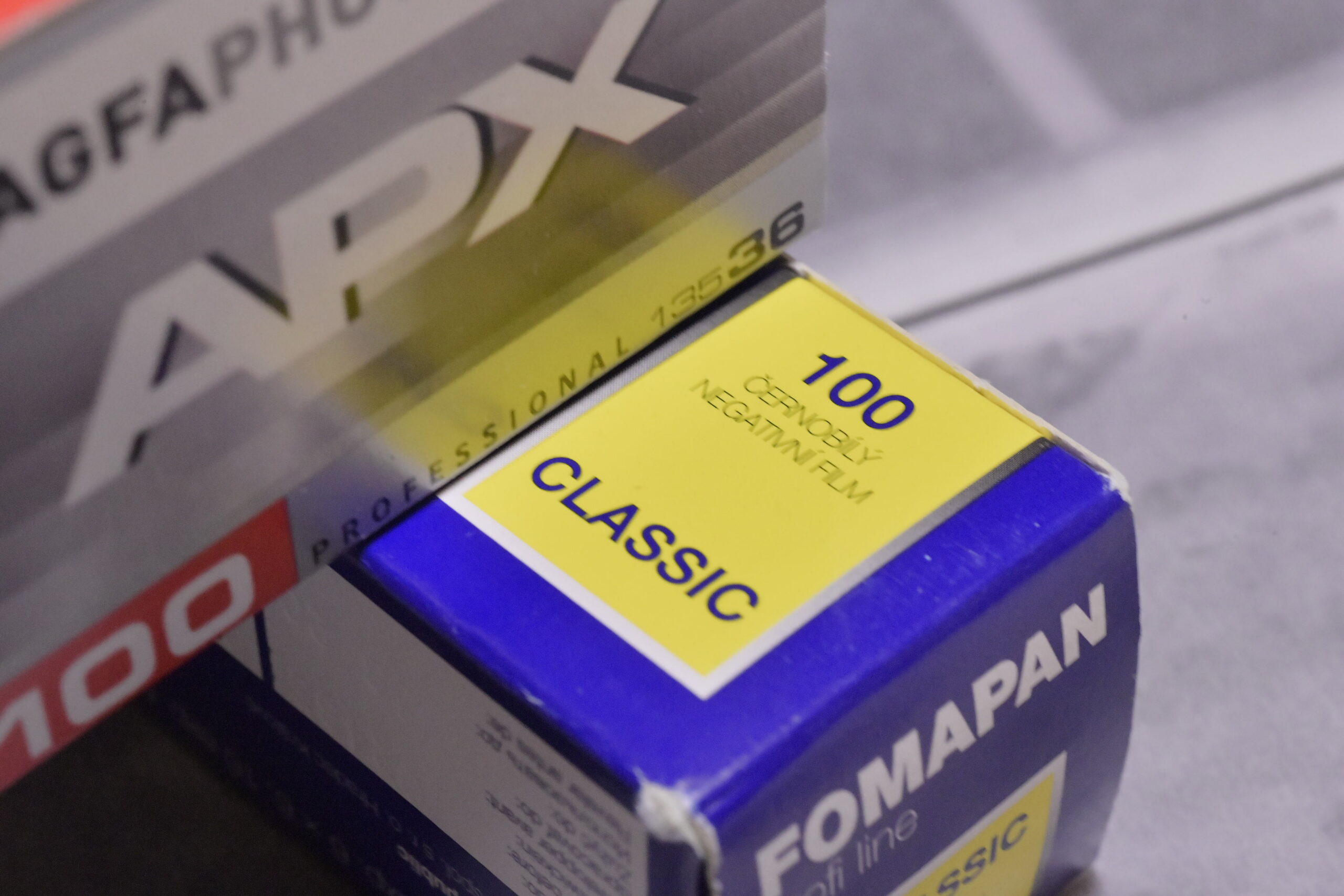

Film stocks can be divided into two main families: those using emulsions made of conventional crystals and those using tabular-grain crystals.
As their name suggests, conventional crystal emulsions were the first to appear. They have been used since the late 19th century.
Tabular-grain emulsions began being produced in the 1980s.
Technical Differences
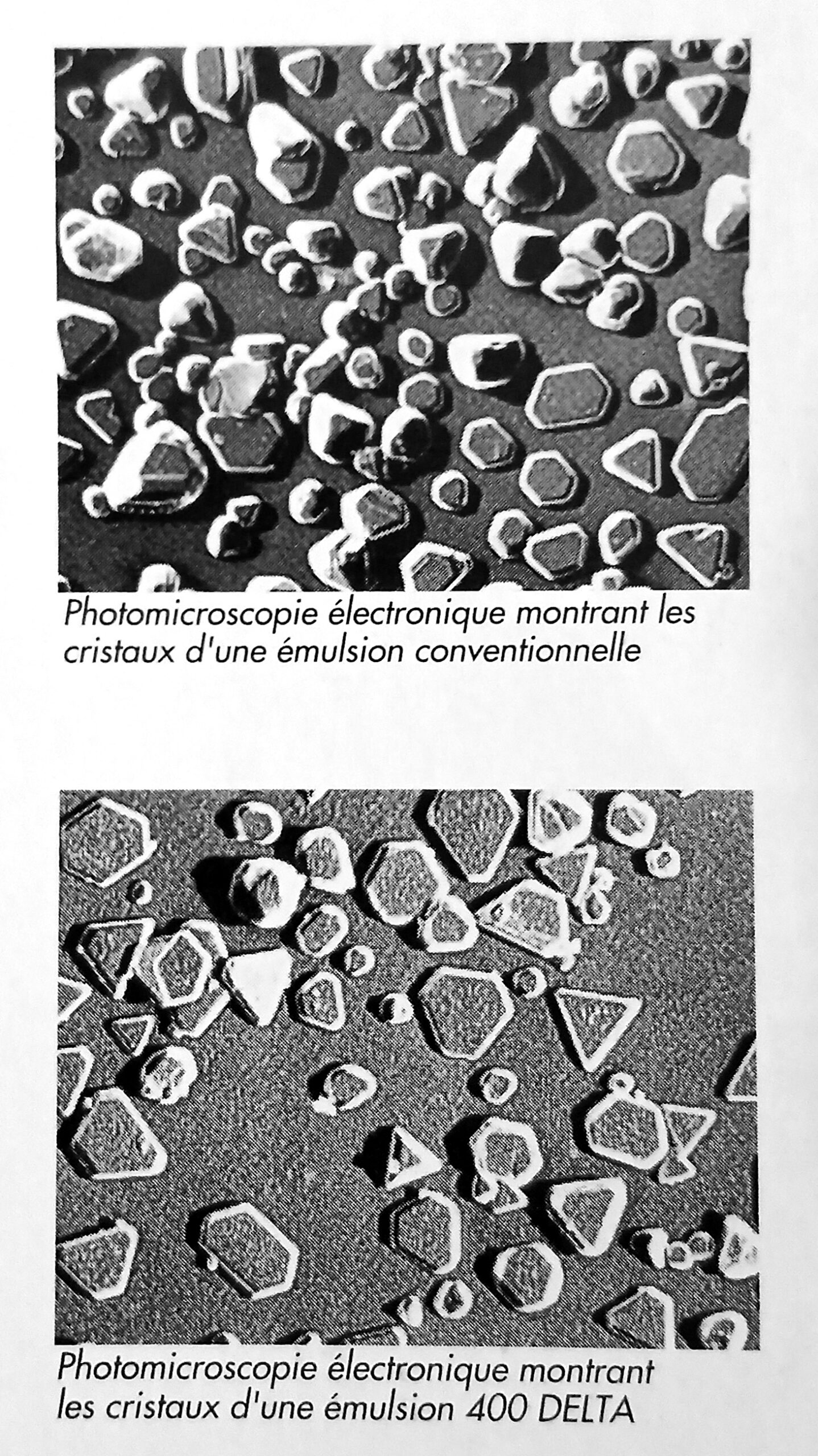
A Visual Comparison of Crystals
Tabular Grain Captures More Light
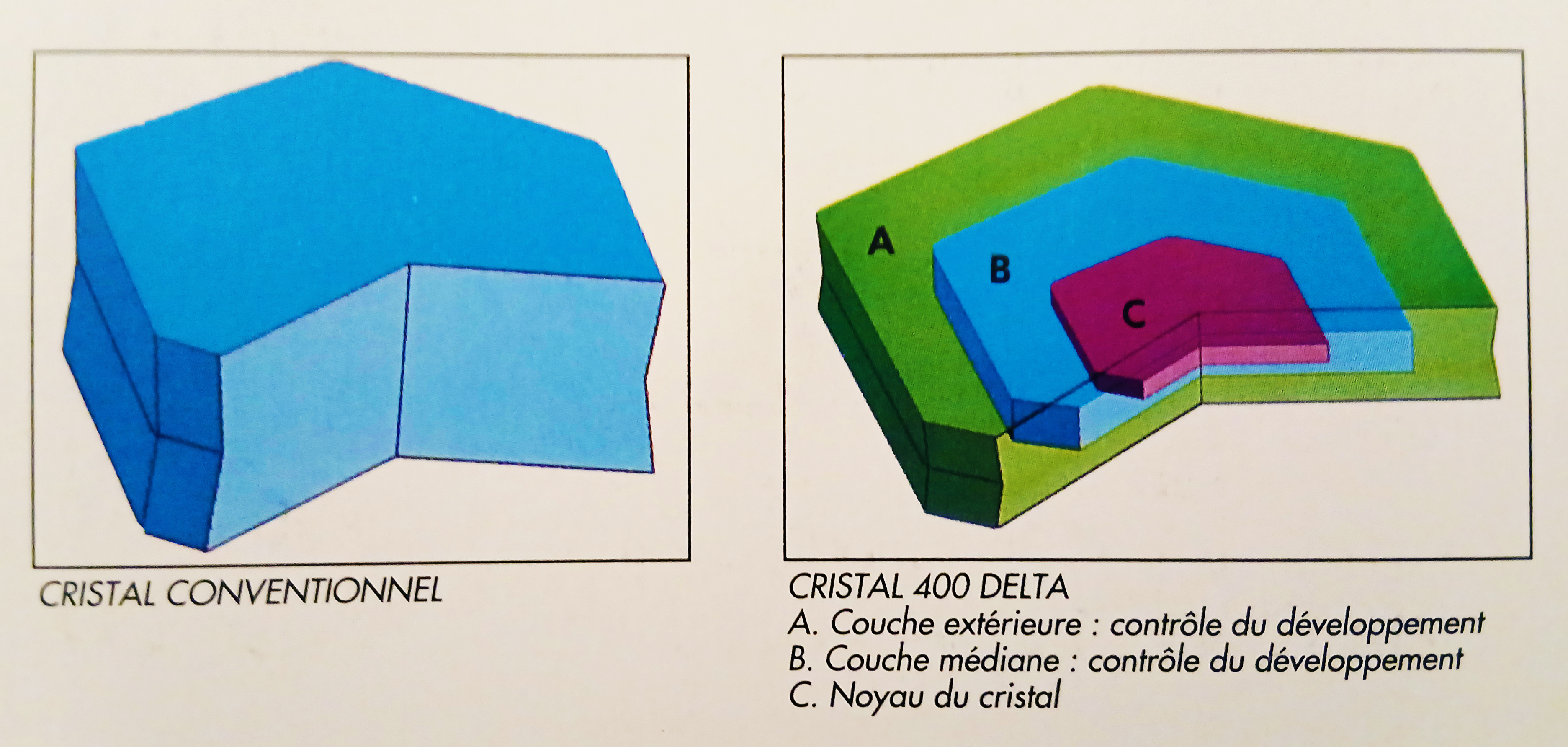
A Crystal with a Different Structure
At equal size, due to its particular structure, a tabular grain crystal requires less light than a conventional crystal to “activate” and create a latent image.*
A Shape That Increases Light Contact Surface
Tabular crystals are also flatter and more regular than conventional ones.
This gives them a larger surface area in contact with light, increasing their sensitivity.
*Ilford states that its Delta 400 offers the same resolution (same number of crystals) as a 100 ISO conventional-grain film.
Tabular Grain Film in Practice
Higher Resolution for Tabular Grain Films…
Tabular grain provides higher resolution for equivalent sensitivity compared to conventional grain.
But this comes with trade-offs:
…But Requiring More Precision in Shooting and Development
A Much Narrower Exposure Latitude
Tabular-grain films have a narrower exposure latitude and require precision both in shooting and development.
The “professional” label on the box reflects this idea: you need to master the process to get good results from these films.
At Shooting and Development Stage
Exposure must be accurate, and development must be carefully controlled (temperature, time, agitation) to obtain usable negatives.

Conventional grain films are more forgiving: it is much easier to recover an improperly exposed frame:


Underexposed HP5+ negative.
Recommended solvent developer
To extract their full potential, fine-grain (solvent) developers should be used.
Rendering
Grain
The two film types mainly differ in their grain structure.
It is often said that grain, when visible, looks more pleasing in conventional-grain films.
The Organic Grain of Classic Films

The Regular and Predictable Grain of Tabular Films

Using tabular grain film at box speed may not be a good idea
In practice, I often struggled to recover shadow detail when using tabular films at box speed.
Thus the advantage in sharpness should therefore be relativized in real-world use as we tend to use them below their nominal ISO rating.
Lower dynamic range in tabular grain films
Some photographers (myself included) often use tabular-grain films below their nominal ISO rating (e.g. 200 or even 100 instead of 400).
This technique increases dynamic range, prevents highlight clipping, and avoids blocked shadows in high-contrast scenes.

https://en.wikipedia.org/wiki/Tabular-grain_film : “it was not until the 1980s that tabular crystals began to be used in production emulsions”











Leave a Reply