

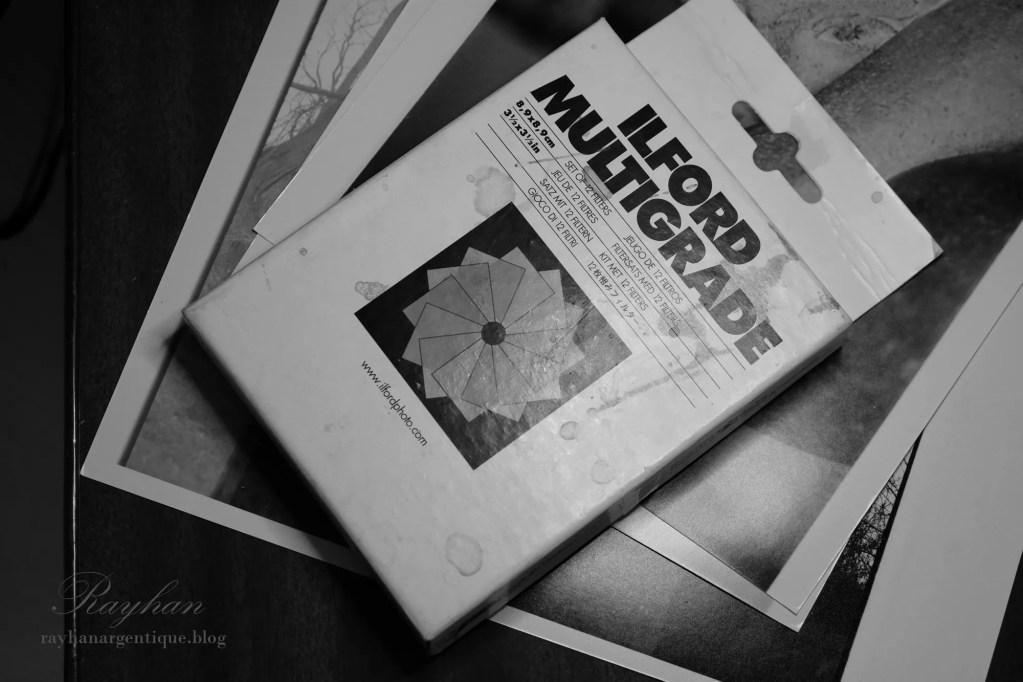

The Practical Advantage of Multigrade Paper
Before the invention of multigrade paper, each paper had a fixed grade.
One paper = one contrast
This meant you had to stock multiple boxes of paper with different grades to achieve the desired contrast.
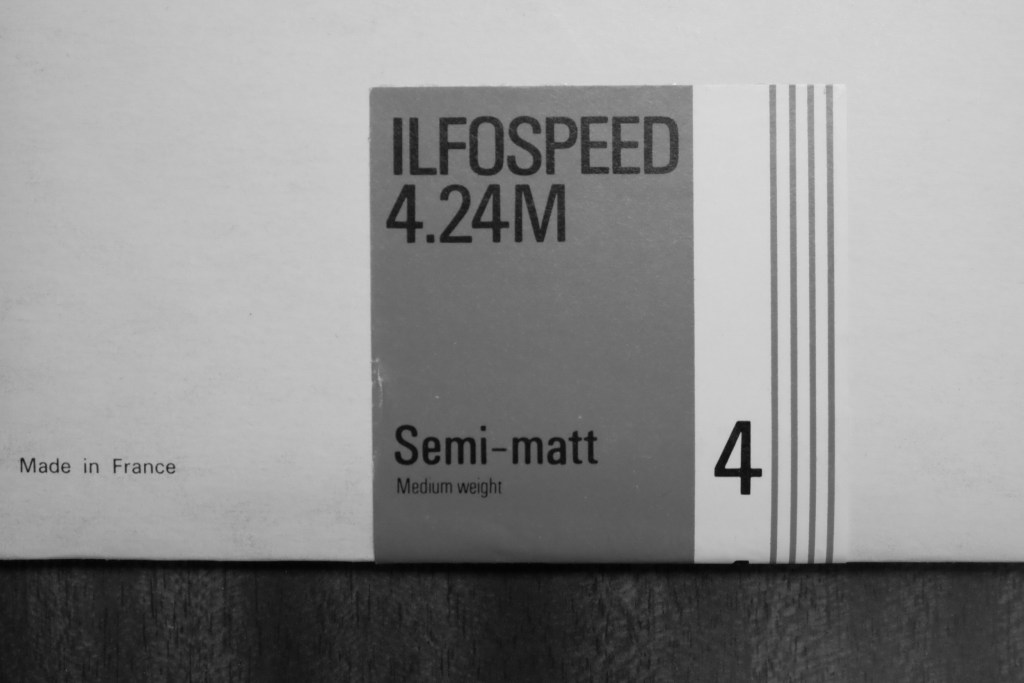
A paper with a fixed grade of 4, for example, is particularly useful when the negative is underexposed.
One Paper for All Grades
All possible contrasts on a single sheet
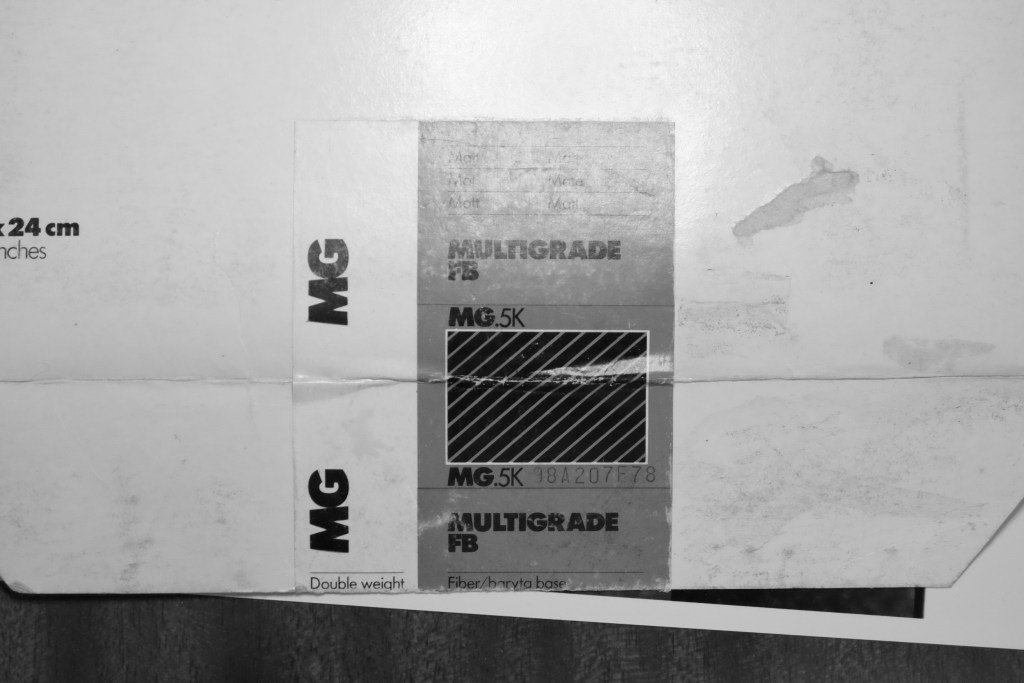
As its name suggests, multigrade paper comes in several grades, ranging from 0 to 5, allowing you to handle any situation.
Multigrade paper lets you use grades 0 to 5 without having to change the paper.
To adjust the contrast, you simply use a color filter placed in the enlarger or under the enlarging lens.
Multigrade paper avoids situations where you can’t make a print due to lack of the correct grade of paper.
Split-Grade Printing
Multigrade paper also allows for split-grade printing, which means combining different grades in a single print.
This technique provides a level of precision in controlling contrast that would be impossible with a traditional single-grade paper.
You can watch an explanatory video of this technique here: https://www.youtube.com/watch?app=desktop&v=ZtbknGsxAqs&t=70s.
The Technical Aspect of Multigrade Paper
Multiple emulsions layered over several layers
While traditional paper contains only a single emulsion, multigrade paper has multiple emulsions layered over several coatings.
Ilford’s multigrade paper, for example, consists of three emulsions.
The final result is determined by the combined density of all three emulsions.
Each emulsion has its own spectral sensitivity
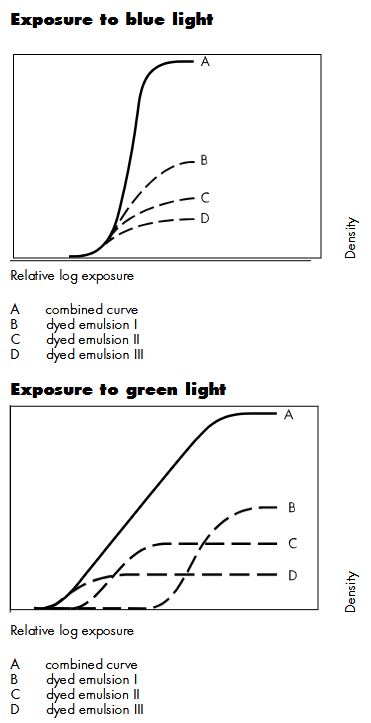
These emulsions react differently depending on the color of light.
As shown in the graph below, exposing Ilford multigrade paper to green light produces a linear, straight density curve, resulting in a low-contrast print.
In contrast, blue light produces a steep “S-shaped” density curve, resulting in a high-contrast print.
B, C, and D are the three emulsions. A represents the sum of B, C, and D.
Adjusting green and blue levels to modify the exposure curve
You can also play with green and blue levels to achieve different intermediate contrasts.
Using a multigrade filter adjusts the amount of green or blue light hitting the paper, thereby modifying the exposure curve.
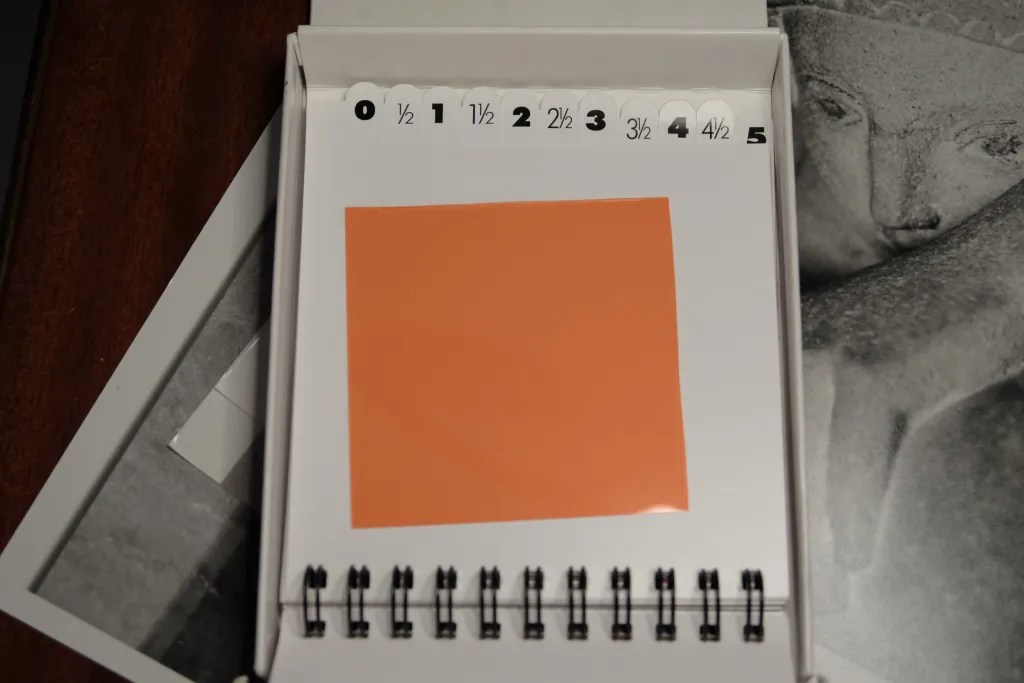
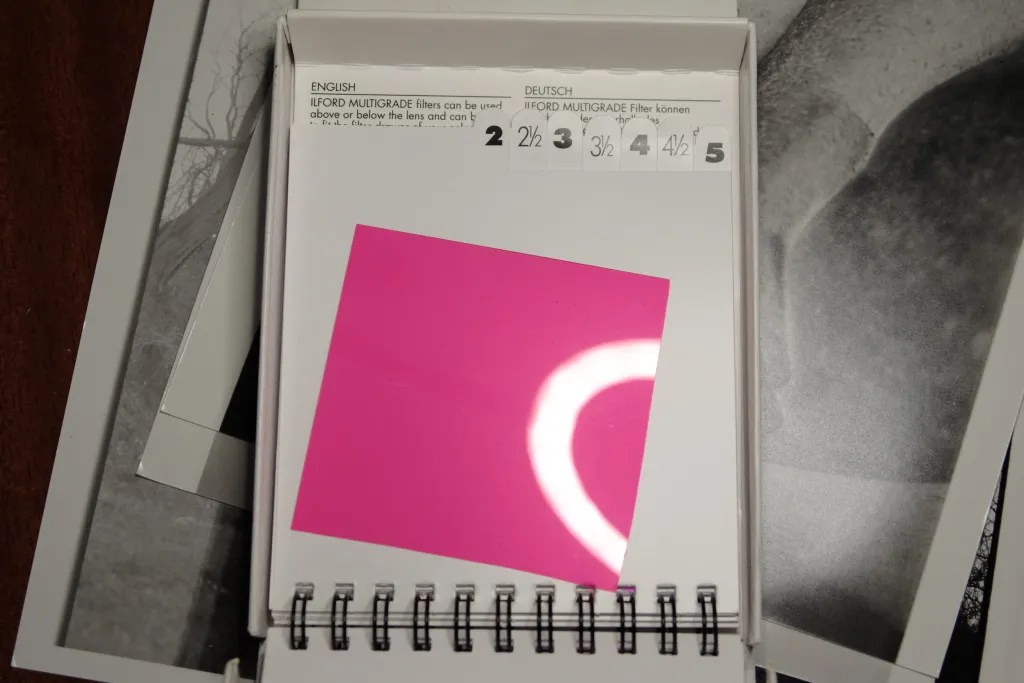
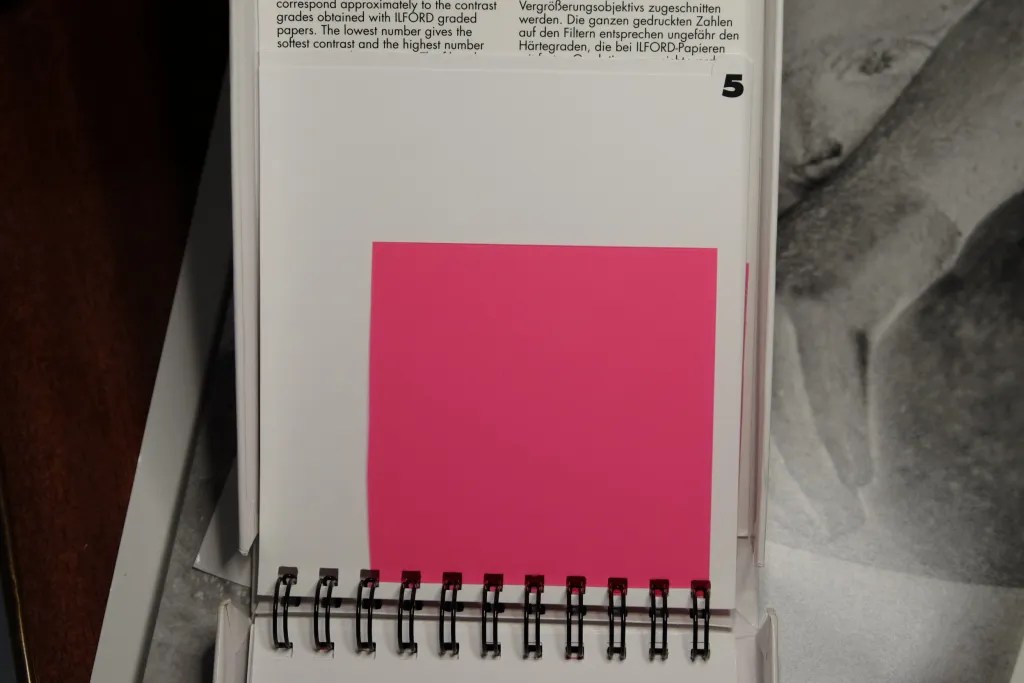
Grade 0, 2, and 5 filters vary the amount of blue and green reaching the paper.









Leave a Reply