


| Ilford Kentmere 400 (400 ISO) | FX-39 II |
| Format: | 35mm |
| Exposed at: | 200 ISO |
| Developer dilution: | 1+9 |
| Development time: | 8 minutes |
| Temperature: | 20°C |
| Agitation: | 8 inversions initially, then 4 inversions every minute |
| Lens used: | Nikkor-Q Auto 135mm F2.8 No.168964 |

Introduction
At the same time as this roll, I also developed Delta 400 exposed at 200 ISO in 120 format. I was satisfied with the results obtained.
How does Kentmere 400 react to this developer? And does the transition from 120 format to 35mm make a noticeable difference?
A quick note on shooting conditions
I took these photographs using a 135mm lens at shutter speeds ranging from 1/60s to 1/250s. Some motion blur is therefore present in certain images, which affects both contrast and the perception of acutance.

First impressions
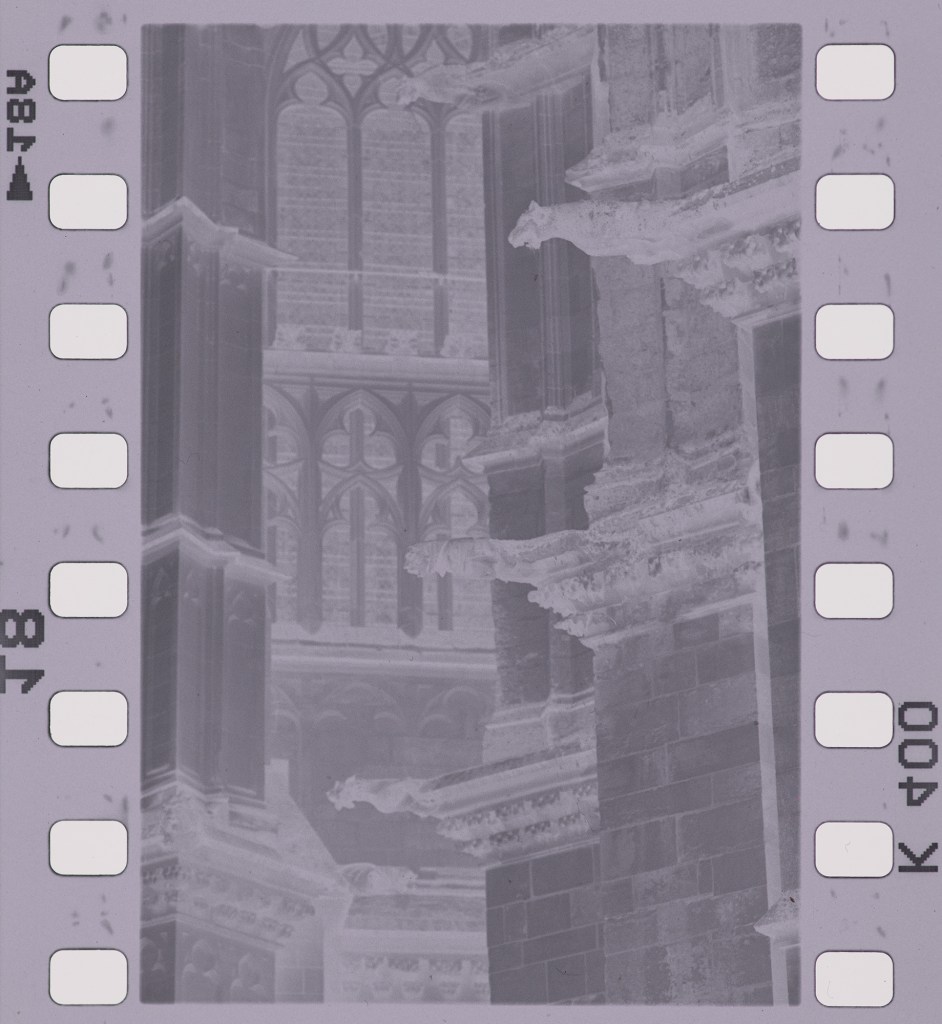
The negatives appear rather flat. There is a lack of differentiation in the midtones. Choosing to expose this film at 200 ISO for rainy and low-contrast scenes is probably the reason for this.
Exposing the film at 400 ISO would likely have produced stronger contrast.

Pronounced grain
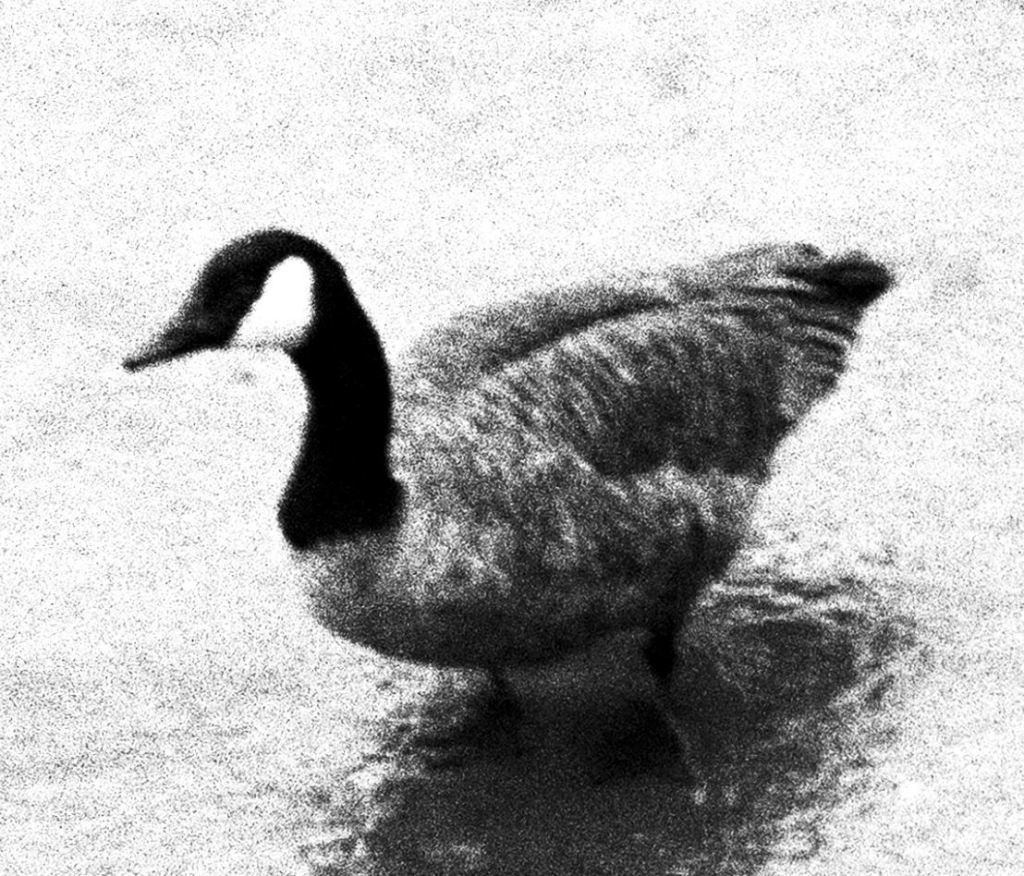
The grain is immediately noticeable. There is no need to inspect the image closely to see it. However, its structure remains pleasant.
The strong grain presence gives the images a distinctive character.
Rather than trying to hide it, I chose to emphasize it during post-processing.
The gritty look produced by Kentmere 400 in 35mm format feels more like a creative strength to work with than a flaw.

Decent overall results
This is my first time using Kentmere 400. From the photographs taken by others that I have seen, the pronounced grain and soft tonal rendering seem to be part of the film’s character. It is a rendering that is artistically very interesting.
FX-39 II diluted at 1+9 seems to handle this film reasonably well. However, my feeling is that a developer specifically suited for films of this sensitivity could probably deliver better results, especially more lively and less flat negatives.












Leave a Reply