



Fixer Does Not Influence Image Rendering
Unlike the developer, which is chosen to alter the look and rendering of the image, the fixer does not affect the image rendering.
Two Types of Fixer
Although they are intended to produce the same result, different fixer formulations exist. Some contain a tanning/hardening agent while others do not.
To determine whether a fixer is tanning/hardening, read the product documentation and look for these terms.
Hardening/Tanning Fixer
The purpose of this type of fixer is to better protect the negative by “hardening” the emulsion. The negative therefore becomes more resistant and less prone to scratches.
This can be useful with certain “fragile” film stocks or in tropical climates.
Hardening/Tanning Fixers Are Less Useful Today
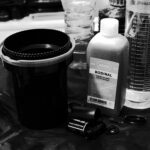
Most modern films are sufficiently resistant to scratches. Personally, I have never encountered issues using a non-hardening fixer (Ilford Rapid Fixer).
Hardening fixers also have the disadvantage of requiring longer fixing and washing times.
Hardening/Tanning Fixers Should Be Used in Specific Cases
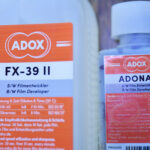
Some manufacturers such as Adox still seem to recommend this type of fixer for certain films.
However, this remains an exception. Read the film documentation to determine whether a hardening fixer is necessary. If nothing is specified, you can safely use a much more practical non-hardening fixer.






Leave a Reply