


Introduction
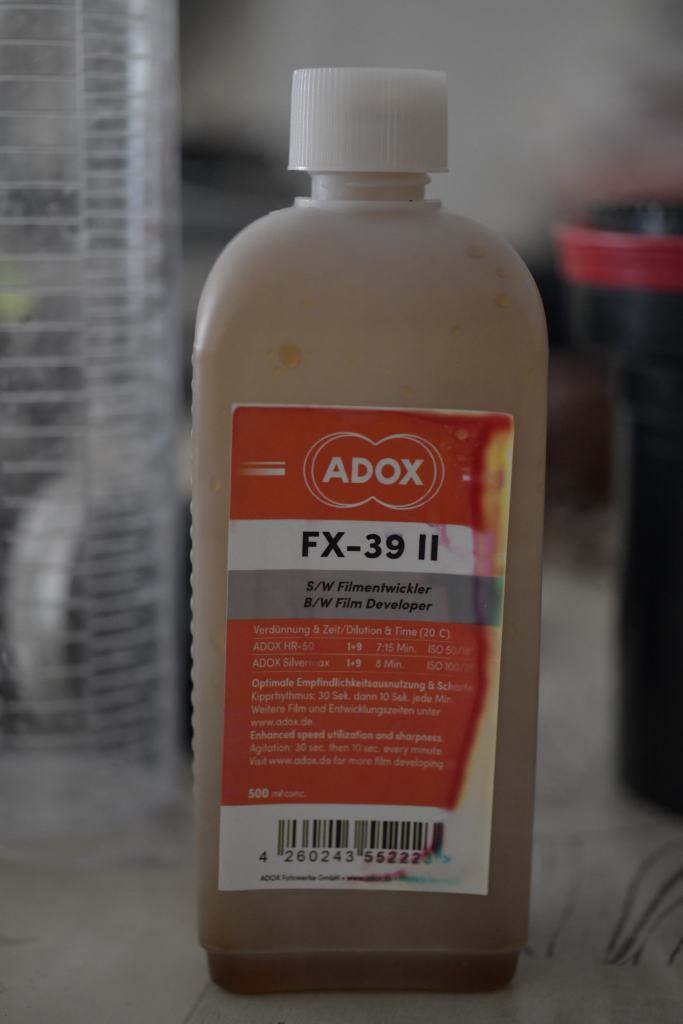
This review is based on my personal experience using the Adox FX-39 II film developer.
Presentation of Adox FX-39 II
A Bit of History
Derived from Willi Beutler’s 1950s Neofin Red, FX-39 was created by Geoffrey Crawley in the 1970s and produced until 2012.
But since 2019, Adox has been producing an improved version of FX-39 that keeps better, named FX-39 II.
The characteristic of this developper
A Developer Designed for Films Under 200 ISO
FX-39 II is marketed as an exceptionally good developer for films below 200 ISO.
It will still work for films above 200 ISO, but the results may be disappointing.
High Acutance
It is a high-acutance developer, meaning it will enhance the perceived sharpness of the image.
Despite being a non-solvent developer, it delivers excellent results with tabular-grain films.
The Negative Must Be Sharp to Begin With to Benefit
As with any high-acutance developer, it imposes a constraint when shooting: you must use sufficiently fast shutter speeds or a tripod to minimize camera shake.
Indeed, a high-acutance developer provides a great sense of sharpness… if the photo is actually sharp and doesn’t suffer from motion blur or isn’t out of focus.
Otherwise, it will amplify the impression of blur and produce a rather unpleasant rendering.
A developer that preserves the detail in the highlights (compensating effect)
One of the most interesting characteristics of FX-39 II is its unique ability to preserve detail in the highlights and prevent them from blowing out.
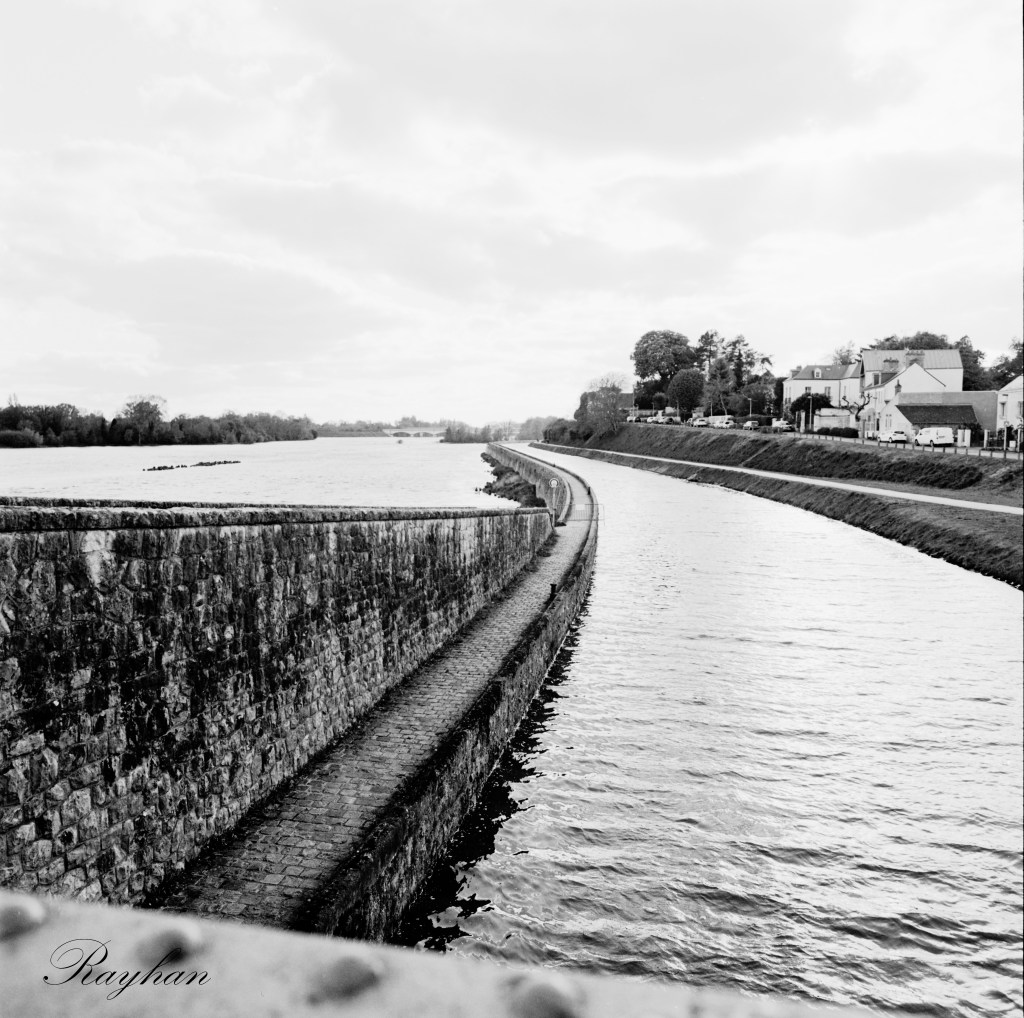
As you can see in this image, FX-39 II allows to preserve detail in the highlights: you can clearly distinguish the clouds in the sky.
Ilford Delta 100 and Adox FX-39 II (diluted at 1+19)
Towpath, Orléans, April 2025. © Rayhan RAHIM KHAN
An Easy-to-Use Developer
It is a single-use liquid one-shot developer.
It can be used at standard dilutions of 1+9, 1+14 and 1+19 by multiplying the development times by 1.5 and 2 respectively.
A 1+5 dilution is also possible for higher-speed films like Ilford D3200 as you will see later in this post .
Just like Rodinal, changing the dilution impacts the rendering. A higher dilution will give more detail in the highlights and less contrasty negatives.
About conservation
Even though Adox FX-39 II was reformulated to keep better, it still needs to be used reasonably soon after opening.
Once opened, oxidation will gradually change its color over time, and you have 3 to 6 months to finish the bottle before it starts losing effectiveness.
So, make sure the bottle is airtight and keep track of the opening date if you only plan to use it occasionally.
And if you have any doubts about its effectiveness, don’t gamble and use a fresh bottle.
Personal Review of FX-39 II
What I Expected from This Developer
With Adox FX-39 II, I was hoping to find the perfect developer: inexpensive, easy to use, and a good all-rounder.
I wanted to make it my sole developer to simplify chemical management and avoid waste.
As you will see below, my expectations were somewhat let down: it isn’t always the best option, especially when it comes to developing 400 ISO and above films.
Films I Developed with This Developer
I used this developer to process Ilford Delta 100, 400, and 3200, Foma 100 Classic, Agfa APX 100, and Kentmere 400.
You can find all my development notes regarding this developer here: FX-39 (all processing was done at 20°C with regular inversions).
Analysis of Negatives Developed in FX-39 II
100 ISO film
Classic grain film
The results achieved with the classic-grain film Agfa APX 100 in 35mm were satisfying. The images were sharp and there was detail both in the shadows and the highlights.
However, the tonalities of the mid-tones are disappointing. They have a limited range and look insipid. Overall, the images look a bit flat and lack punch -which is a recurring drawback of this developer.

Sainte-Croix Cathedral of Orléans. Orléans. April 2025. © Rayhan RAHIM KHAN
I think the best results I got with this developer were with Foma 100 Classic in medium format. As expected, they were sharp, but here I was very pleased with the tonalities I obtained.
The compensating effect and low global contrast give a soothing look to the image. I really like the images I got with this combination under these conditions.
Because of course, the reason why the images turned out so well is also related to the scene and lighting conditions.
Tabular grain film (Ilford Delta 100)
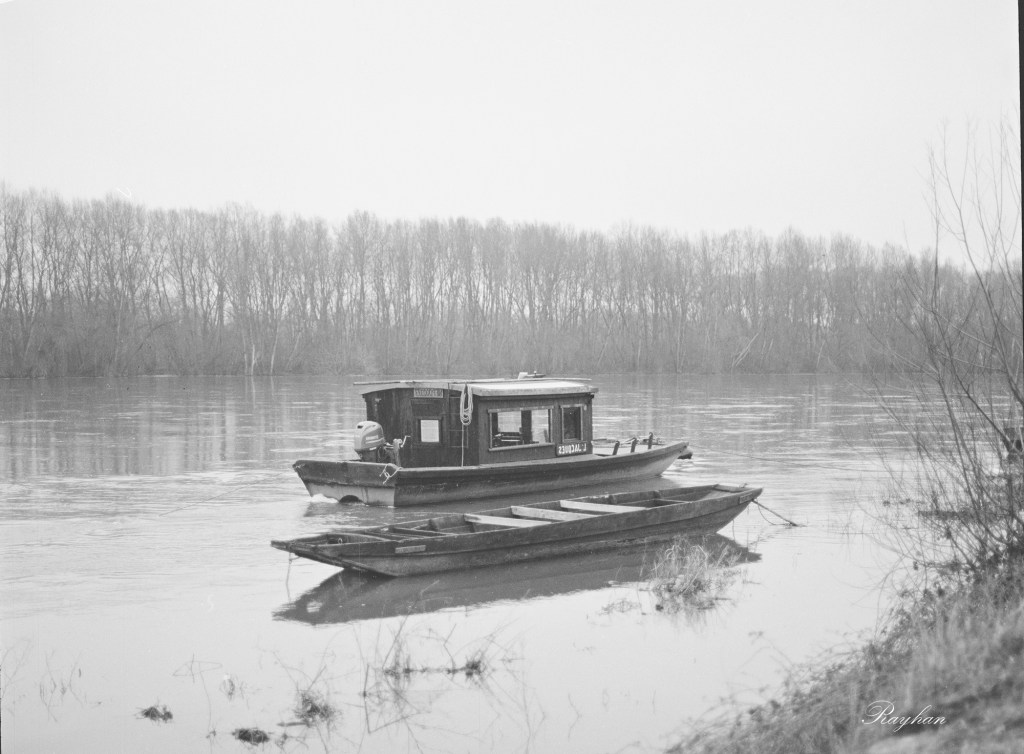
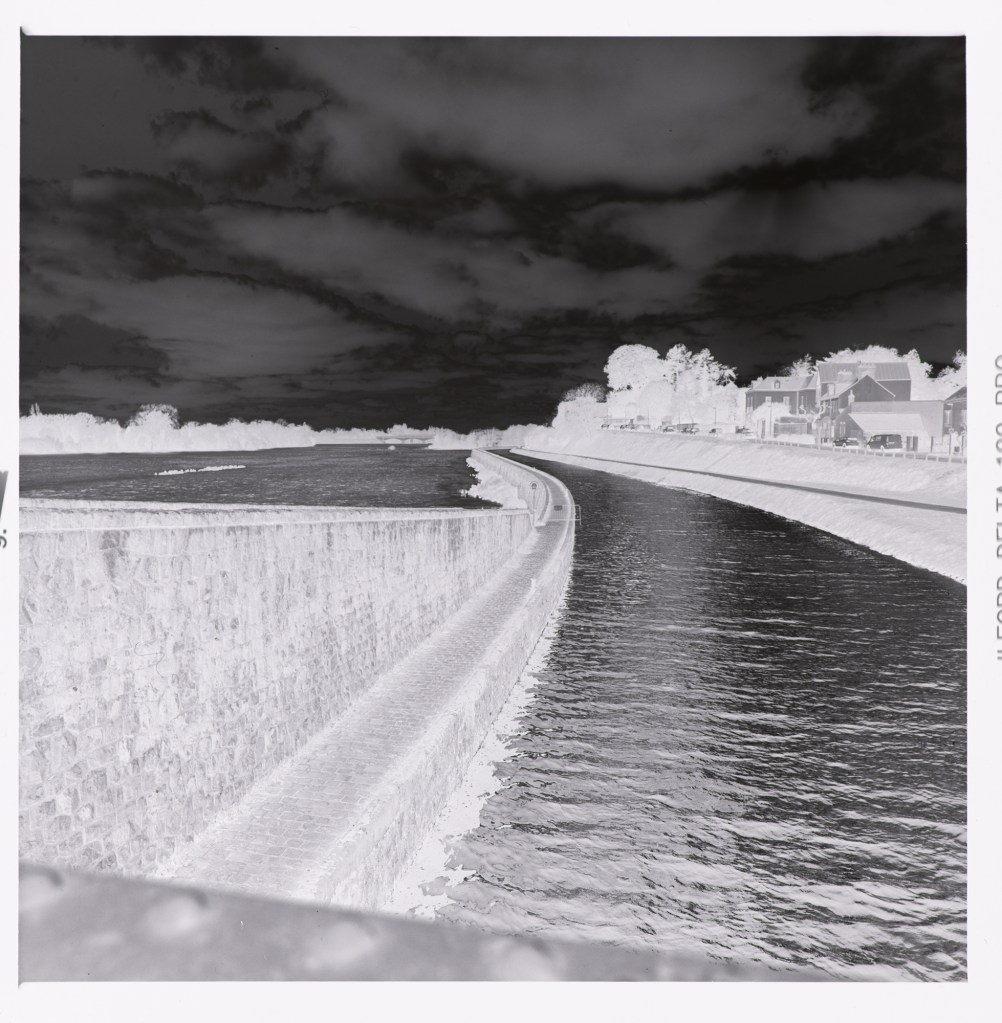
The results obtained with Ilford Delta 100 were also good. The images are very sharp, but tabular grain films still suffer from that typical, abrupt loss of detail in the darkest areas.

Stick to a 1+9 Dilution for Films Above 200 ISO
My experience with Delta 400 when diluting at 1+19 was not good: I ended up with prominent grain. To use FX-39 II with 400 ISO films, even when exposed at 200 ISO, you should stick to a 1+9 dilution (maybe 1+14?) to preserve good image quality.
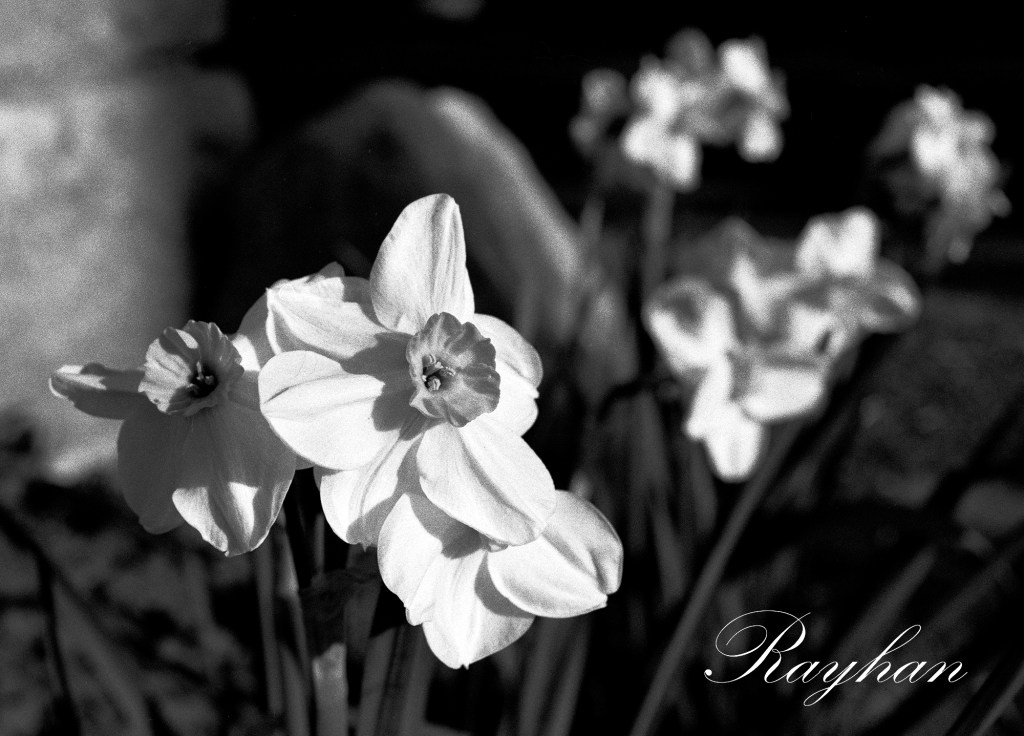
The grain here is too strong for me. It stands out and looks particularly unflattering outside the sharp focus areas. And this is medium format.
Flowers, Orléans, April 2025. © Rayhan RAHIM KHAN
Unsatisfactory Results with Delta 400
Despite multiple attempts, I was never able to obtain good results with the tabular-grain film Ilford Delta 400, even with a 1+9 dilution.
The images have flat, dreary tones.
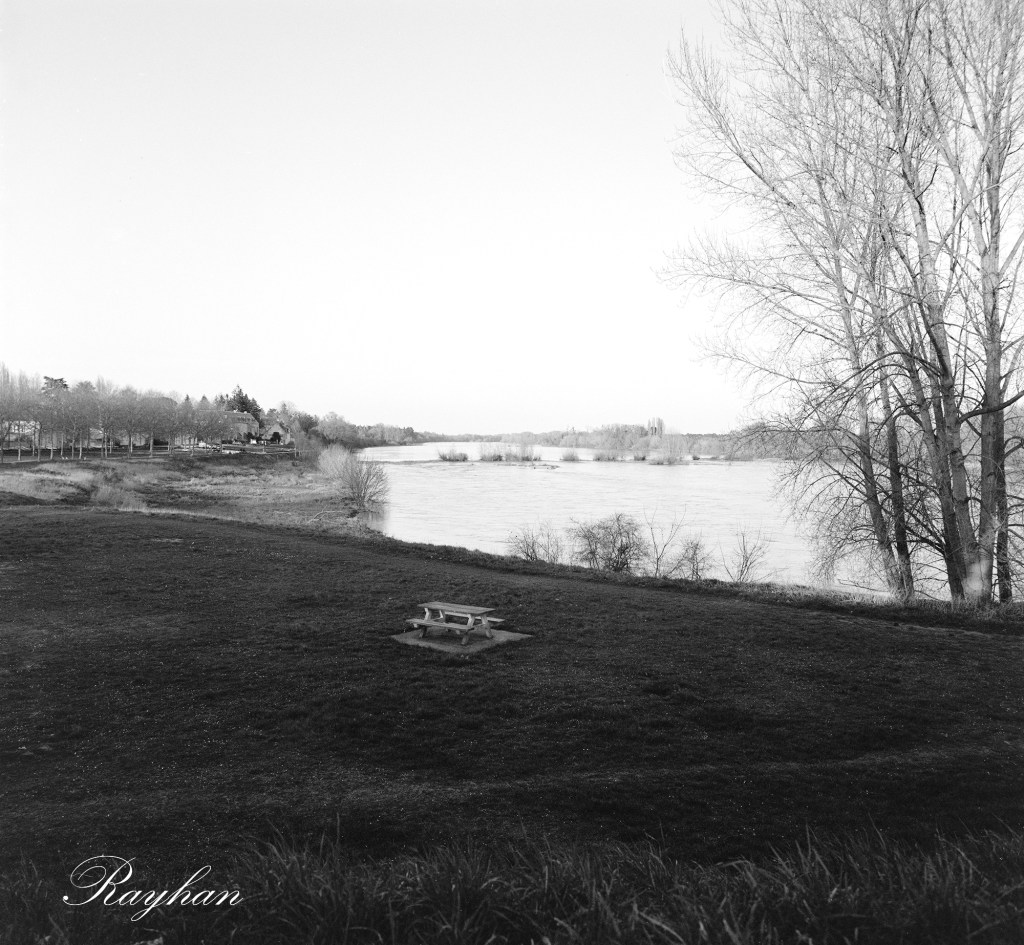
Meung-sur-Loire, Loiret, France. March 2025. © Rayhan RAHIM KHAN
Which is not quite surprising as this developer is recommended for less than 200 ISO films.
I would advise you to not use this developer for more than 200 ISO films. It is not made for it and other developers will do a better job.
Works Well with Delta 3200
I also developed Delta 3200 shot at 3200 ISO in medium format, diluting at 1+5. Despite moving even further away from the recommended 200 ISO, I found the results to be quite good.
The grain -in medium format- is visible but not annoying. Moreover, detail in the highlights are very well preserved, which is important in these night scenes where the contrast is very high.

Orléans at night, René Thinat bridge. © Rayhan RAHIM KHAN
However, I would not recommend this combination with 35mm because of the grain.
Conclusion: A narrow operating window
FX-39 II is clearly not an all-purpose developer.
It is only really interesting for films below 200 ISO -whether they are tabular or classic grain film.
Like all high acutance developer has a great sense of sharpness, which is great for landscape and macro photography. But not optimal for portrait photography as it may bring out imperfections and render ungracefully out of focus areas such as the background.
Its compensating effect allows a wide dynamic range. It gives a specific rendering that can yield exceptional results when the stars are aligned, but it can also easily give images that lack punch (it is a matter of taste, of course).
I would say that if you are looking for a developer that gives you sharp images and a compensating effect, you should definitely consider using Adox FX-39 II.









Leave a Reply