

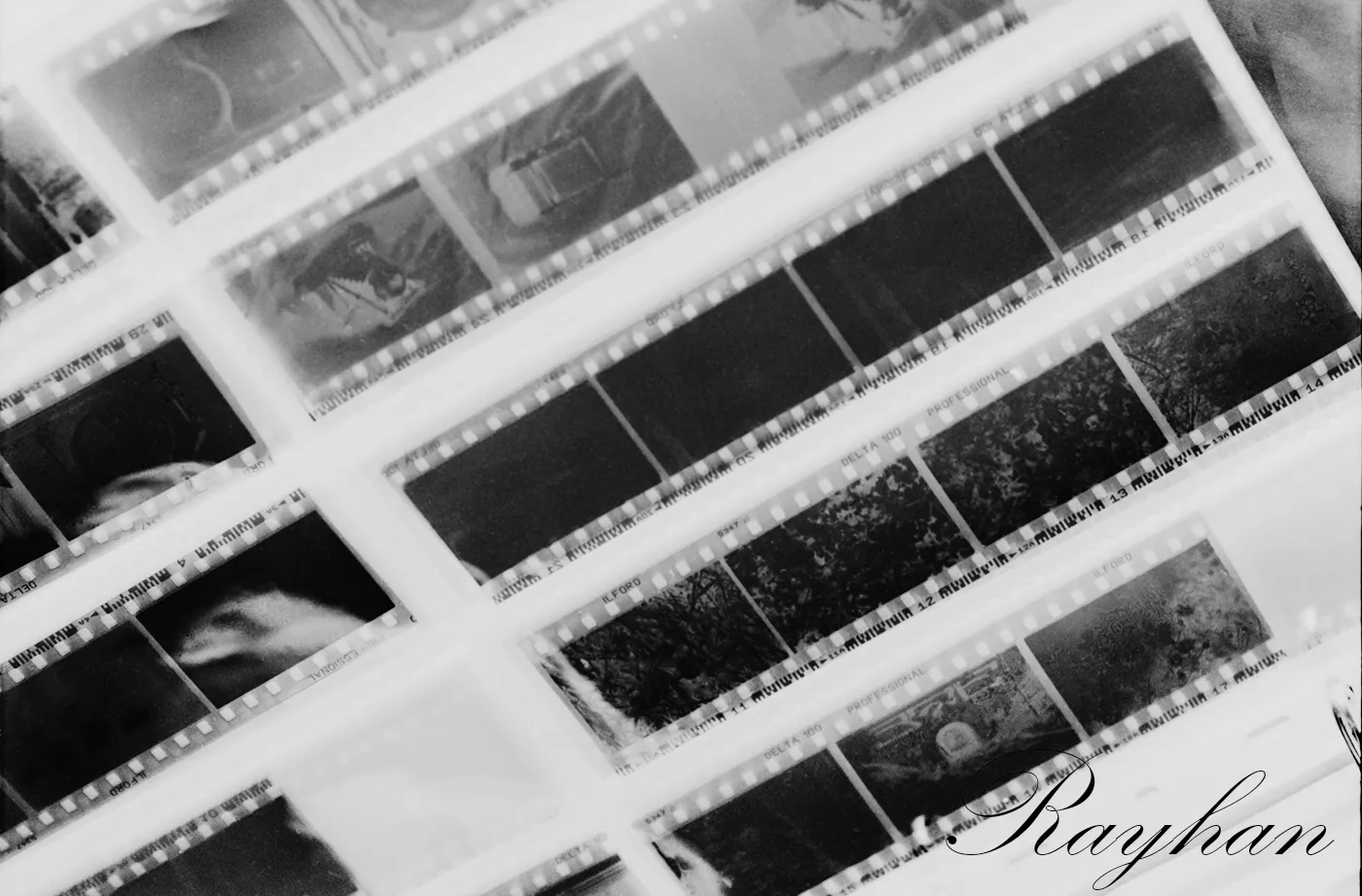

The importance of taking notes
Ending up with usable negatives is as simple as applying the instructions on the developer’s bottle.
So why is taking notes important?
I am speaking from experience. Looking at old negatives with a rendering you like and not being able to tell how you achieved this result is VERY frustrating.
The interrelation between the film, camera, lens, development and weather greatly affects the rendering of your negative.
If you don’t take those notes while they are still in your head, this information is very likely to disappear forever because you’ll forget it.
What should you take notes on?
I’ve identified 11 parameters that influence the rendering of the negative:
- The Lens – Sharpness
- The Camera – Sharpness (Blur due to vibrations for example)
- Shutter Speeds – Sharpness (Too low shutter speeds may induce motion blur)
- Aperture – Sharpness (image is less sharp at wide aperture)
- The Weather
- Developer – Grain, Contrast
- Developer dilution – Dynamic range, Contrast, Grain
- Development Temperature – Grain, Contrast
- Development Time – Negative Density
- Agitation During Development – Grain, Negative Density
- Push/Pulling Development – Grain, Contrast
It may seem like a lot, but it’ll take five minutes at most to note them down.
Thanks to these notes, you’ll be able to do comparisons and perform analysis that reveal why a negative look good or look bad.
Without taking notes, you can develop hundreds of films and never be able to tell what influences the characteristics of your negatives, and thus how to control their rendering finely.
So, spending five minutes to take notes is pretty worthy, isn’t it?
Free templates
Writing notes on blank paper makes you prone to forgetting some details, and as the placement of info changes, it becomes harder to read.
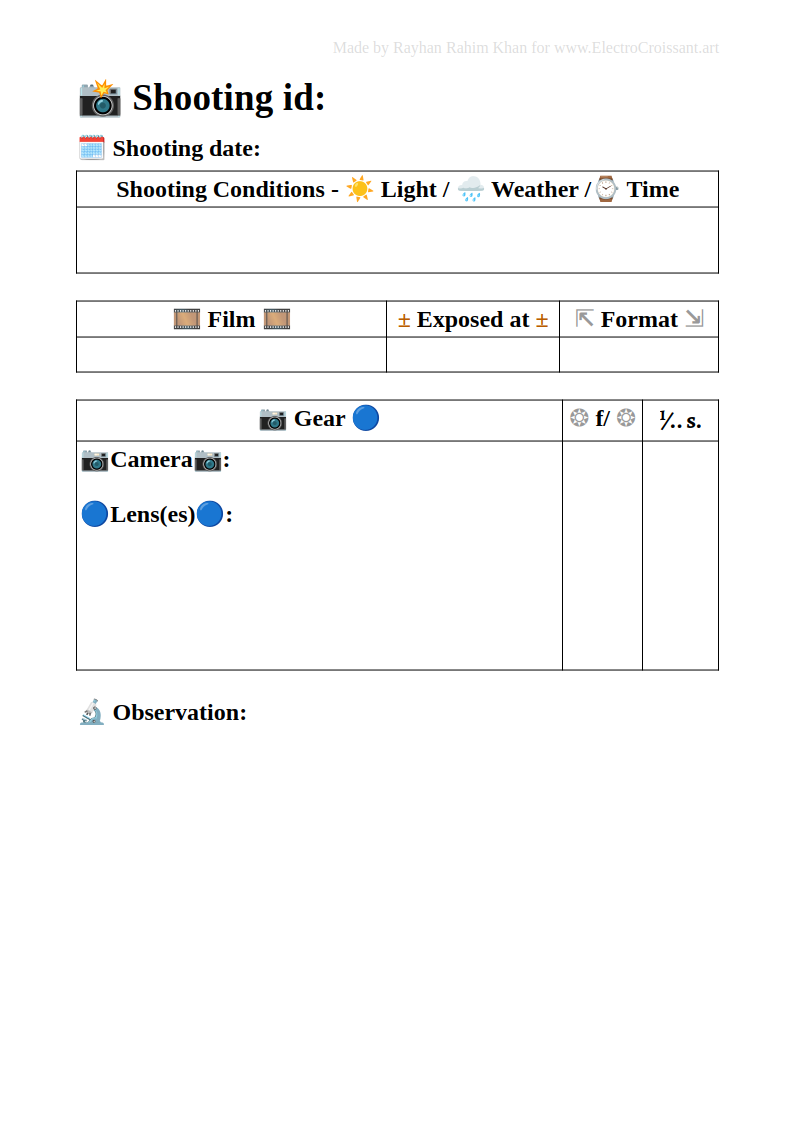
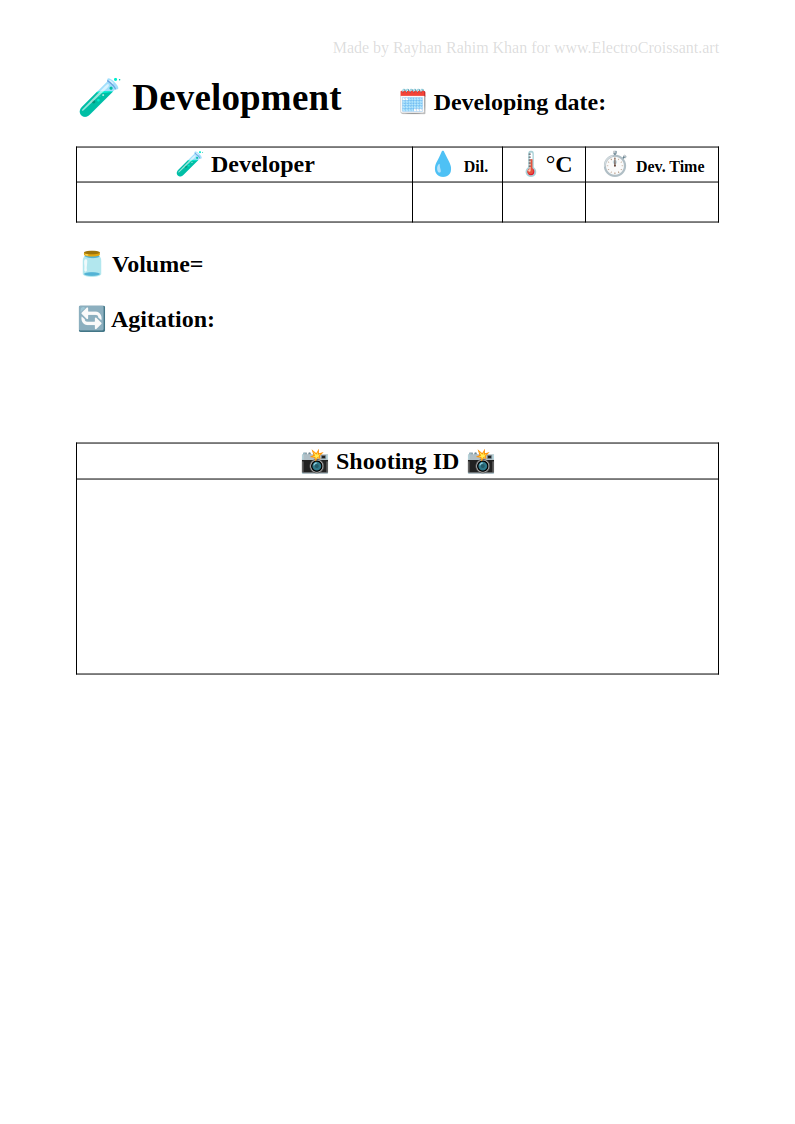
So, I created two templates to make sure I don’t miss anything.
You can download them for free here. There is one page for shooting info and another for development. If you develop multiple films at once, just print the development page once and the shooting page as many times as needed.
If you have any suggestions on how to improve these templates, don’t hesitate to leave them in the comments.
Conclusion
Unlike digital where the camera writes the info for you in the EXIF data, if you use film, you have to write it down yourself.
If you don’t, you’ll lose that precious information and won’t be able to make comparisons or understand what causes a good or bad rendering.
So, get into the habit of taking these notes systematically.










Leave a Reply