


Introduction
If you watch some shorts or videos on YouTube, you can quickly end up with a mystified view of film photography. Content like this can make shooting with film seem so challenging that getting an image feels like a minor miracle.
Anybody can practice film photography
As a reminder, before digital, everybody used film. From the professional photographer, to the amateur who used their bathroom as a darkroom, down to the casual photographer who captured their vacation.
Everyone can do film photography. Shooting with film is not impressive in itself.
Now, you might say to yourself: the guy has developed hundreds of rolls of film and has forgotten the steep learning curve at the start.
But I have good memories of my first roll. I went outside with my Nikon F80, took 36 pictures, went back home, opened my Ilford* starter kit, read the instructions, followed the instructions, and ended up with usable negatives. It was not a difficult task.
The skills I needed when shooting were the same as for a digital camera. And if you know how to follow a recipe, you’ll have zero difficulty developing any film. There are also photo labs that can develop your film for you (though most only handle C-41 color film and XP2).
Shooting film is not harder than digital. You’ll quickly get used to not seeing your image immediately after taking it -you may even like it.
There are film cameras with the same automated features as digital models, such as the Nikon F80 I mentioned earlier, but using a manual camera with a light-meter is no big deal either.
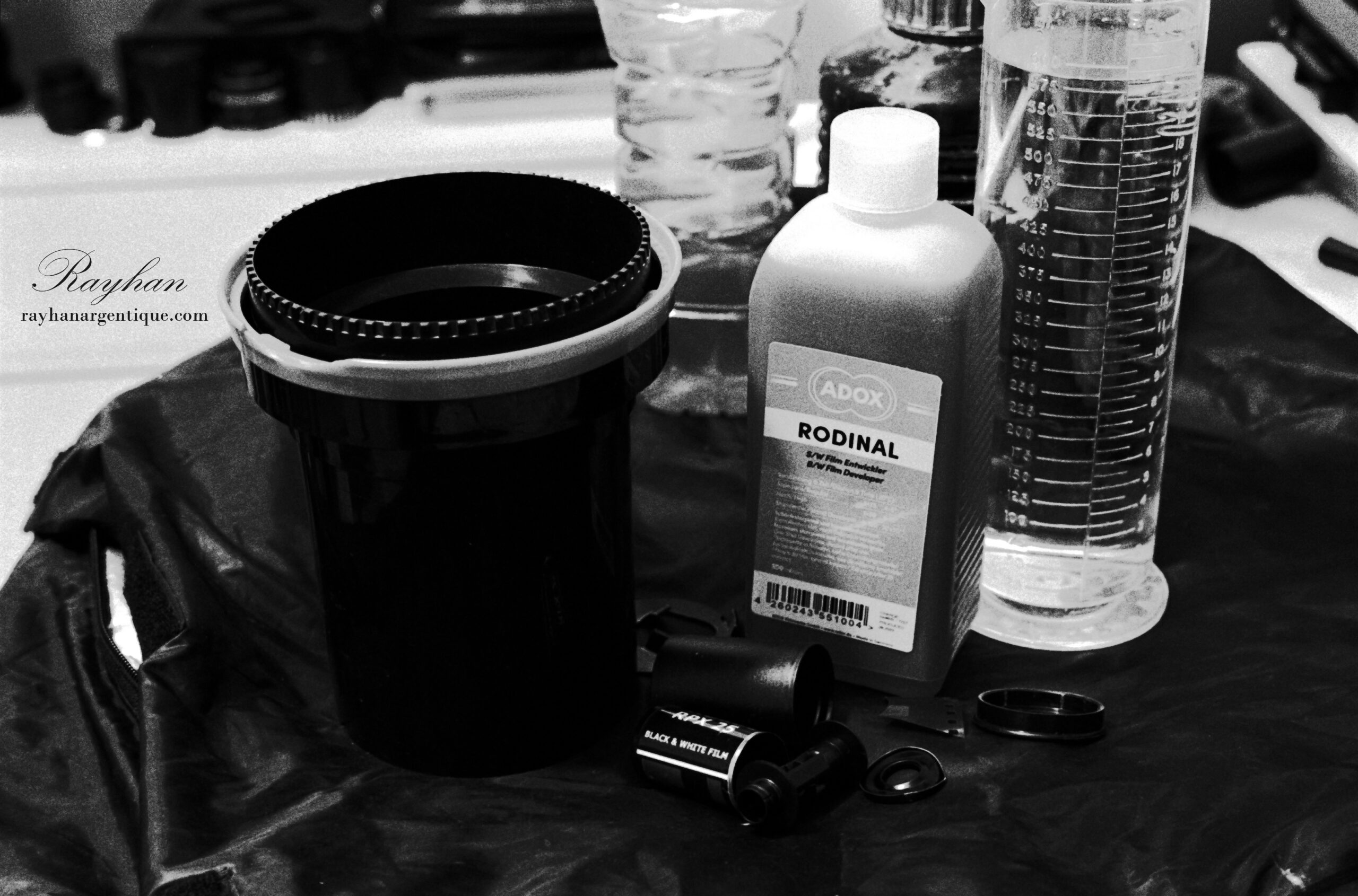
As for developing film yourself, manufacturers such as Ilford* offer a kit with everything you need to develop black-and-white film. But if you want to buy on the second-hand market, it is not complicated either. There are plenty of tutorials and documentation available on the internet.
So I’m telling you: obtaining usable images with film is not challenging.
The only “difficulty” with film photography
The real drawback of film photography compared to digital is its tediousness. So the real question when it comes to shooting film is: are you motivated enough to get organized and put in a few extra hours to get your images?
It is also important to know that chemicals, especially those to develop color film, can be harmful if used improperly or too often without adequate protection.
Use gloves, safety goggles, ventilate the room, clean up after development and follow the manufacturer’s recommendations to avoid problems.
The threat should not be exaggerated, millions of people have developed film without having any health issues. But that does not mean you should take chemical safety lightly.
In my case, I don’t shoot with film to impress people or because I like wasting time, but because I prefer the rendering of film.
If I could get the rendering of film with a digital camera, I would 100% use a digital camera. Because spending hours preparing chemistry, agitating the developing tank, waiting for the negatives to dry, and digitizing them is the antithesis of fun.
My conclusion is that if you want to try film photography, go for it. Analog photography offers a rendering that digital is unable to reproduce and a different experience. If you are fine with making the effort to organize yourself and spending more time to get your images, film photography is no more difficult than digital.
*I am not sponsored by ilford.


Leave a Reply