

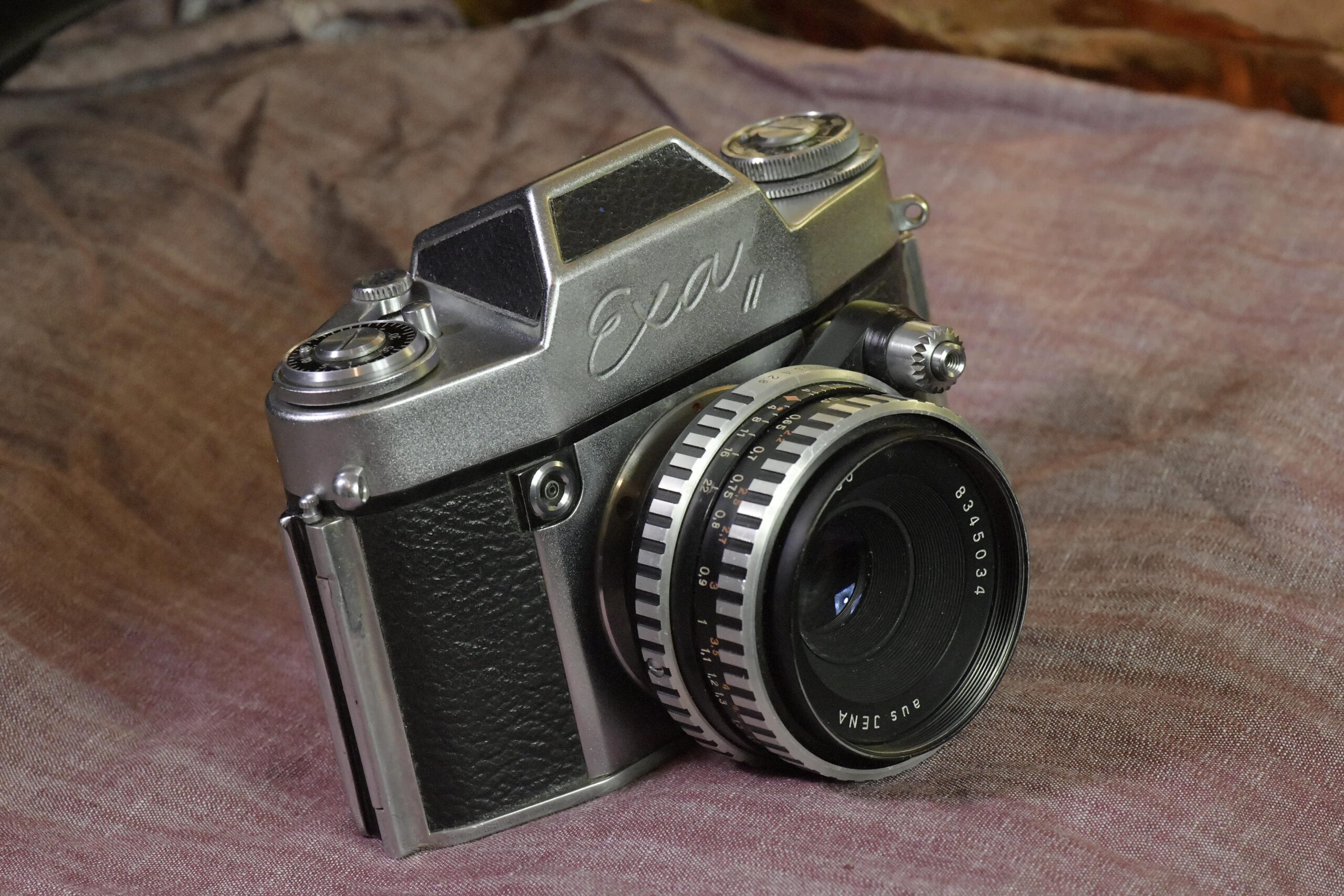

A brief history of Ihagee
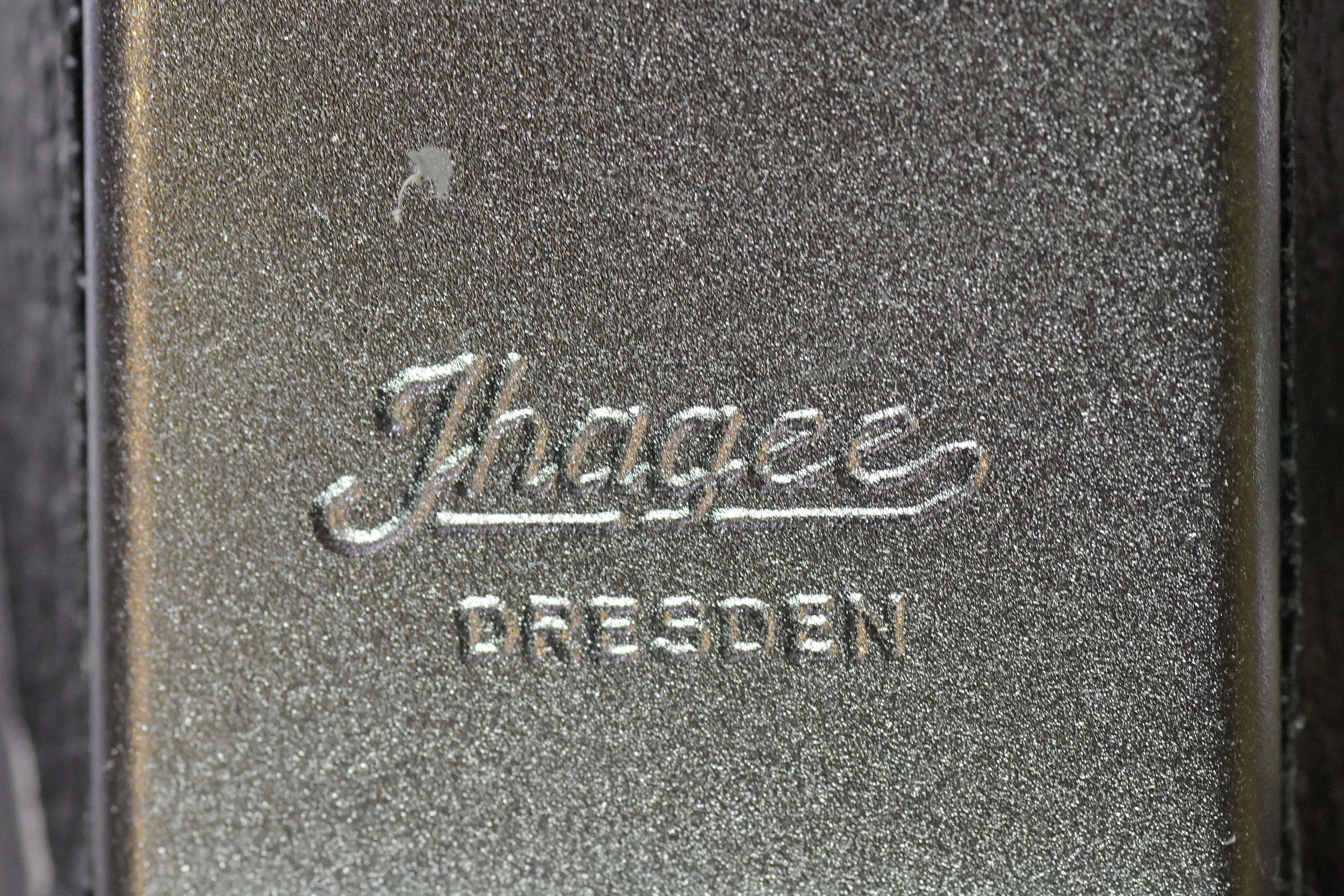
Ihagee is a German camera manufacturer (Dresden) founded in 1912. In 1936, Ihagee achieved success with the launch of the first 35mm SLR camera: the Kine Exakta [1].
World War II saw the destruction of the company’s production facilities and the departure of its founder, Johan Steenbergen. The company was then integrated into the planned economy of the GDR.
Despite these events, the company continued to prosper and produce high-quality cameras until the 1960s and 1970s.
Unlike Pentax, which was able to adapt by abandoning the M42 mount in favor of a more modern and efficient mount, Ihagee was unable to reinvent itself and declined in the face of competition from other, more advanced cameras (Nikon, Canon, etc.).
Ihagee and the Exakta brand were eventually absorbed by Pentacon in the 1970s.
To make the first 35mm camera
Before 1936, 35mm cameras used rangefinder viewfinders at best (for example, those with an M39 mount, notably Leica).
However, this viewfinder system is not the most accurate and is unsuitable for macro or close-up photography.
Reflex viewfinders fill these gaps by allowing the photographer to see through the lens using a movable mirror and a ground glass screen.
1936, Kine Exakta
After creating its first 127 format reflex camera in 1933, Ihagee capitalized on the popularity of 35mm in 1936 with the Kine Exakta, the first mass-produced SLR camera to use this format.
This first camera was improved upon by its successors, which also enjoyed critical and commercial success.
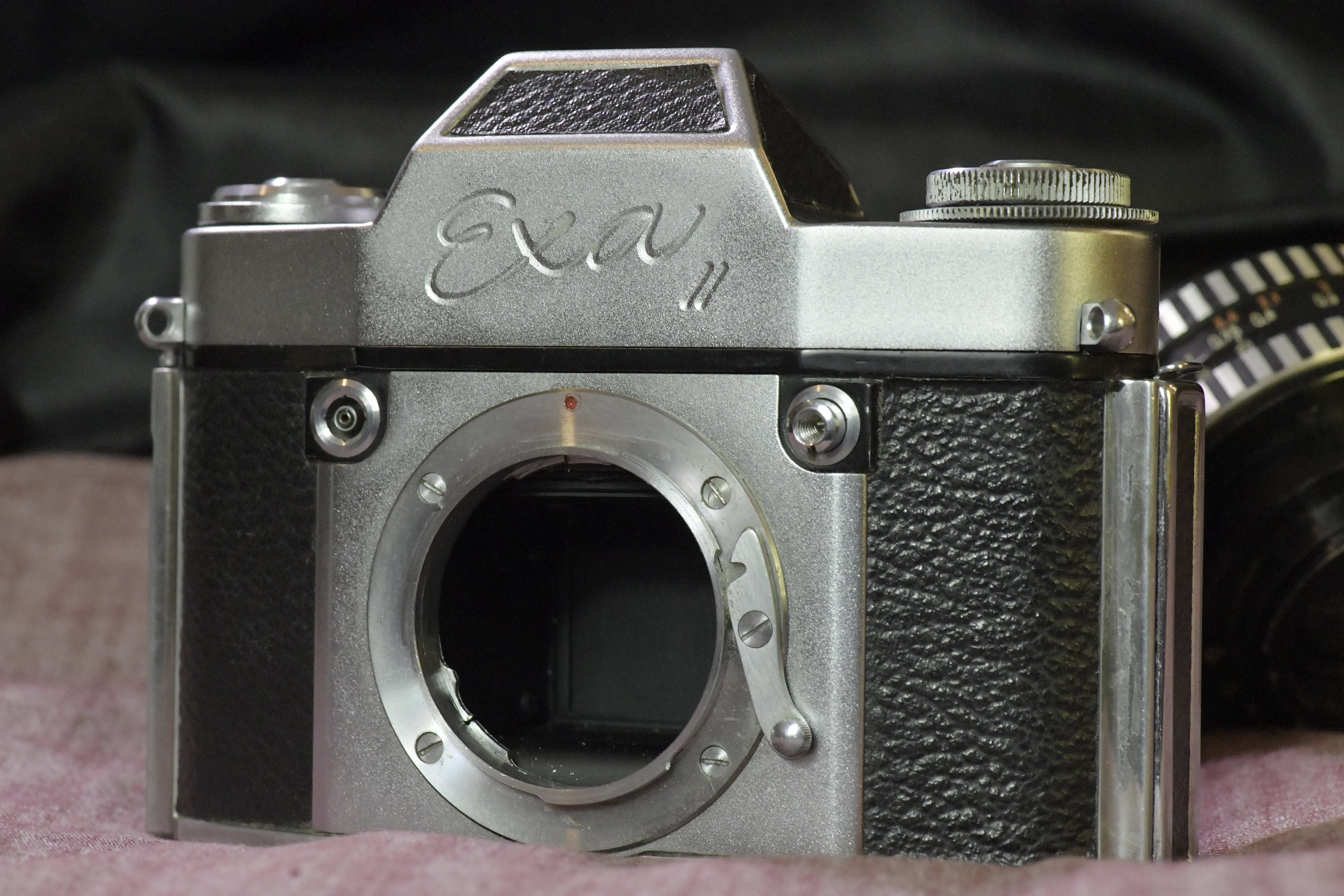
Cameras adopted by professionals
Until the 1960s, Exakta SLR cameras were considered the benchmark for this type of camera (in terms of build quality and system modularity).
Nikon then took over this position by offering more technically advanced and equally reliable cameras.
The Exakta Mount
The Kine Exakta uses the Exakta mount created for the occasion. This mount would be used for over 40 years, from 1936 to 1977.
A widely used mount
The Exakta mount was used by many lens manufacturers (Carl Zeiss Jena, Schneider-Kreunznach, Angenieux, etc.).
Although only one other manufacturer produced cameras using this mount (Topcon), the Exakta mount, and more generally the Exakta system, were a source of inspiration for other SLR manufacturers (Nikon, Canon, Pentax, etc.).
How does the Exakta mount work ?
The Exakta mount obviously does not have all the refinements of those that would follow (Nikon F, Pentax K, and others), but it is nonetheless functional and its ingenuity can be appreciated.
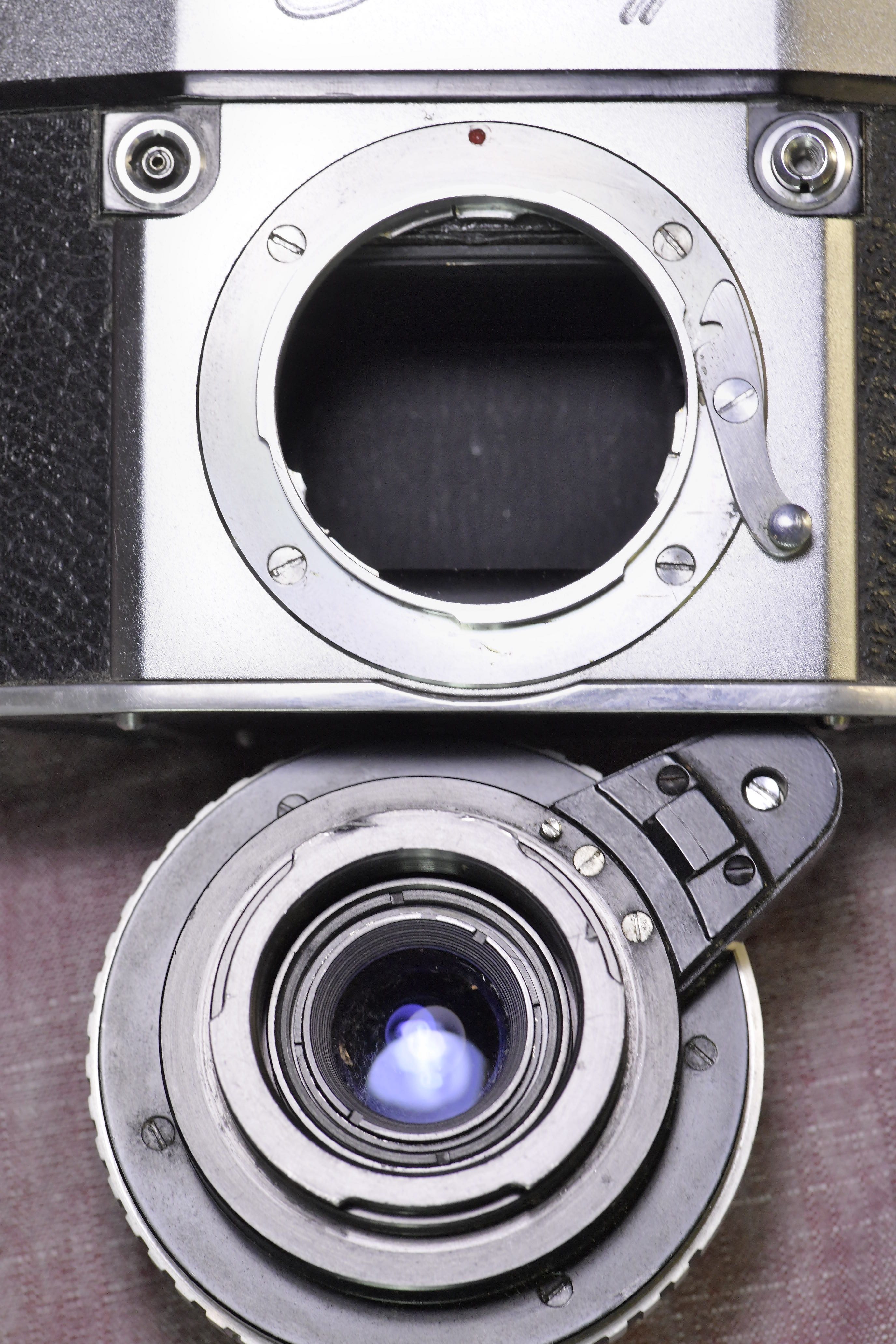
A bayonet mount
This type of mount allows for faster lens changes and limits the risk of play between the lens and the mount.
Diaphragm closure upon release
To ensure that the focus screen is sufficiently clear, the lens diaphragm needs to be fully open.
However, having to close the diaphragm each time before taking a photo is impractical.
The level of precision required in the industry made it difficult to implement an integrated system that would connect the lens and its diaphragm to the camera, such as the one used in the Nikon F.
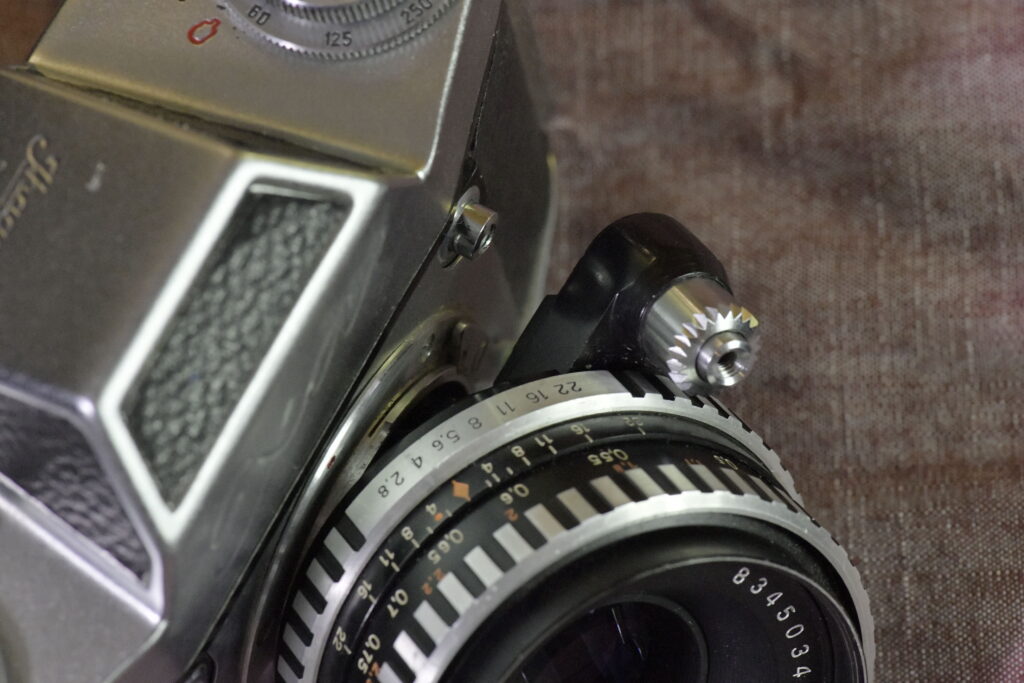
Ihagee nevertheless came up with a simple and elegant solution.
A button on the lens allows the diaphragm to be closed…
…and pressing this button also presses the shutter release button located behind it.
End of the Exakta mount
The Exakta mount will finally become obselete as more advanced mount suited for being used with a pentaprism were created.
Sources :
[1] http://www.ihagee.org/History/art252-ExStory76.pdf
https://ihagee.org/History/exagese2.pdf «Finally, the factory was completely destroyed during the air strike on Dresden on February 13, 1945.»
https://en.wikipedia.org/w/index.php?title=Johan_Steenbergen&action=edit&redlink=1
https://fr.wikipedia.org/wiki/Ihagee
https://www.exaktacircle.org/cameras.html#35mm – Liste des modèles Exakta produits.



Leave a Reply