

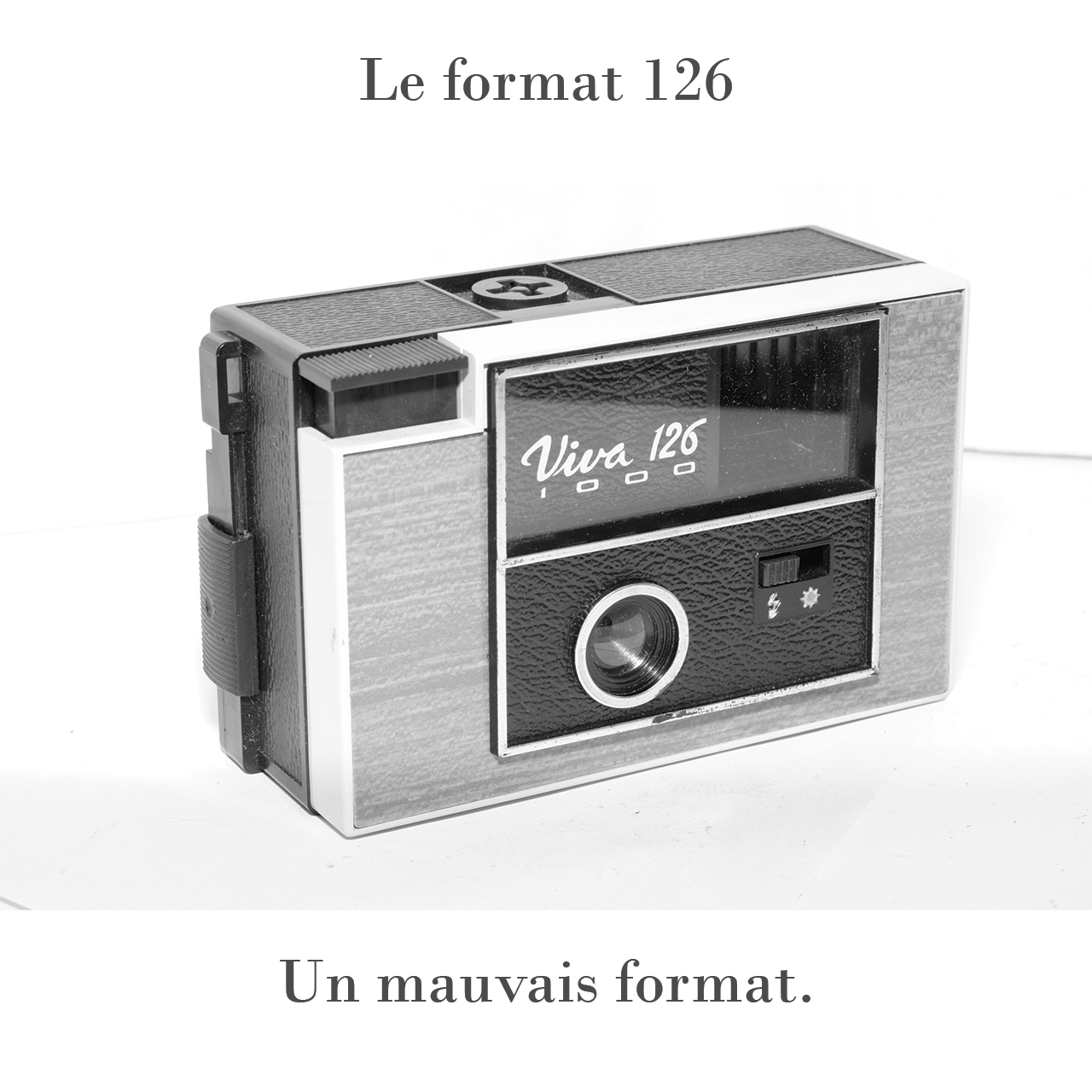

A format that no longer exists
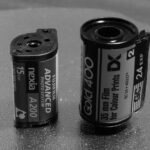
126 format film was produced from 1963 to 1999. It was a low-end format intended for amateurs with no knowledge of photography.
It offered poor image quality due to flatness defects that significantly affected image sharpness.
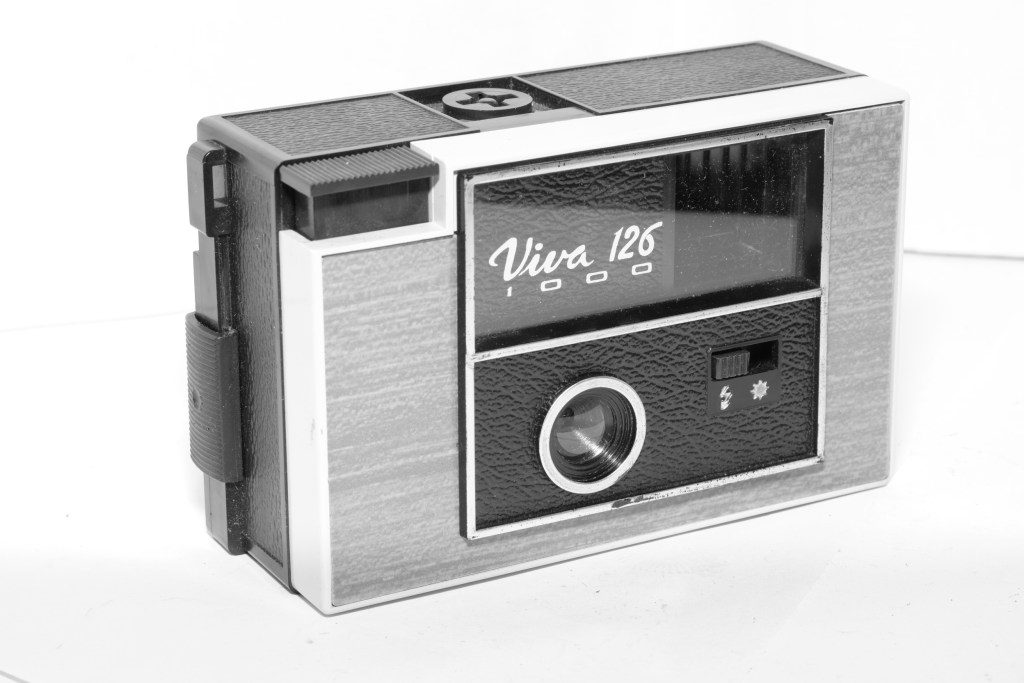
The best-known 126 format camera is the Kodak Instamatic, but there are other cameras that use this format, such as the Viva 126.
The camera has only two speeds and no focus, prioritizing ease of use.
Technical specifications
Sensitive surface height is the same as for the classic 35mm format. This was convenient for manufacturers, who only had to change the distance between the perforations and put the film in an integral cartridge.
The 126 format produces square images measuring 28x28mm.
The perforations differ from 35mm: they are much further apart for the 126 format (one perforation per frame for 126 versus 8 per frame for 35mm 24x36mm).
Like the 110 format, the cartridge covers the entire film, which greatly simplifies things for users who are not very knowledgeable about photography. All they have to do is insert the cartridge and shoot, then send the cartridge to the lab once it is fully exposed.
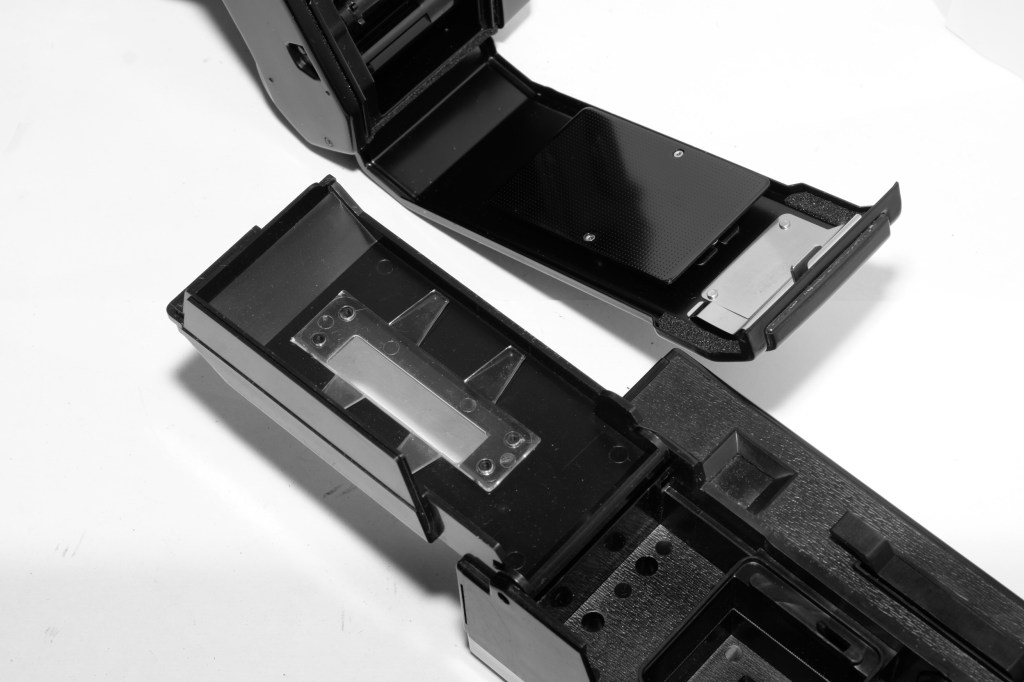
Unlike conventional 35mm cameras, 126 cameras do not have a plate to flatten the film.
A format known for flatness issues
The single-perforation cartridge system used by the 126 format does not guarantee film flatness that is acceptable to even the most undemanding photographer.
This causes significant sharpness defects in the image.
35mm film can be converted to 126 format
If you are not put off by the low quality of this format, there are tutorials on the internet explaining how to create film that can be used in a 126 format camera from standard 35mm film.









Leave a Reply