


Producing a Photograph Is Not Just Pressing a Button
We can divide the production of a photograph into multiple steps.
- Preparation
- Shooting
- Selection
- Post Processing
- Finalizing
I am Rayhan Rahim Khan, a fine art photographer. During my years practicing photography, I learned the importance of preparation to create successful photographs.
In this post we’ll break down the first step which is the preparation.
The Preparation
In this post we’ll go through the scouting step, then, we’ll see what you should prepare to get the best pictures once the scouting is done.
Scouting
That being said, preparation is of course not necessary to take pictures. I’ve taken a lot of my best photographs with no precise idea or route in mind.
But In fact, these first pictures can be considered scouting or observation, and therefore part of the preparation work.
Because when I am not satisfied with a picture (because of poor framing, composition, focal length, time of the day, etc.), which happens often, I go back later with a proper plan to get the photograph I want.
I think this is the most efficient way to do it. Go on location with a clear mind, observe, maybe take some shots, think about it, and go back another day to take the perfect picture.
If you cannot do scouting on location, you can still use google maps or streetview. But being there in person will allow you to gather more information and have a more concrete and extended idea of your subject.
The Scouting is the Biggest Part
After scouting, you’ll know what your objective is. You won’t wander around searching for a good subject on the day of the shoot. You’ll go straight to it because you have already seen it and know where it is.
It’s like life: once you know where to go and what you want, everything becomes easier.
Anticipate What You Are Going to Do
After the observational step, you can start drawing conclusions about how you are going to photograph the location.
The less you have on your mind once on location, the more you can focus on your subject and the better your photographs will be.
Gear
The most evident part is the technical side. Such as, choosing the right lens or the right film speed. Here you want to be sure to not find yourself unable to take the picture you want because you don’t have the right gear.
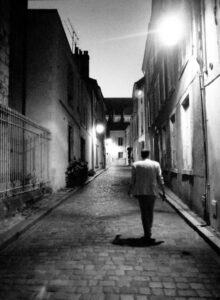
For example, if the location has narrow streets, you’ll need a wide angle lens. If you plan to shoot extensively, take more batteries and film. If it’s night, you may need a tripod.
Environmental Factors
That leads us to environmental factors that can dramatically change the quality of your pictures.
Choosing the day or the hour you’ll shoot can greatly improve the quality of your photographs.
So make sure to check the weather forecast, how busy the area is and other environmental factors.
I will give you two concrete examples of how choosing the right time can improve or spoil your photographs:
Orléans Cathedral and the Night
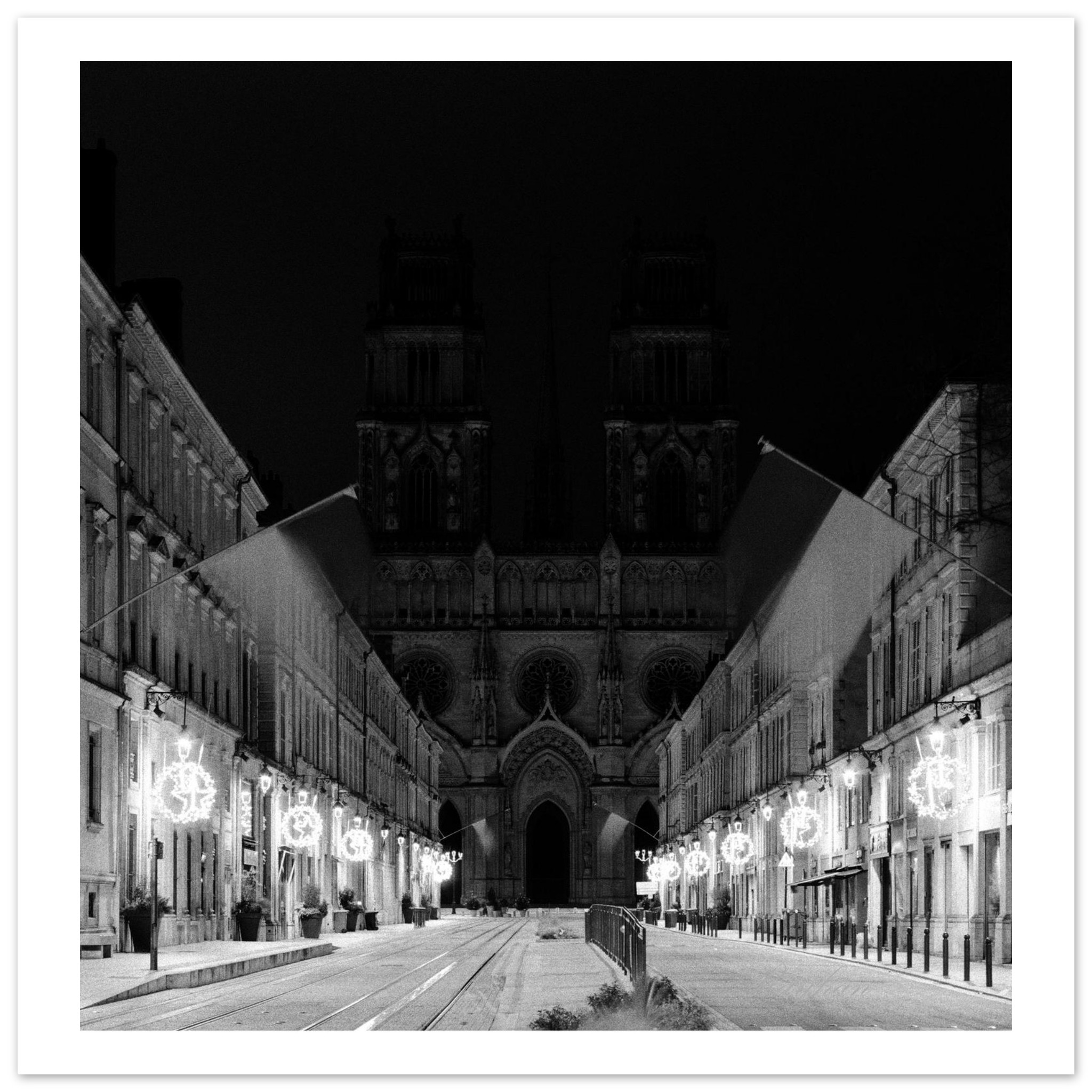
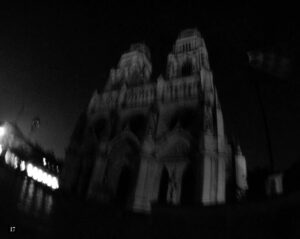
Before taking this photograph of the Cathedrale d’Orléans, I knew it was unlit late at night and therefore I would have this contrast between the darkness of the edifice and the lit street. If I had come earlier in the night or during the day, I would have ended up with an ordinary and less interesting photo.
Garbage Collection Day
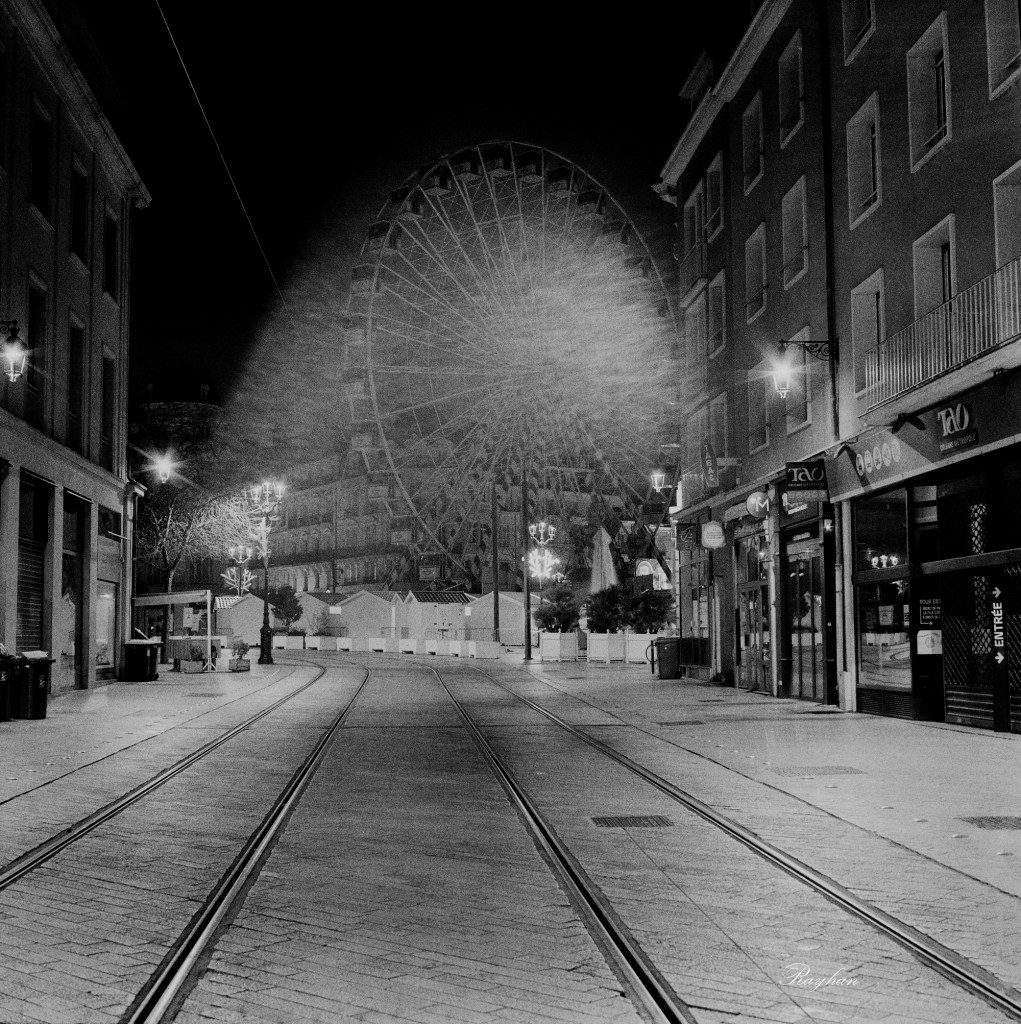
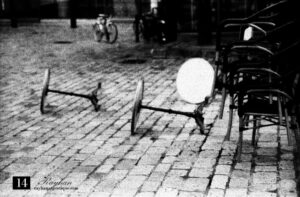
On the contrary, here, I made the mistake of going out on garbage collection day, and thus ended up with unsightly trash cans in my photograph.
More Examples on ElectroCroissant
I have plenty of other examples where just choosing the right day and the right hour radically changed the picture I got. If you’d like me to analyze my pictures in depth, I do that on ElectroCroissant in the Contact Sheets posts.
The weather, the season, the hour of the day, foot traffic, all these factors can dramatically change the quality of your photographs. Do not neglect them.
And the more you’ll know the location, the more you can anticipate how they’ll change under specific circumstances.
The use of the Photographs
Another thing is what you intend to do with your photographs.
For example, if you are planning to make a book, you may want to shoot specific details or close ups that you won’t need if you are only planning to make prints.
Or if you’re taking photos for Instagram, you want to avoid complex composition that can’t be appreciated on a phone screen.
Conclusion: Be Prepared… But not Too Much
In conclusion, I would say that a good preparation should ease your mind while shooting, but not be invasive. Anticipate to avoid problems that will prevent you from expressing your vision but always keep your mind open once you’re on location. Some opportunities may appear and you don’t want to miss them because you are clinging to a plan.
If the subject of creative process and compositon interests you can read educational posts named Contact Sheets on ElectroCroissant for 8 dollars a month. You can also access all my work as a fine art photographer on this website.
Read an excerpt of the first contact sheet.
Corresponding video on the youtube channel (there are some variations, though): https://www.youtube.com/watch?v=In94G1A35-A

Leave a Reply