

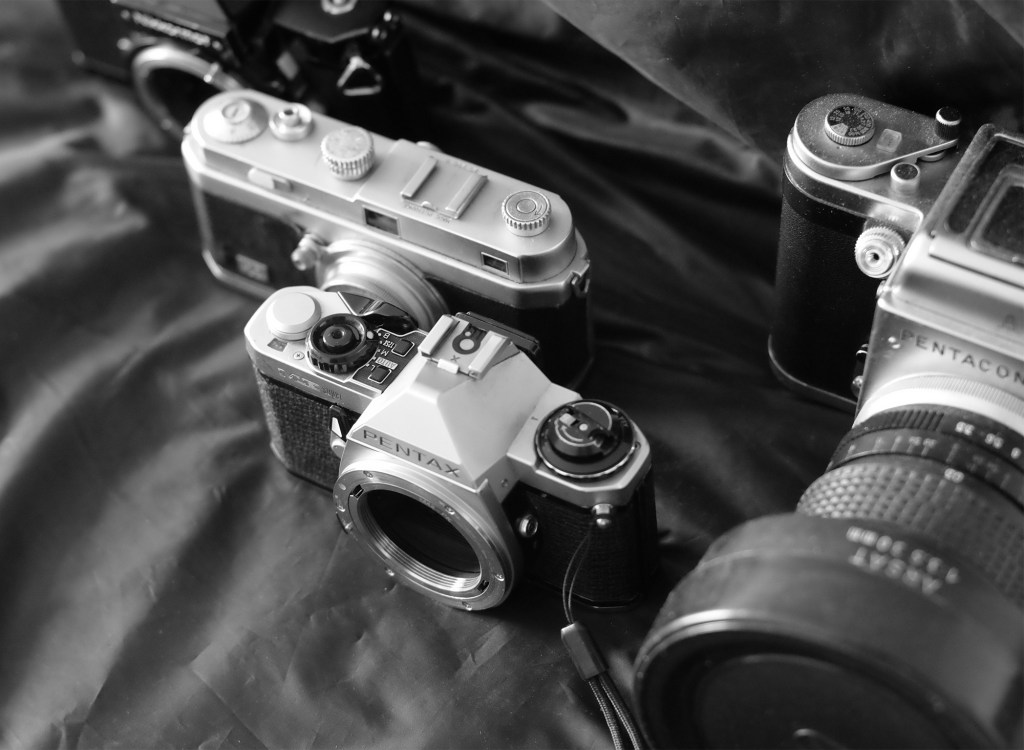

Dozens of cameras and lenses
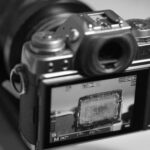
Over the last four years I have used dozens of cameras and lenses, trying to find the best tools to express my vision as an artist.
In this post, I will try to find if this intensive search for gear has benefited my photographic work or, on the contrary, has been a waste of time.
My “gear journey”
I started with digital cameras (Nikon D3500 and D7100) but quickly realized I preferred analog photography after trying a Nikon F80. Later, using a Nikon FG, I discovered that I actually preferred manual SLRs.
From there, I’ve used multiple manual 35mm cameras such as the Leicaflex, leica R4, Nikon FM, Nikon FT2, Pentax SP, Pentax ME Super and Fujica ST705. I’ve even used a Foca PF2 35mm rangefinder.
Was all this back-and-forth useful and necessary?
Is there a big difference between using a Nikon, a Pentax, or a Fujica that would justify the hassle of switching cameras? Was image quality better or just different?
In hindsight, I think I wasted a lot of time and energy over-optimizing things.
Thus I decided to try medium format photography.
I started with a Pentax 645 -which I abandoned quickly because I disliked the motor noise-, bought a Fujica GS645W out of opportunism, then replaced the Pentax 645 with a Pentacon Six, then replaced the faulty Pentacon Six with a Kiev 6. And after a short time I finally decided to invest in a Bronica EC TL and stick with it.
After a few months, I sold the Bronica because I needed money and was frustrated by the lack of sharpness of my handheld photographs with it.
Obviously, I lacked a clear idea of what I wanted. Had I defined my needs more clearly from the start, I would have ended up with the right camera much earlier.
Useful or a waste of time?
My assessment is nuanced.
In a way, I wasted a lot of time with “horizontal changes” that made me switch from one camera to another without any improvement. The same goes for my inability to determine what I needed and my bad habit of trying everything that came my way.
All this fuss cost me a lot of time and energy. In the end, I think I missed some great photographs because of the hassle of adapting to new gear so often.
But on the other hand, these changes were useful. Switching to medium format obviously improved the resolution of my photographs and allowed me to crop as I wanted or achieve decent handheld night photos.
Trying all these cameras and lenses also allowed me to figure out what I really wanted to use.
To summarize, I would say changing gear is a good thing when it is a thoughtful decision. It should clearly improve image quality or provide you with a feature you need and don’t already have (such as telephoto or macro lenses).
Nevertheless, I think I made a mistake by devoting all this energy to gear. It would have been better spent learning skills like creativity and composition, which would have improved my photos much more quickly and dramatically.
Gear is secondary, skill is what matters
In my case, I think I got caught up in the marketing of big companies that greatly exaggerates the importance of gear in creating a successful photograph.
Great images come from the photographer’s eye. It is all about skill. Decent gear is more than enough to produce great images. You can have the greatest camera or lens, but if you don’t know what you’re doing, you’ll take bad photographs.
This is why I created ElectroCroissant.Art: to teach skills in creativity and composition in photography.
And that will be my conclusion: if you want to create great photographs, work on your skills. It’s probably all you need.


Leave a Reply