


Complications ?
In watchmaking, a complication refers to anything added to a watch’s basic function of telling time (such as indicating the temperature, tides, etc.).
In film photography, a complication could be anything added to the film advance and shutter functions (mirror lock-up, aperture closing on shutter release, and so on).
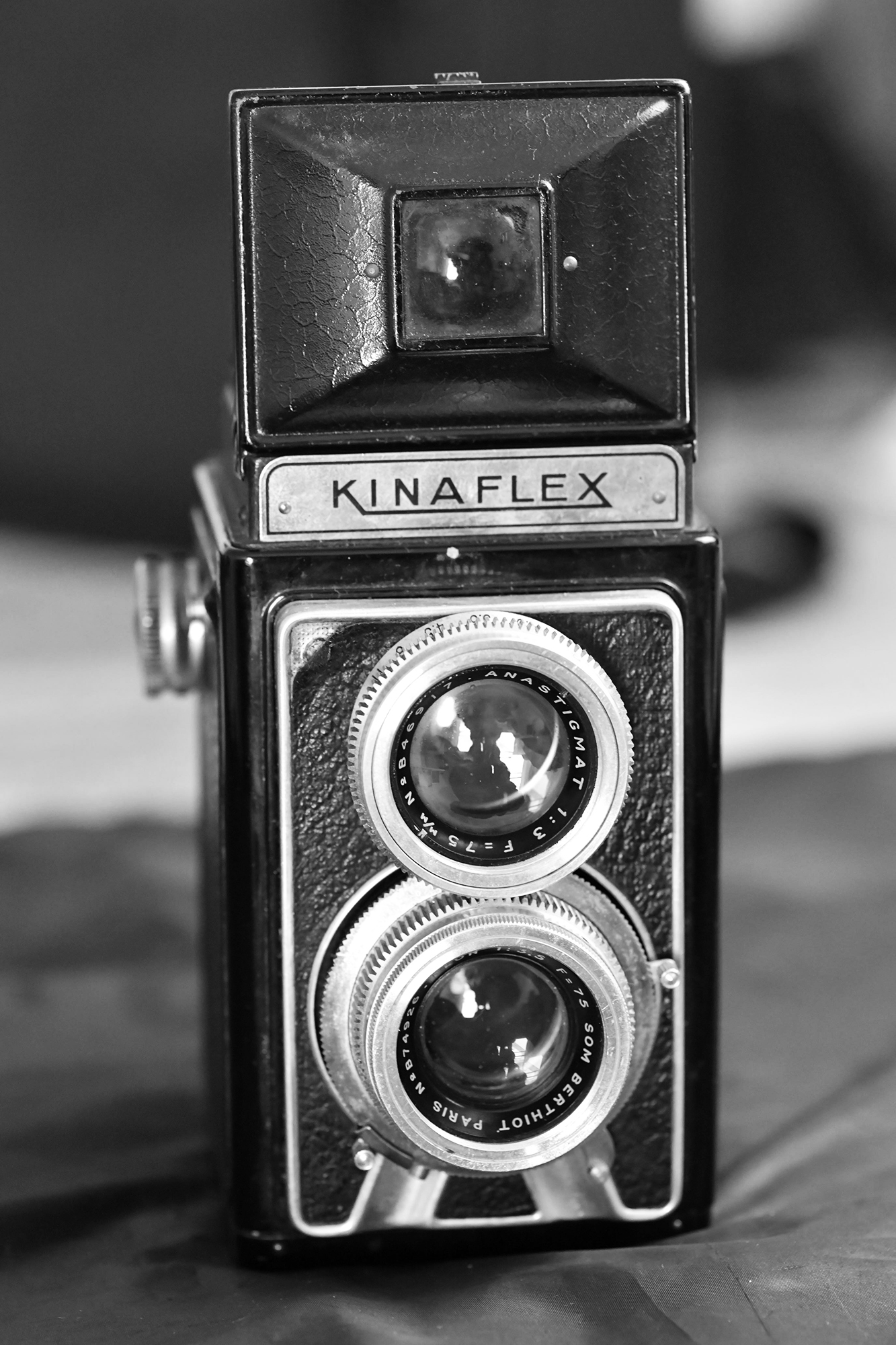
The Kinaflex
It would be wrong to say that this 1950s camera, manufactured by Atoms for Kinax, is devoid of complications: it does include features for framing and focusing.
Nevertheless, it remains a camera of simple construction, and therefore robust and reliable.
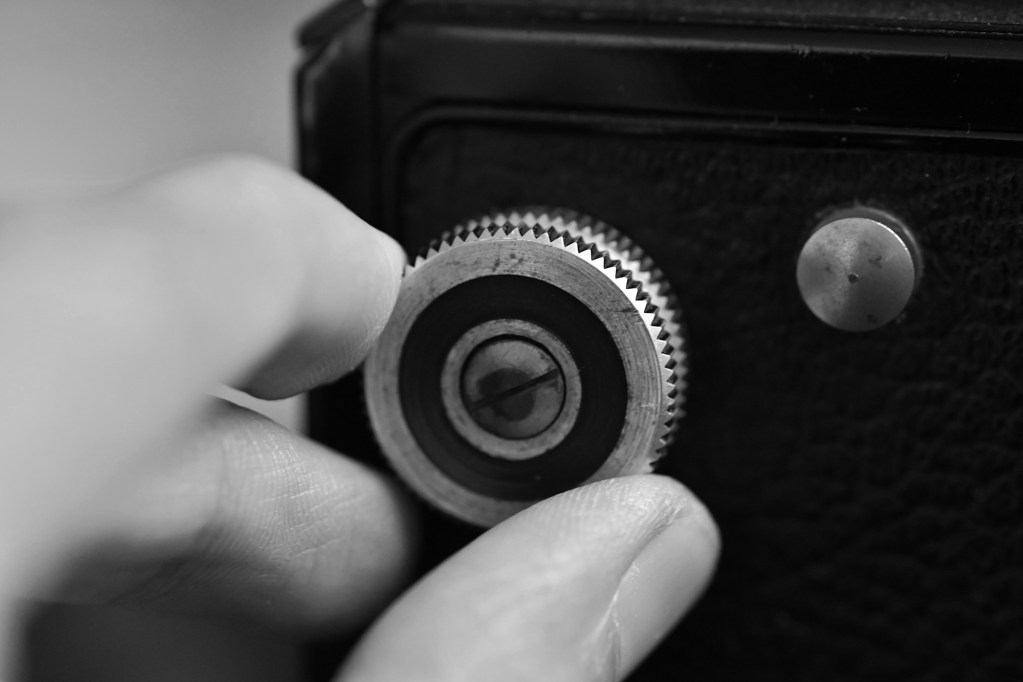
We turn the wheel to advance the film,
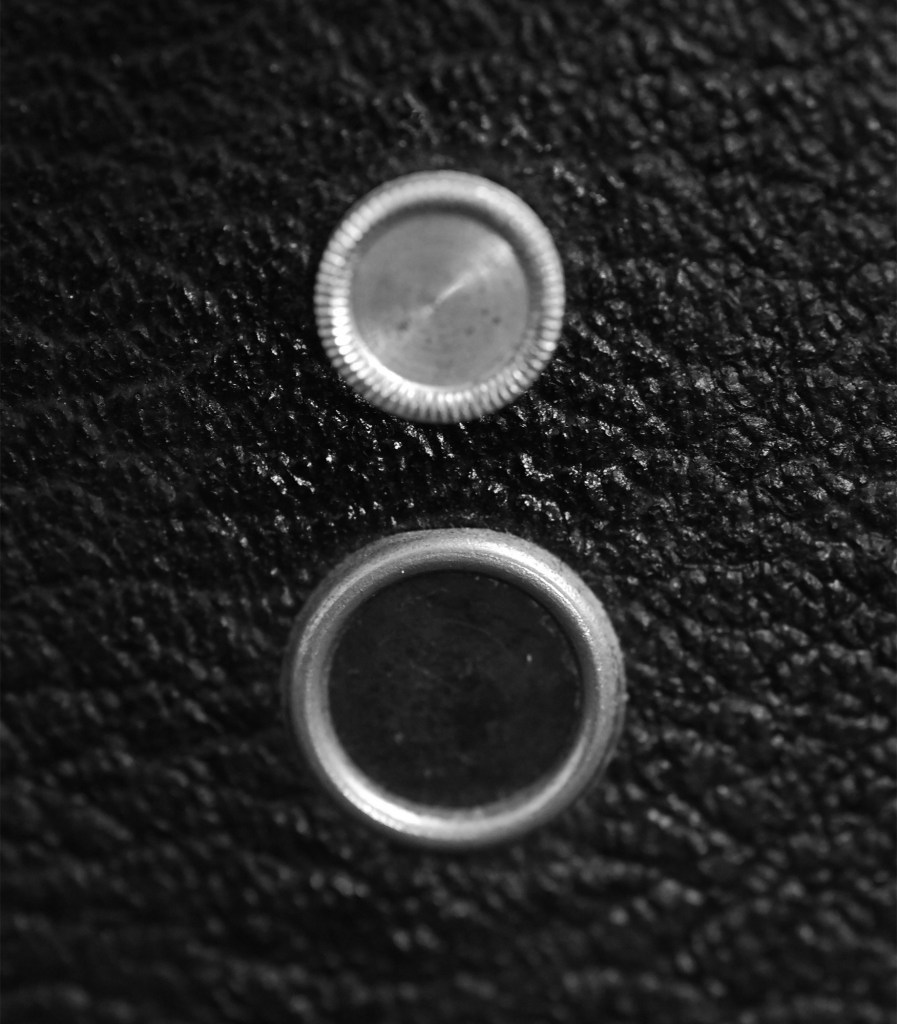
Then we check if we have advanced it far enough using the small window at the back.
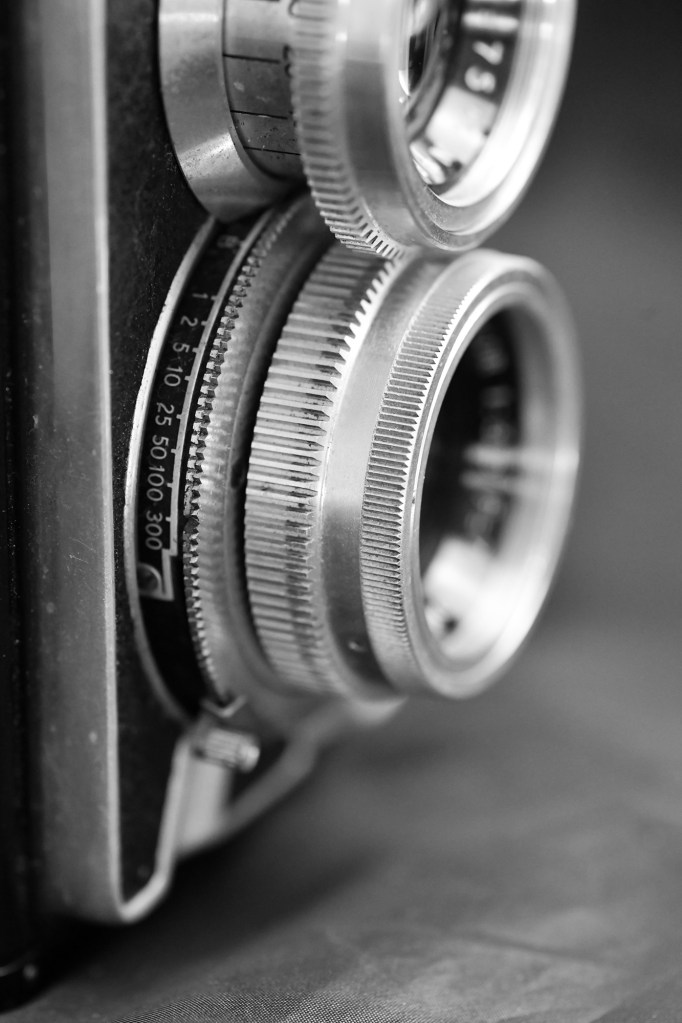
The maximum shutter speed is 1/300th of a second.
The two lenses are coupled so that focusing only needs to be done once.
A learning curve
If you are switching from a standard 35mm SLR to a Kinaflex or other twin-lens camera, you will struggle at first.
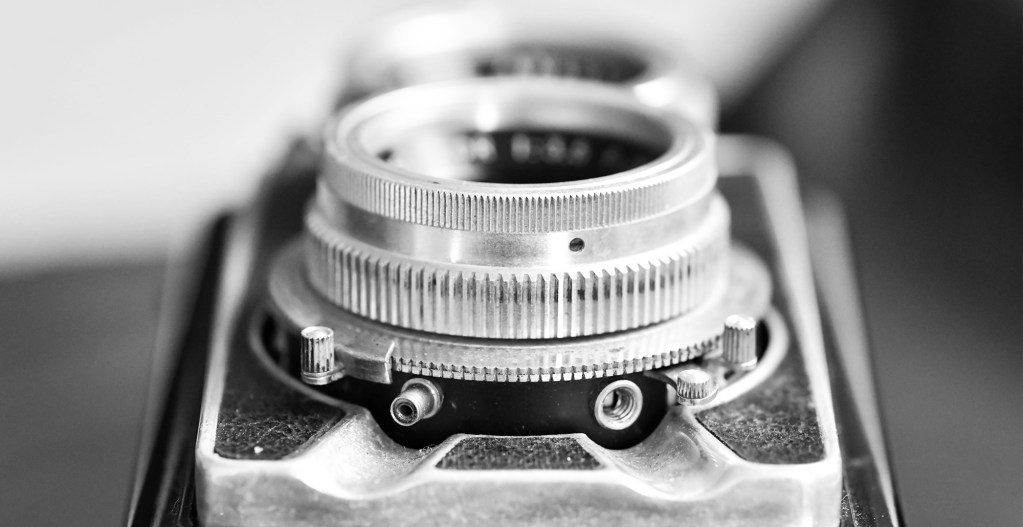
The controls (aperture, cocking, speed selection, shutter release) are grouped around the lower lens, which can be confusing.
Otherwise, if there is something magical about seeing the image form directly on the ground glass, the image is reversed, which requires an adjustment period.
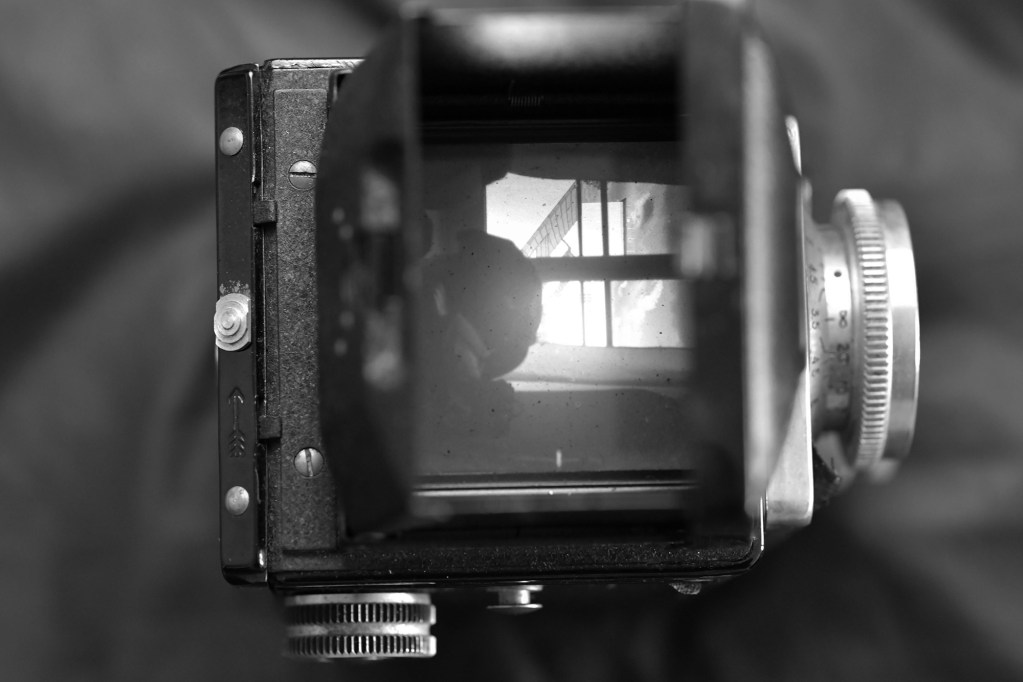
Left and right are inversed on the ground glass.
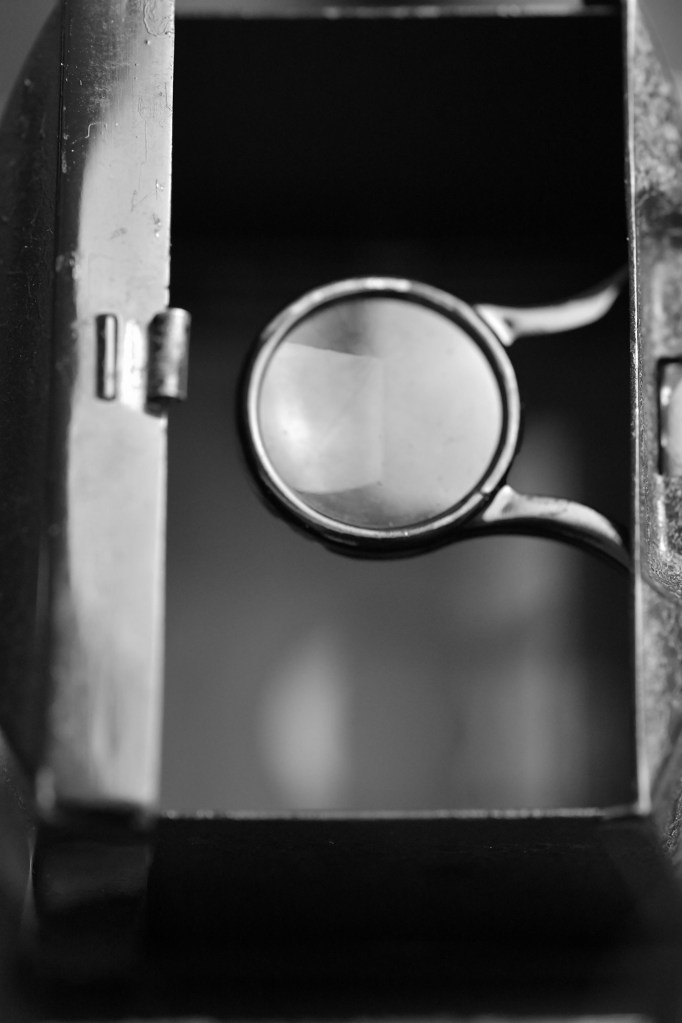
A small magnifying glass is included to help with precise focusing.
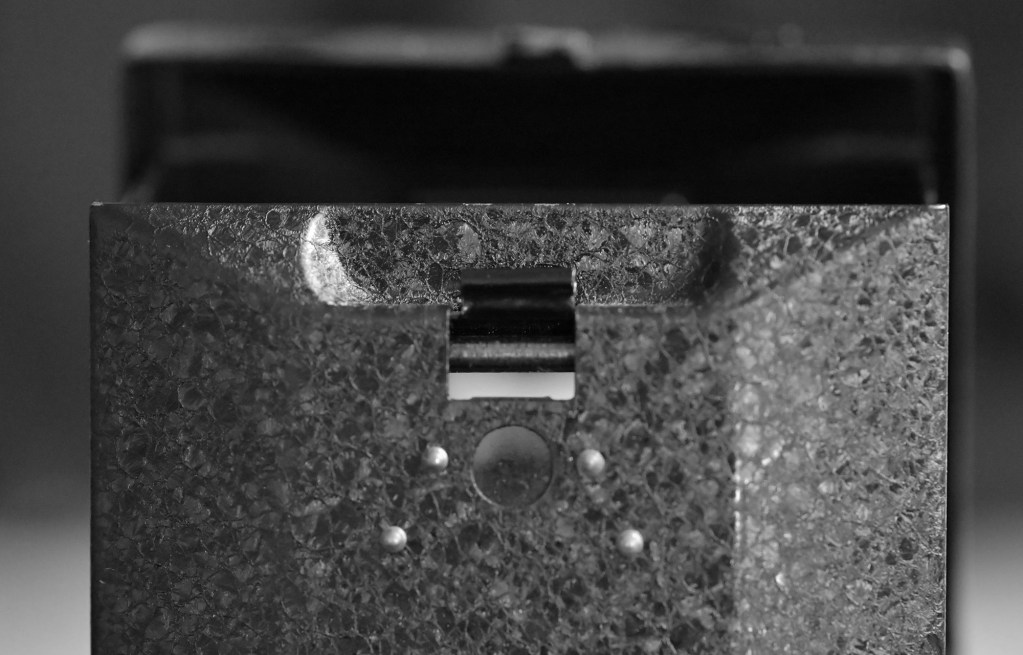
The Kinaflex also has a basic external viewfinder which does not have the drawback of inverting the image.
Image quality
The lens is a Berthiot 75mm “Flor” F3.5 manufactured by Berthiot Paris; it is a Tessar that doesn’t say its name.
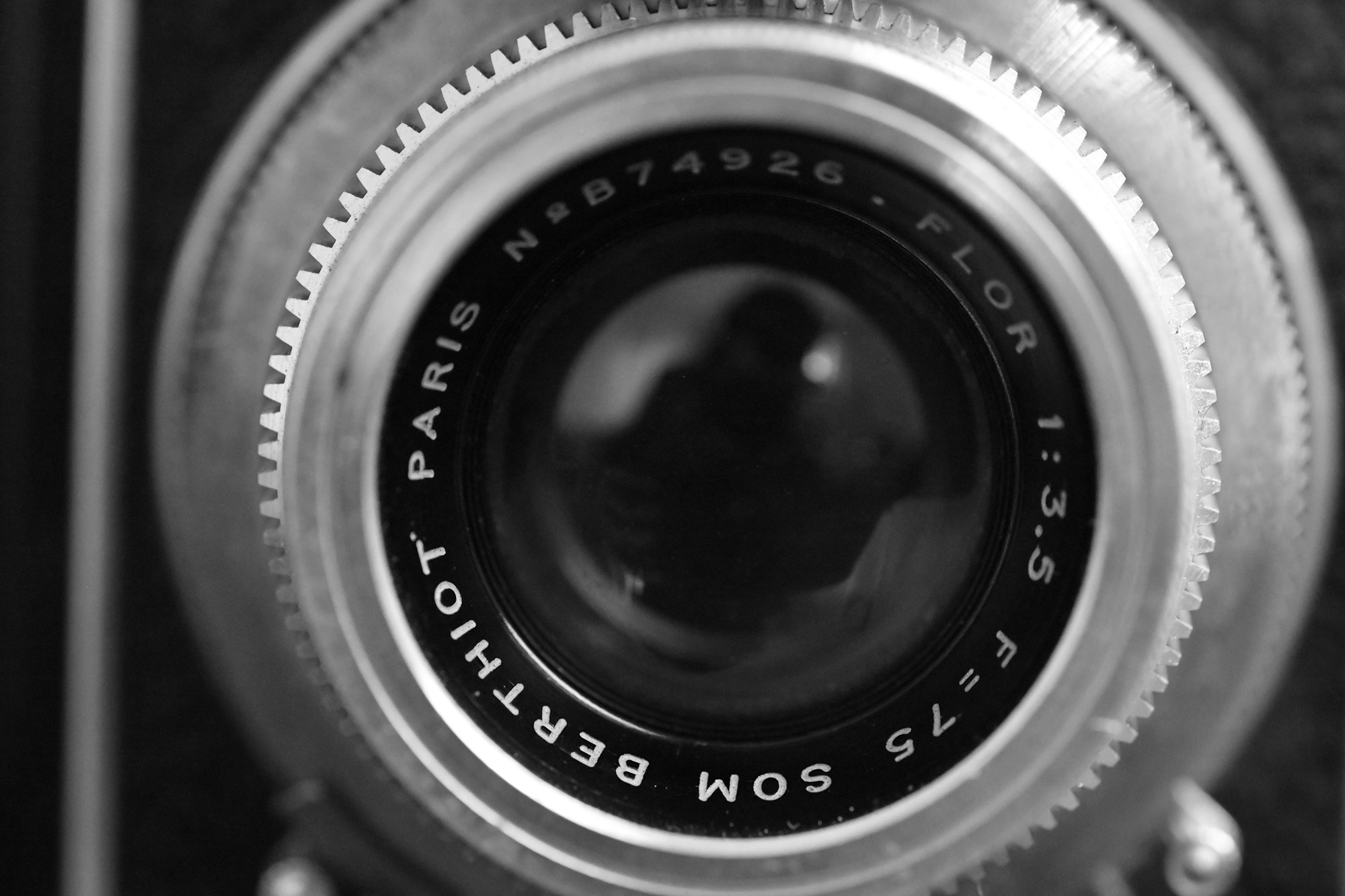
There are some shallow micro-scratches on my camera lens, but the lens performance remains satisfactory.
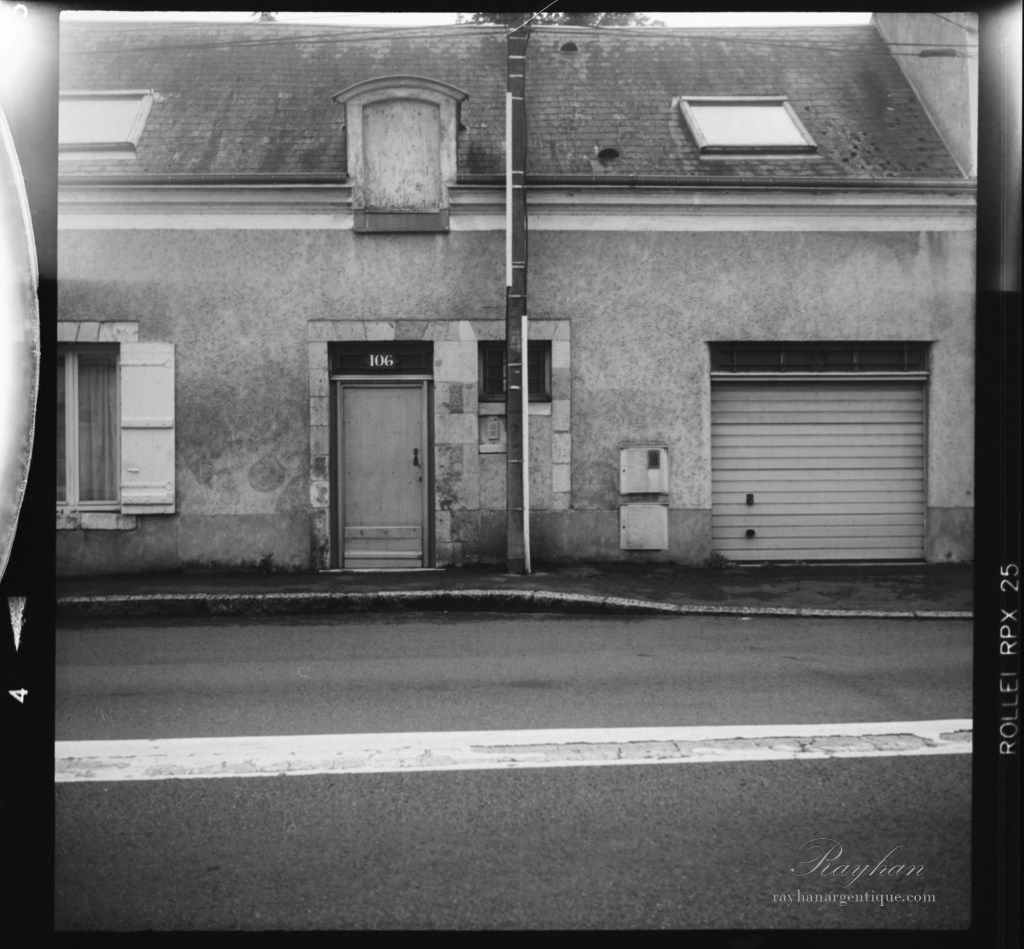

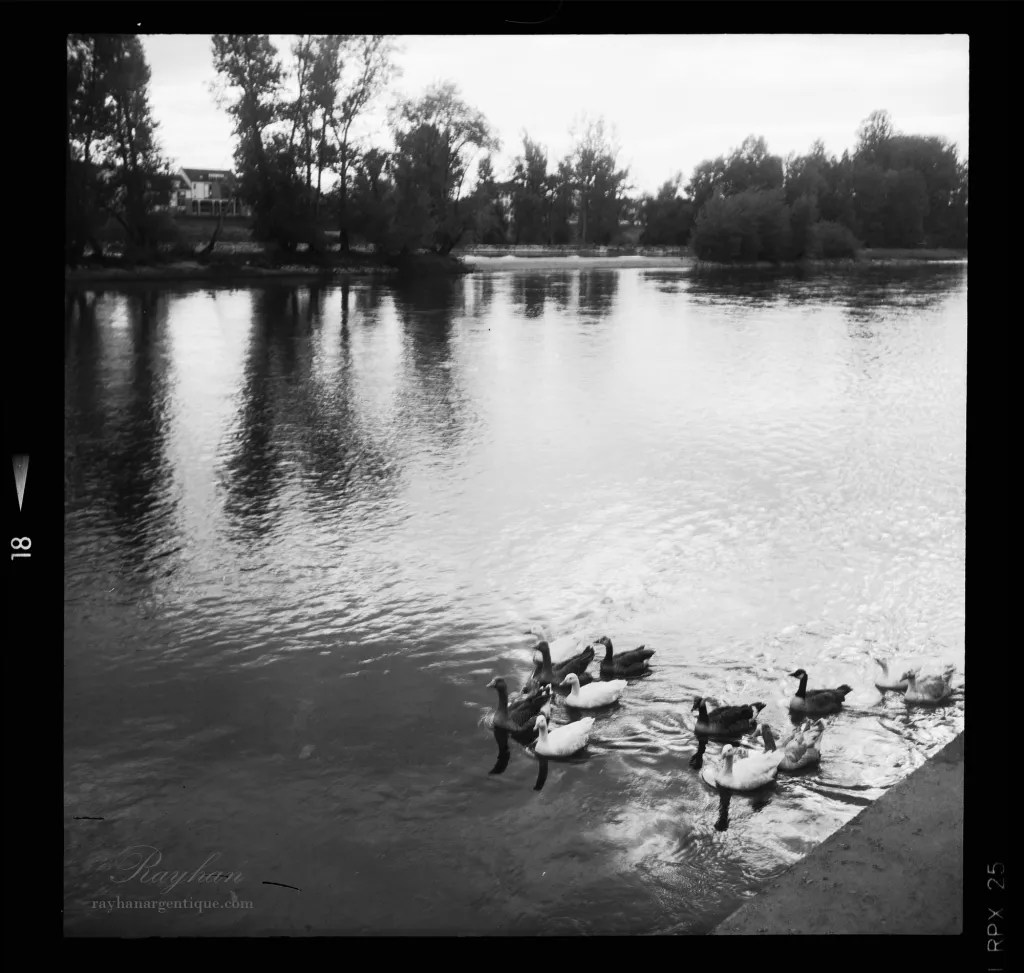
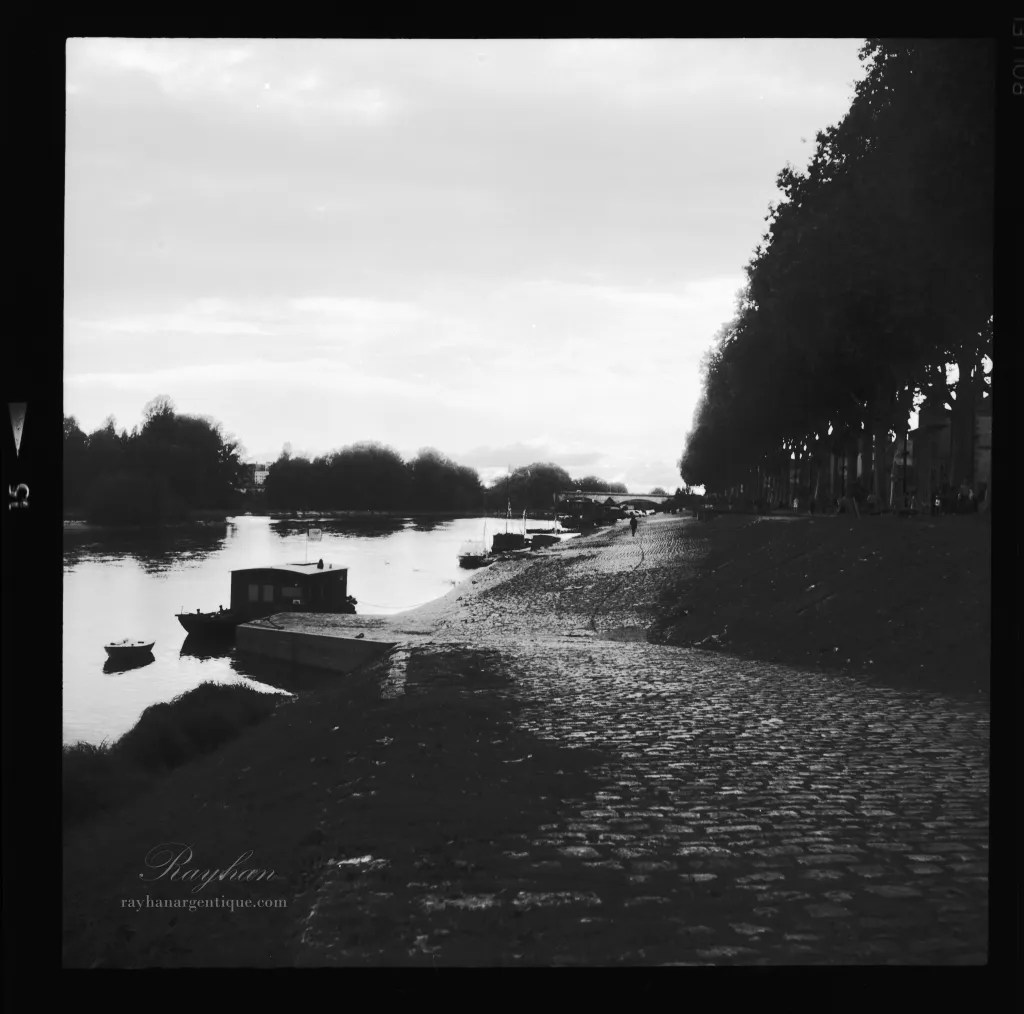
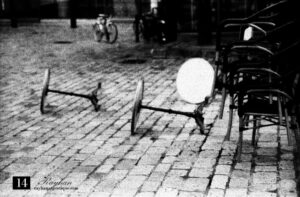
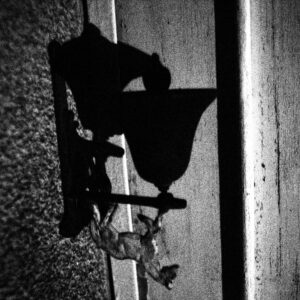
The slight blurring effect on some images is more due to the use of slow shutter speeds than to poor lens performance.






Leave a Reply