

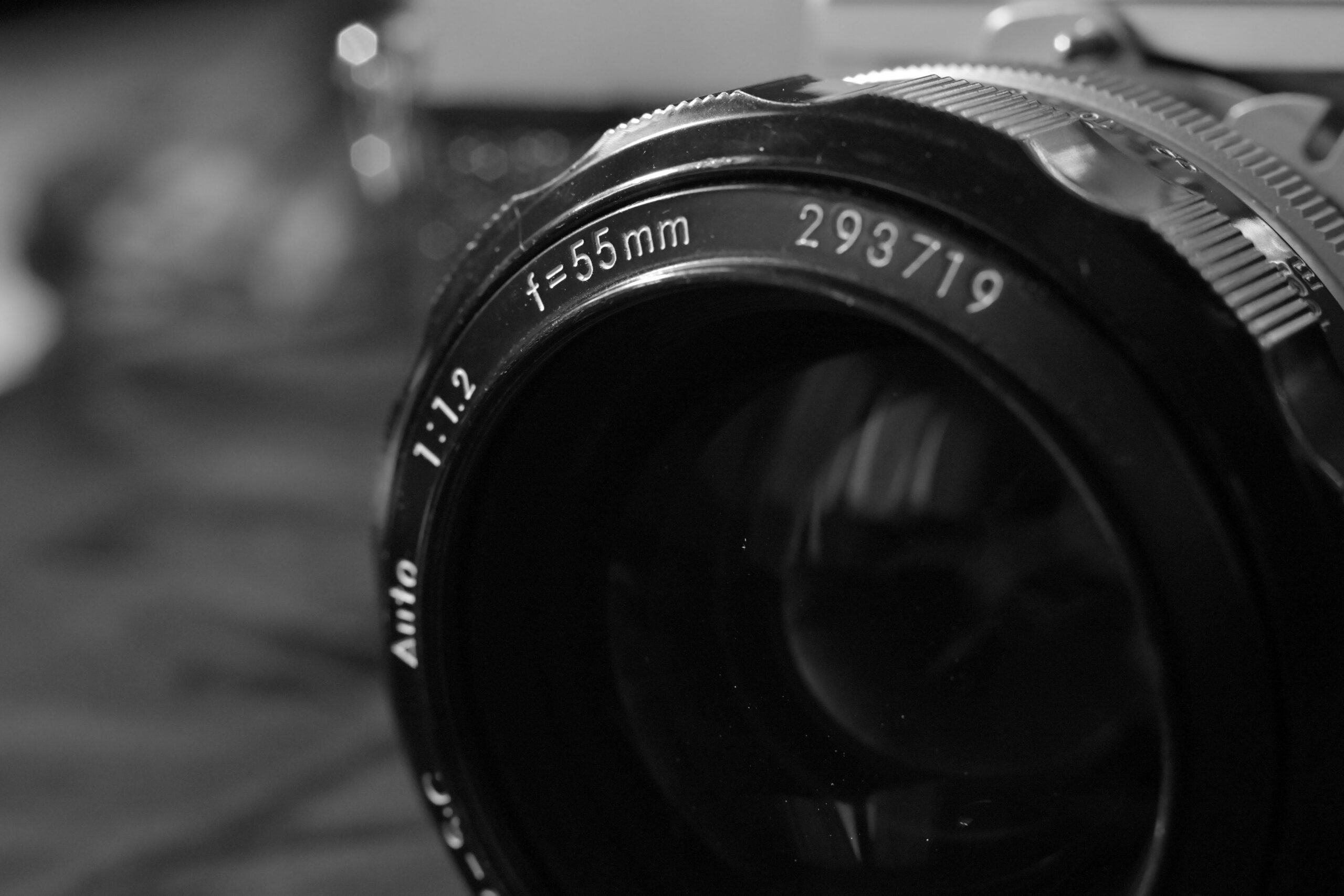

Evolution of the 55mm F1,2
Nikon produced 55mm f/1.2 lenses from 1965 to 1978.
This range underwent several changes, the most notable being the adoption of a multi-layer anti-reflective coating to improve optical performance in 1972 [1].
This range was subsequently replaced by the 50mm f/1.2 and the rare and expensive 58mm f/1.2 Noct.
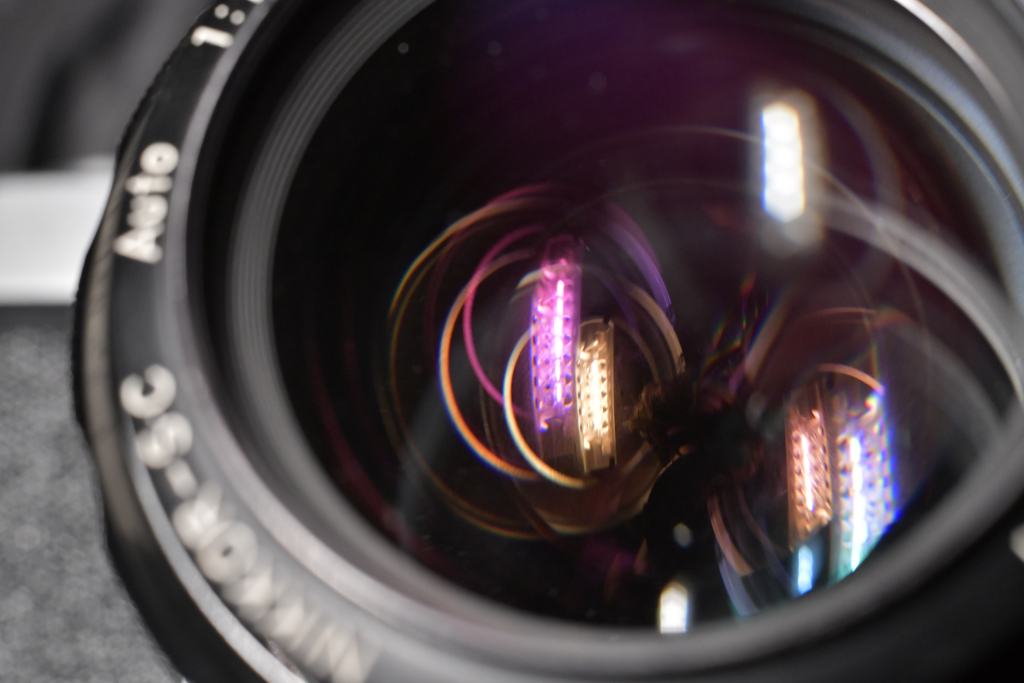
As indicated by the “C” for “coated,” my copy, produced between 1972 and 1974, has several anti-reflective layers.
The advantage of a f1.2 lens
Having such a large aperture does not come without compromising sharpness. And that is obviously not why you buy such a lens. You buy it to achieve background blur similar to what you can get with medium format, or to achieve decent shutter speeds at night.


A compact lens


Comparison with a 50mm f2 above/next to it.
Despite the size of the lenses, the lens retains the same filter diameter commonly used by Nikon and is easy to handle.
The performance of the lens
A reasonable minimum focus distance


The minimum focus distance is 0.6 meters.
It’s not the most impressive feature, but it’s still reasonable for photographing fairly large flowers.
By way of comparison, a Nikkor 50mm f2 has a minimum focus distance of 0.45 meters.
A good definition when the diaphragm is closed beyond f2.8


As you can see in this image taken at f5.6, the definition is good when you take the trouble to close the diaphragm.
Image taken with a digital camera. I think the lens performs much better with film.
A very interesting rendering at full aperture


I should point out that what I am writing here applies to the use of the lens with film cameras. I was much less impressed with the lens’s performance with digital cameras.
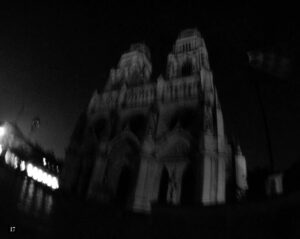
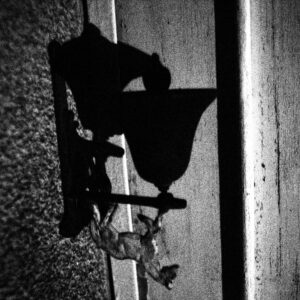
The images at f1.2 are therefore perfectly usable and interesting from an artistic point of view. There is little or no vignetting, and the image is sufficiently sharp.
Versatile
The Nikkor 55mm f/1.2 lens offers two types of rendering: soft and low contrast at full aperture, and sharper when stopped down beyond f/2.8.
Comparison with other standard lenses
For standard focal length in 35mm format, I mainly used a Leica Summicron R f2, a Zenitar – M 50mm f1.7, and a Nikkor 50mm f1.4, all of which are excellent lenses.
While it may not rival them in terms of sharpness and may have more flaws (chromatic aberrations, coma, etc.), the Nikkor 55mm f1.2 offers appreciable versatility.
It can produce two types of rendering: soft and low contrast at full aperture, and sharp when closed beyond f2.8. The quality of the images obtained and the larger aperture (very practical for night photography in particular) make it a very interesting alternative. As for optical flaws, they won’t be a problem if you shoot in black and white.









Leave a Reply