

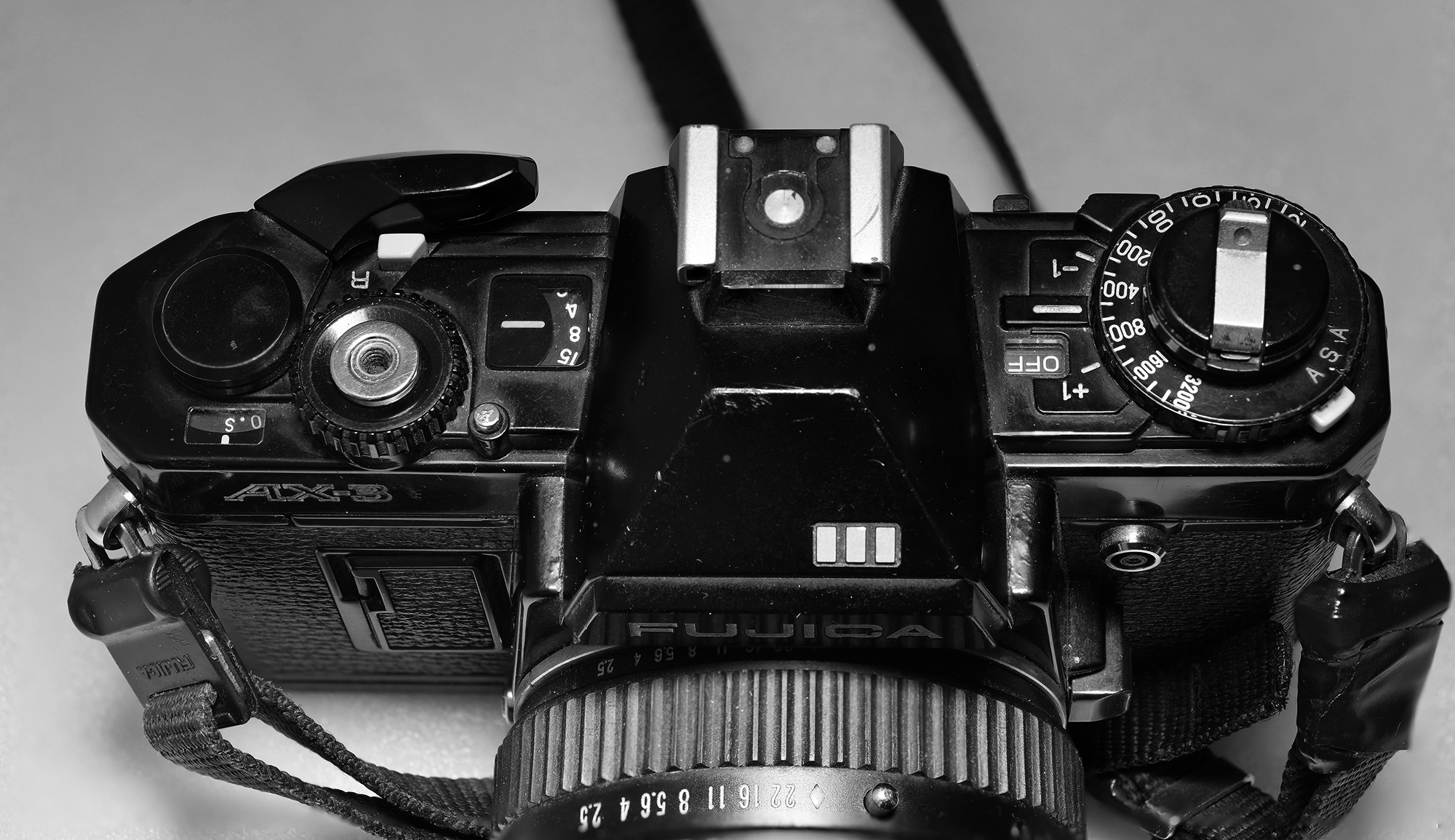

The Fujica X system
The Fujica AX-3 is an SLR camera released in 1980. It abandoned the M42 mount used by previous Fujica models and instead used new Fuji’s proprietary X mount.
Unfortunately, cameras using this mount were not very commercially successful, and the last camera using it was released in 1985.
This means that lenses using this system are not common and can be difficult to find (unlike the Nikon F or Canon FD systems, for example).
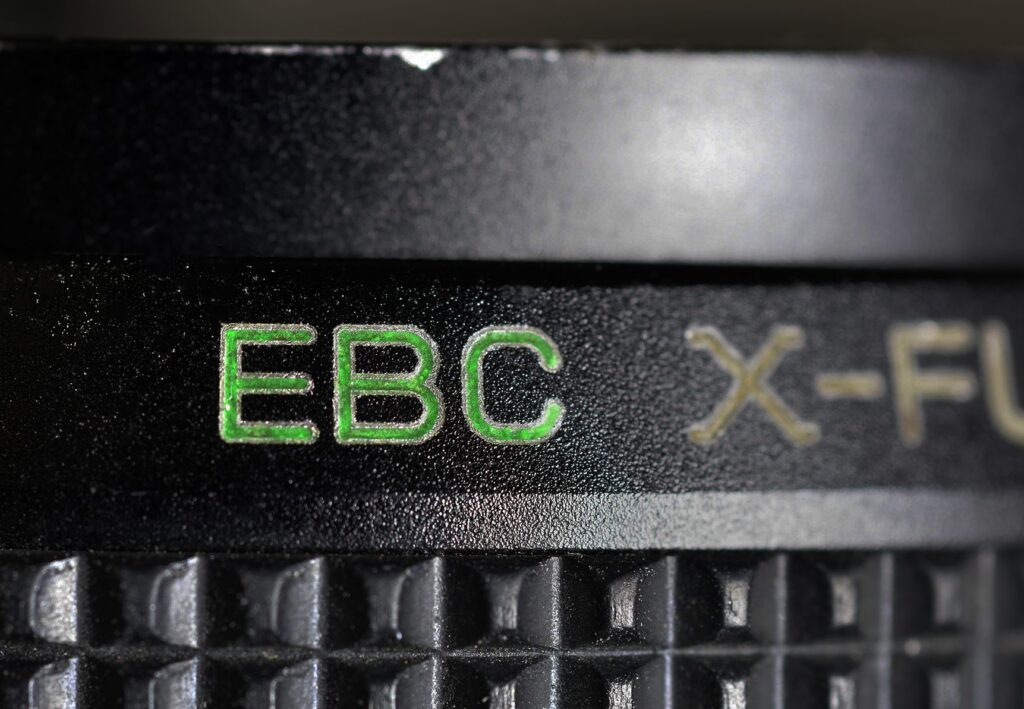
There are excellent lenses available for this system, including one that uses Fuji’s “EBC” anti-reflective coating.
This is not a device I have used or intend to use. However, I thought it would be worthwhile to dedicate an article to it because of its remarkable ergonomics.
Good technical specifications, but not state-of-the-art in the 1980s.
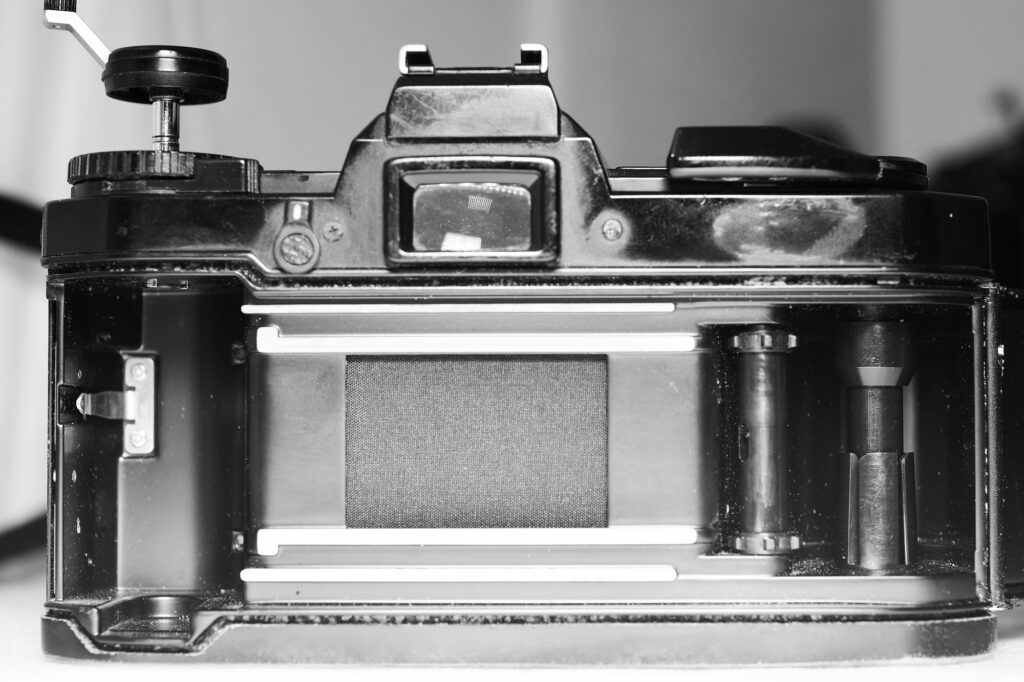
The camera was not technically remarkable for its time.
The horizontal-travel canvas focal plane shutter was already outdated (Nikon was already using vertical-travel metal shutters in the 1960s).
It offers an aperture priority mode. The Fujica AX-5, which is virtually identical to the AX-3, additionally offers shutter priority and program modes.
Shutter speeds range from a thousandth of a second to two seconds. A bulb mode and a self-timer are also included. A depth-of-field preview is also present.
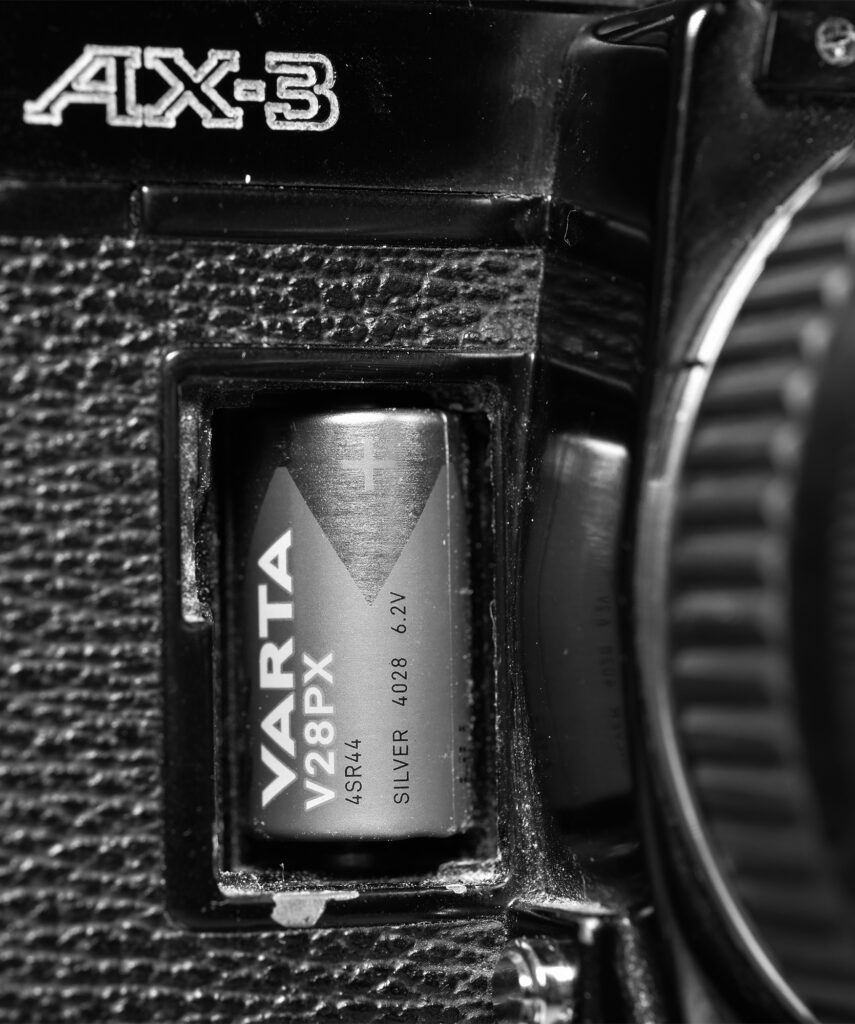
The camera requires an SR44 battery to operate.
Excellent ergonomics
A good viewfinder
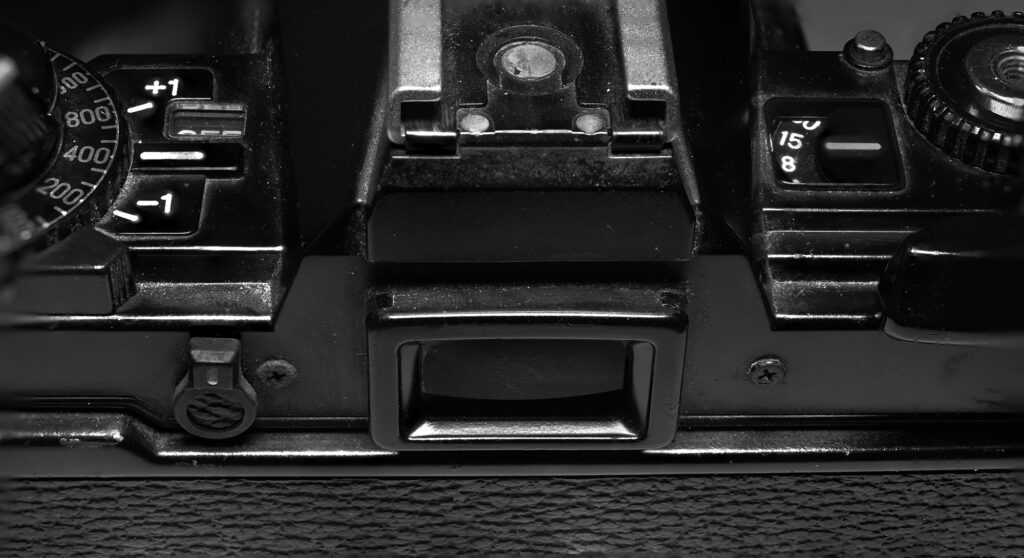
You can easily see the entire frame. This means that you can see the image you are composing, the aperture and shutter speed chosen, all at once.
Excellent and unusual ergonomics
The controls are easily accessible. The shutter speed dial surrounds the shutter button.
This layout is common on many cameras.
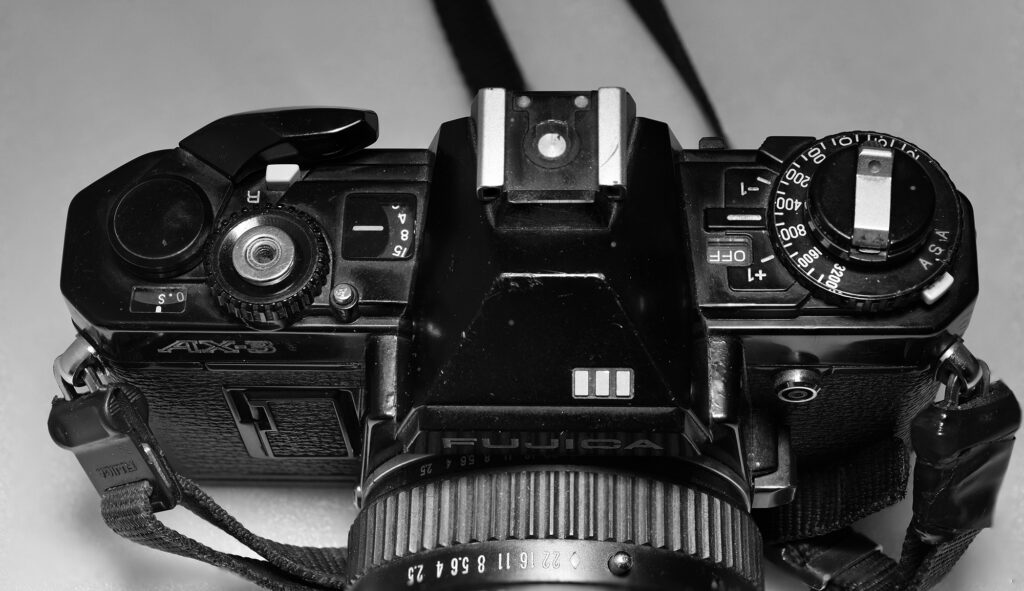
But what makes the Fujica AX-3 unique is the small size of this dial.
It allows you to change the shutter speed without having to perform acrobatic movements with your fingers while keeping your eye on the viewfinder.
The controls are very easy to read. Information is displayed in small glass windows, whereas most cameras simply use labels on the dial.
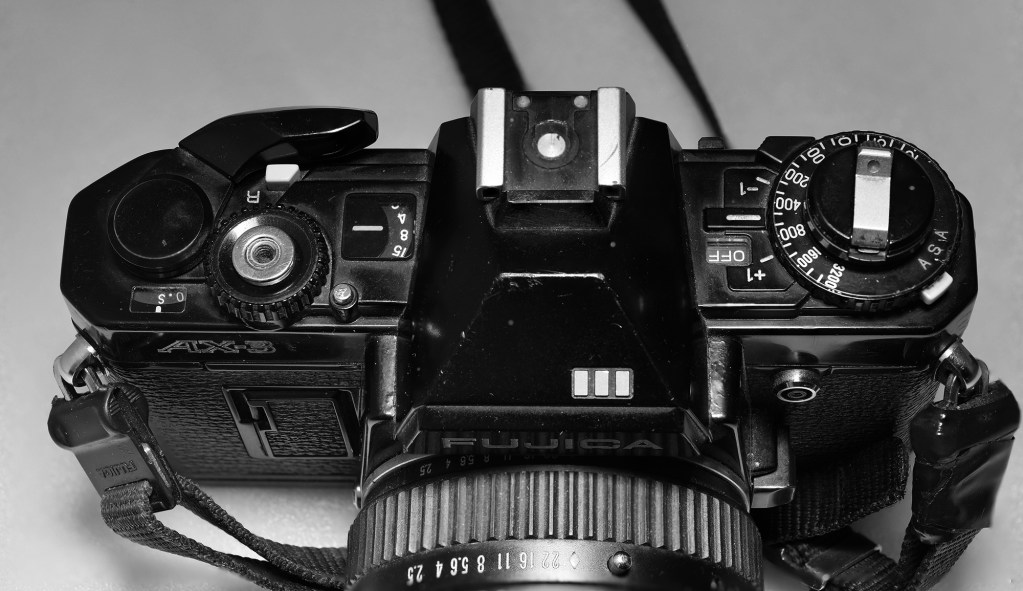
The shutter and mirror mechanisms are smooth, and there’s no vibration felt when the shutter is released.
My only criticism is that the aperture priority mode is integrated into the shutter speed dial: when using the camera in manual mode, you can accidentally select “AE,” which locks the dial.
A good camera
The Fujica AX-3 may not be the most technically remarkable camera (and any shortcomings in this regard only apply to certain types of use —macro and flash photography— otherwise, it has everything you need).
But what it offers in terms of ergonomics and ease of use is the best I’ve seen so far on a manual film SLR camera. It’s not an “engineer’s” camera striving for the best spec sheet, but a solid camera designed for the user. Its only drawback is its lens mount and the difficulty in finding compatible lenses for it.







Leave a Reply