

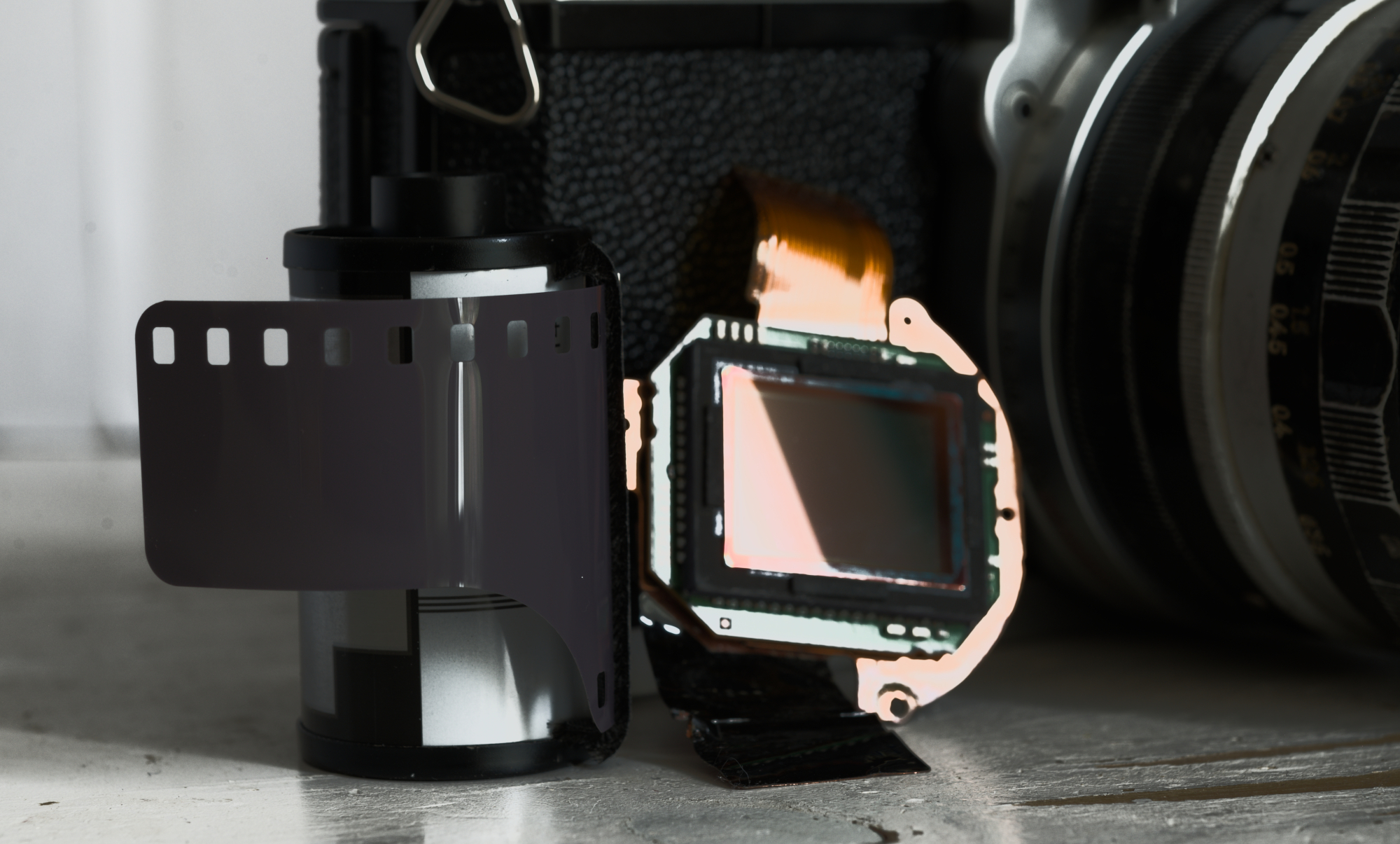

Six years ago, I began my journey as a fine photographer with a Nikon D3500. But after a few months I abandoned this digital camera for an old analog camera.
By doing so, I was looking to get rid of the unnerving buttons and functionalities that diverted my attention from what matters most, which is composing my photos and searching for interesting subjects.
It worked, but I also found other virtues to film photography. In this post, I’ll cover how shooting film helped me improve my skills faster, and what made me stuck with film through all these years.
Why Film is Ideal for Learning Photography
When shooting film, I use a very simple shooting process: I measure light very punctually with a lightmeter to set the correct shutter speed and aperture. Then all I worry about is focusing and framing.
Of course, to proceed like this, I was forced to learn the exposure triangle, to choose the right shutter speed to avoid motion blur and other things. But there are also less obvious reasons that made film a much better way for learning photography.
When I began photographing with a digital camera, I quickly fell into the bad habit of doing multiple takes to get a shot right. When I was doing something wrong (depth of field/aperture, shutter speeds, framing, etc.) it would appear immediately on the screen and I would correct it right away. It was a bad habit because it made me slower and allowed me to avoid learning from my mistakes, without ever gaining true mastery while shooting.
With film, you don’t see your photos until going back home and tend to not take multiple shots of the same scene to save shots.
And it goes without saying that when I was being punished with a bad photo because I made mistake (wrong aperture, shutter speed, etc.), I was very motivated to learn where I failed and to not reproduce this error later.
With digital, you can also easily forget or push back indefinitely the moment to take a look at your photos. With film, because you take time and effort to develop it, you’ll inevitably take an interest in them.
So if you are beginning photography or want to improve, shooting film can help you. In fact, a lot of photographic schools require students to use an analog camera at the beginning of their training for the same reasons mentioned here.
But six years after the beginning of my journey as a fine art photographer, I am now experienced enough to overcome the traps of using a digital camera. So why do I keep shooting film and spending hours developing and digitizing rolls?
Rendering
It is an artistic decision.
The softness of film is more appropriate to convey the emotions of calm and serenity that I look for in my contemplative photos. On the contrary, the clinical sharpness of digital photography, particularly the way it renders fine textures and details, is less suited to create these soothing images.
Overall, I would say that digital renders cold and clinical compared to film which looked organic and alive.
But film has also, if I may say so, a more artistic workflow.
A “More Artistic” Workflow with Film
With a digital camera, you don’t have to think about the rendering until post processing.
When shooting landscape photos in RAW, all you have to worry about is exposing your photo correctly. Which you can hardly mess up (basically, you just have to put the histogram on the right).
Then you change the rendering of the image as you like on your computer.
Film process is more complex and demanding: you have to prepare yourself before going out. -What film to choose? Think more before pressing the shutter release. -Should I underexpose here (without talking about the zone system)? And think about how you are going to develop it. -How much contrast/grain?
Because after developing the roll, what is done is done. If your negative is bad, flat, grainy or simply does not have the rendering you want, it is over. It is especially true for a darkroom print (or you are -or have- a great analog printer). There is a technical mastery that goes from before the shooting to printing that you don’t need with digital.
Sometimes, I am disappointed with the rendering of my negatives: inappropriate grain, lacked punch… I wouldn’t have these issues with digital photography.
But when I get an image that renders perfectly on film, I know it is because I made it happen. I know there is an intent behind this rendering that started long ago, which, for me, gives much more value to the work.
This is the very reason why analog prints are more highly regarded than digital ones: they show the photographer’s -and/or printer’s- mastery, how he has tamed the process to express a unique vision.
Of course a digital photographer can start thinking about the rendering before shooting. But first, the viewer cannot guess it while looking at it. And for me, it sounds easier and less fascinating than the way a film photographer construct the rendering of their photos.
Recap
To recap:
- Film is more punishing in a good way: it forces you into true mastery.
- Film has a different rendering than digital that may be more appropriate for your photographic style.
- Analog photographers had to master a complex process to control the rendering of their photos. Which gives more value to their artistic work.









Leave a Reply