


Introduction
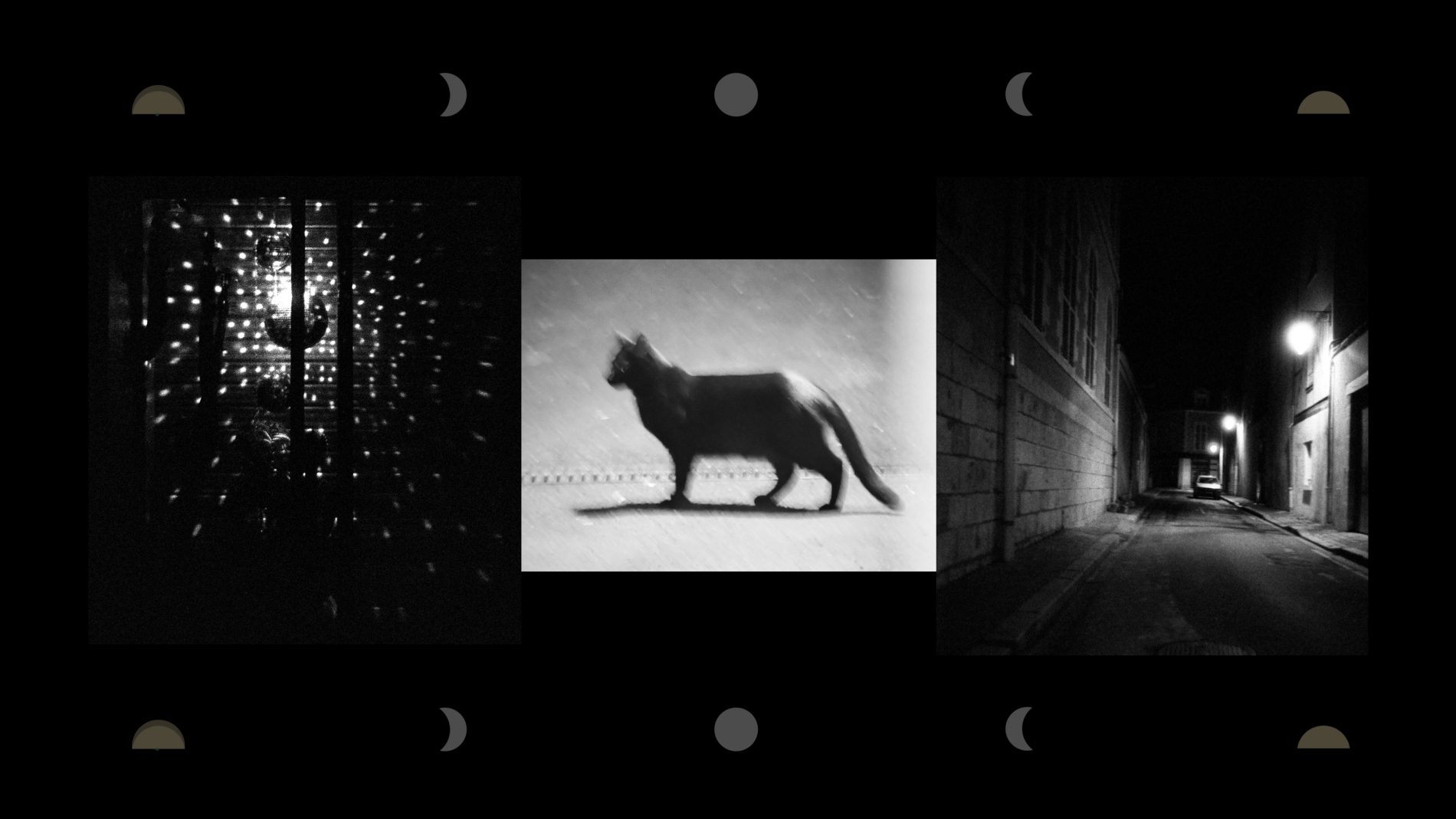
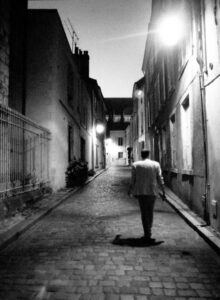
Over the last 5 years, I mostly photographed at night. I liked the calm it offered and the radically different atmosphere it adds to the scenes.
This resulted in a book that you can view here, but it also taught me valuable lessons on how to create interesting night shots.
Technical Decisions
The limitations of long exposures
When I say “night photography”, a lot of you may think about long exposures, tripods or even flash. But here is the thing: a long exposure makes everything look static. The people passing by will not appear in the image and the cars will only leave a light trail.
So yes, shooting with a tripod at ISO 100 will give sharp photos without grain or noise. But if you want to capture action and life or simply avoid being weighed down by a tripod, you have to shoot handheld.
Because learning photography is often centered on how to get the best technical shot, we tend to forget that producing clean and sharp photos is not what photography is about. Photography is about conveying emotions and expressing yourself, no one cares how sharp your photos are if they are uninteresting.
Don’t get me wrong though, I did long exposures too. They can work very well for certain scenes, but they are clearly not a universal solution.
Shooting handheld
In fact, the overwhelming majority of the photos I took at night were shot handheld.
By doing so I was able to photograph scenes of life and be much more agile and spontaneous.
But how does shooting handheld at night affect the quality of the images?
The trade-off is the need to shoot at least ISO 3200 to be able to use fast enough shutter speeds to freeze the scenes and avoid motion blur. That means that there will be grain.
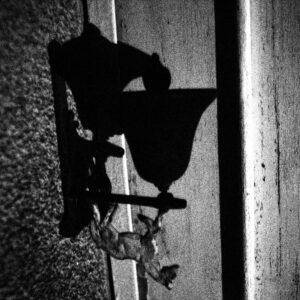
But grain does not mean the photos are going to be ugly. A lot of photos in my book are grainy, even slightly blurry. It has not made anyone put the book down. On the contrary, this look helps build an eerie atmosphere that a clinical long exposure shot would not have been able to capture.
So yes, the image quality is technically worse, but it has plenty of character to compensate, especially if you shoot on film like I did.
Gear for handheld Night Photography
For my photos I mostly used Ilford Delta 3200 at nominal ISO or pushed to 6400 ISO.
The rule to avoid motion blur for handheld photography is simple: the minimum shutter speed you can use has to be equal to the focal length of your lens. For example if you use a 50mm it will be 1/50s, for a 28mm 1/30s., etc. If you go under these shutter speeds, you are likely to end up with motion blur.
Of course, to attain these minimal shutter speeds, your lens must be fast enough.
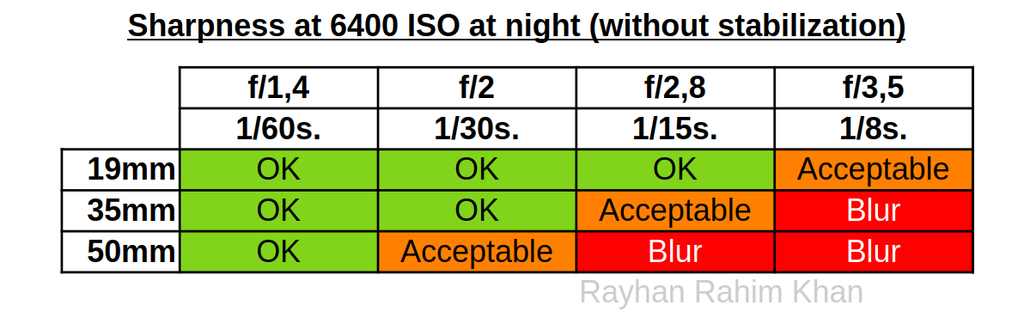
If your camera or lenses are stabilized, you’ll have more flexibility. You’ll be able to lower the ISO, use longer focal lengths or even close down the aperture if you want.
If possible, use walls and your environment to steady yourself and reduce motion blur.
Also, keep in mind that the minimum shutter speed value is not magical.
If the camera moves too much at the moment of shutter release, there will be motion blur, even if you are using a reasonable speed. I suggest taking the time to find the positions and movements that keep the camera as still as possible -when you release the shutter- before going outside.
Preparation is more important than ever
Another point I want to bring up is how important preparation is for night photography. I already made a post on this topic so I won’t dwell on it here.
But obviously, if you are out at a time and in a place where the streetlights are no longer lit, it will be hard to take photos.
Stay aware of the opportunities too. For example, if it is raining, interesting reflections might appear.
Don’t hesitate to consult the post on preparation.
Post-Processing
My last advice would be about post-processing.
When you edit a night photo, you may instinctively make the photo brighter to “better see” the details. But by doing so you distort reality and break the atmosphere of the scene. A night scene is dark, keep that in mind while editing your photos. The point of photographing at night is to show the night, not to change it into a sunny day.
Conclusion
To sum up:
- Don’t hesitate to photograph handheld, even if it gives grainy images
- Take the time to prepare your night outing
- Respect the original scene in post-processing
If you think I missed important advice, don’t hesitate to tell us in the comment section.

Leave a Reply