


Introduction
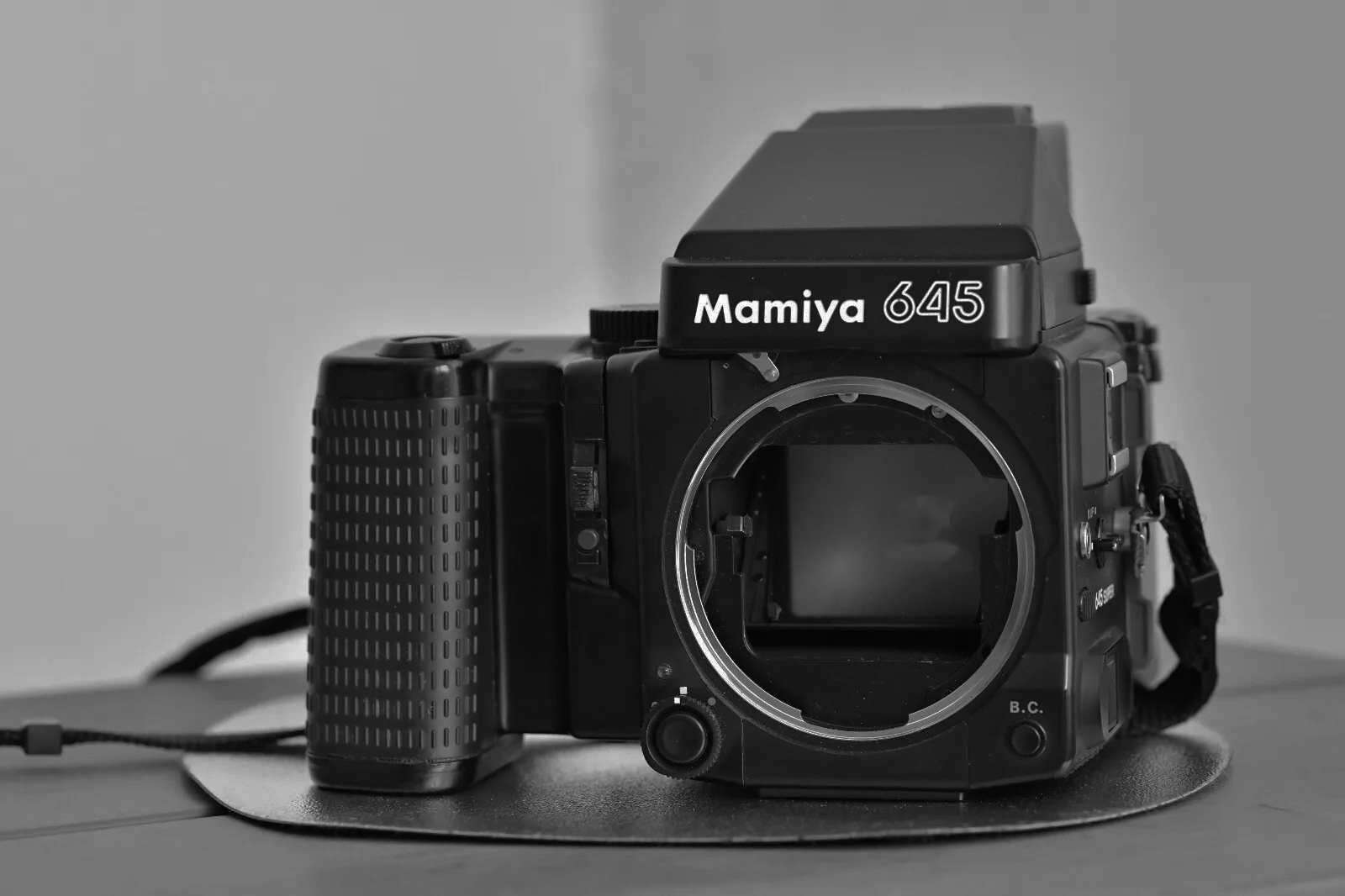
The Mamiya 645 Super is the evolution of the original Mamiya M645 released in 1975.
Introduced in 1985, this model and its later variations produced until 2006 (excluding the 645E) mainly differ from the first generation thanks to their interchangeable film backs.
The Advantage of Interchangeable Film Backs
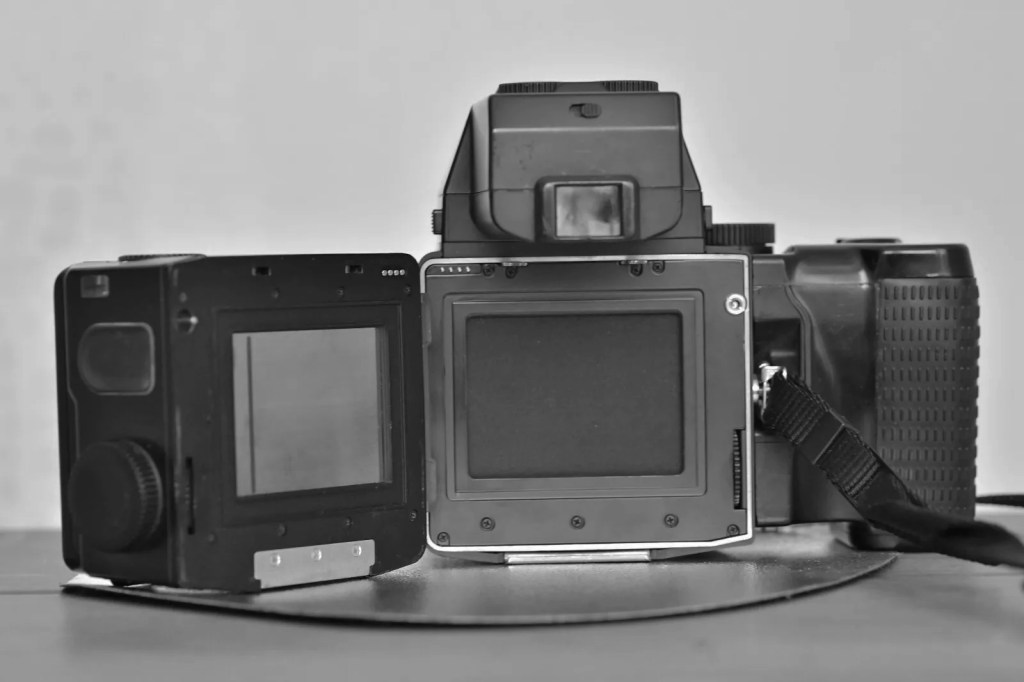
Whether you want to switch from black and white to color film, or because the lighting conditions or the contrast of the scene changes, it makes sense to change film.
An interchangeable back system like the one found on the Mamiya 645 Super allows you to do this without having to finish an expensive roll of film, making it possible to reload and use it later.
A Heavy Camera
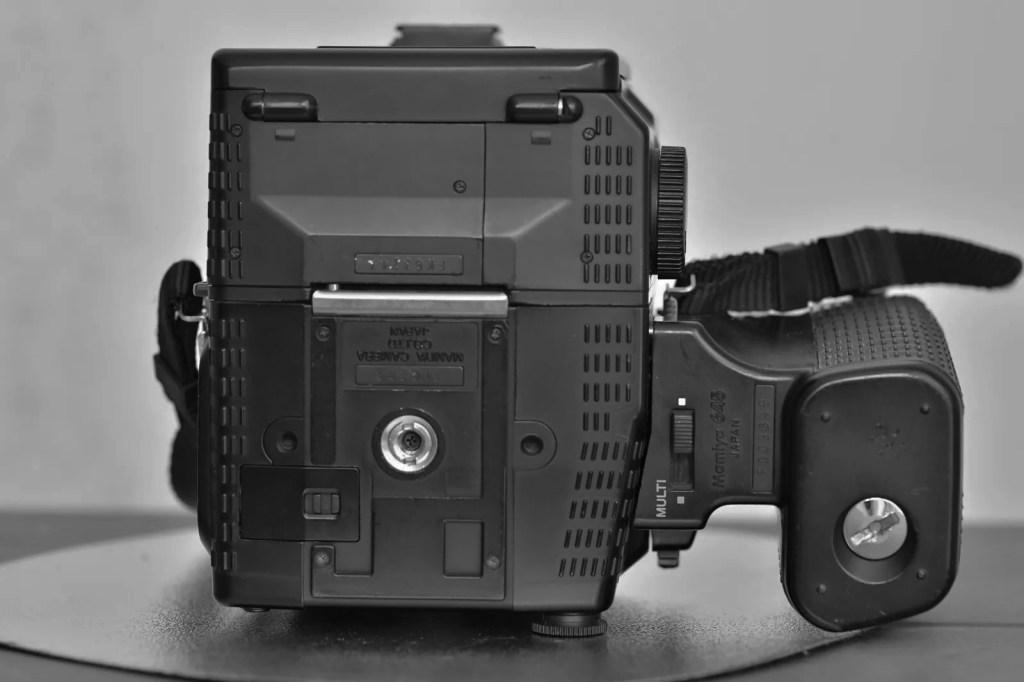
As expected from a medium format SLR, the camera’s weight is noticeable (1.6 kilograms without a lens, but with the motor drive attached).
Good Ergonomics and Reliable Metering
Once you become familiar with it, the camera is easy to handle and enjoyable to use.
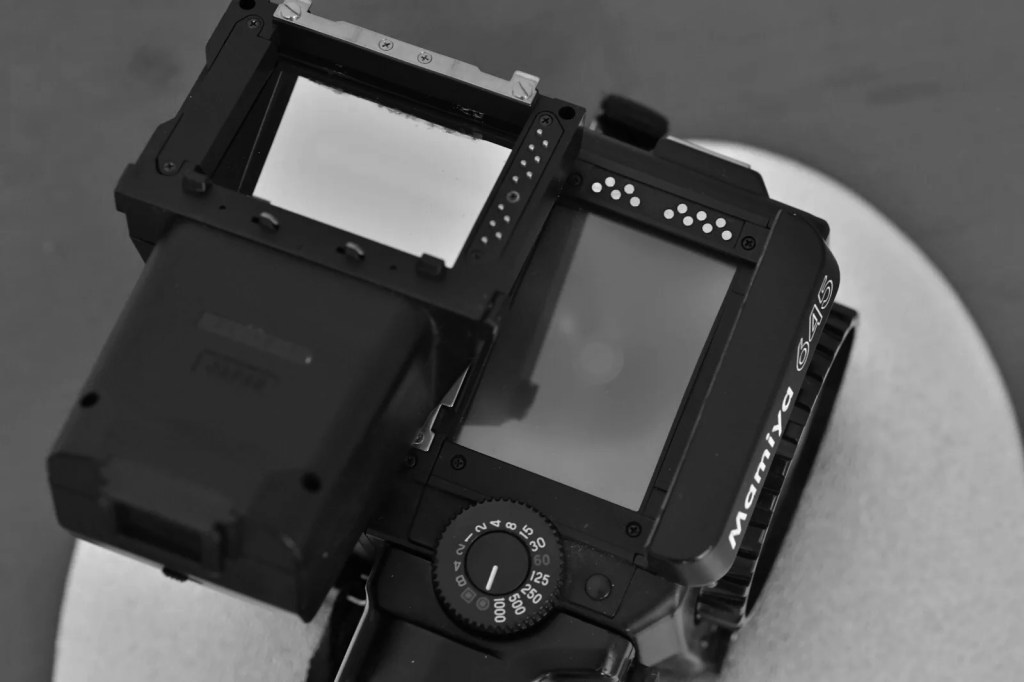
Except in difficult lighting situations, the matrix metering system (which evaluates the entire image rather than a single spot) delivers accurate exposure readings.
Not Discreet
Beyond its imposing size, both the shutter and motor drive are quite loud (although, from memory, still quieter than a Pentax 645).
A Pentacon Six performs much better in terms of noise.
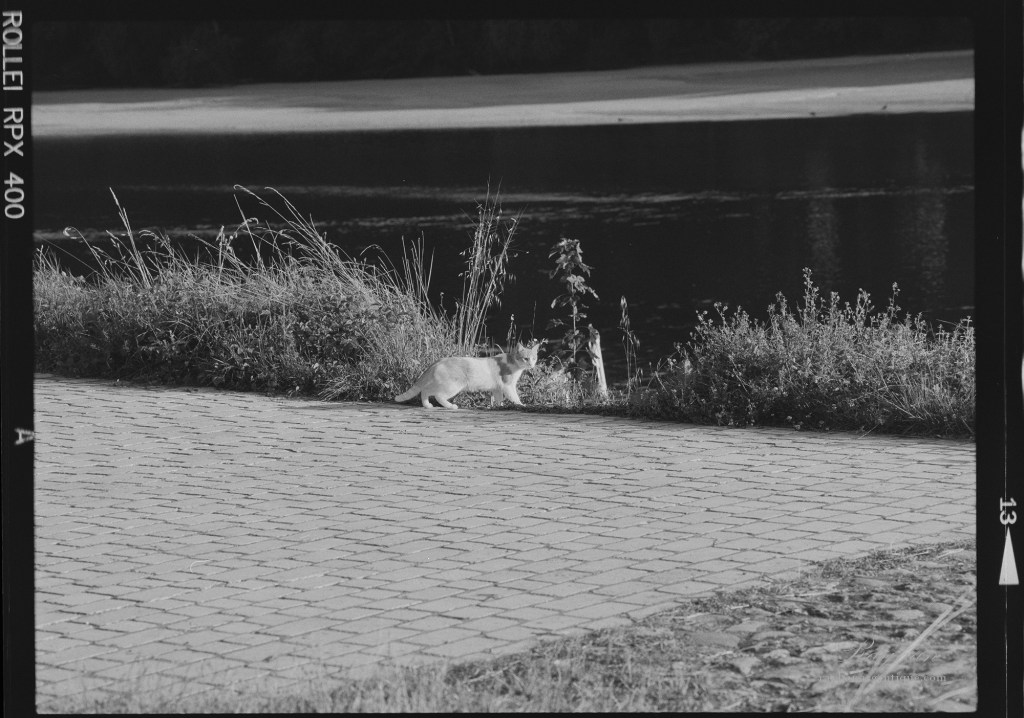
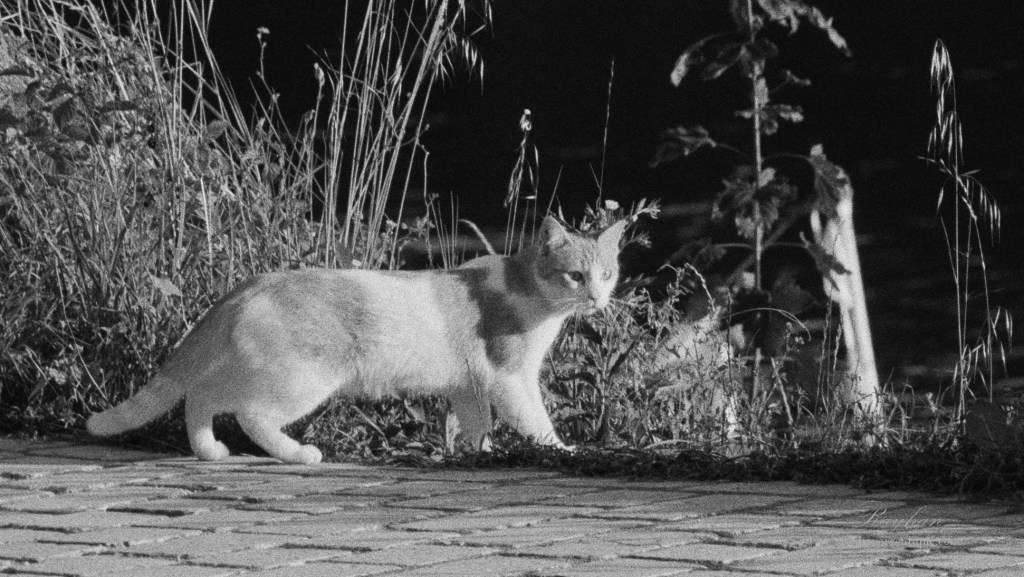
Despite the distance and the 180mm focal length, this cat immediately turned its head toward me after I released the shutter.
Handheld Stability
This is always an important question with medium format cameras.
Personally, I do not find the Mamiya 645 Super especially comfortable for handheld shooting.
If handheld stability is your priority, you may prefer a Pentacon Six.
However, if you work on a tripod, you will appreciate the mirror lock-up mode available on the Mamiya 645 Super, which helps reduce vibrations.
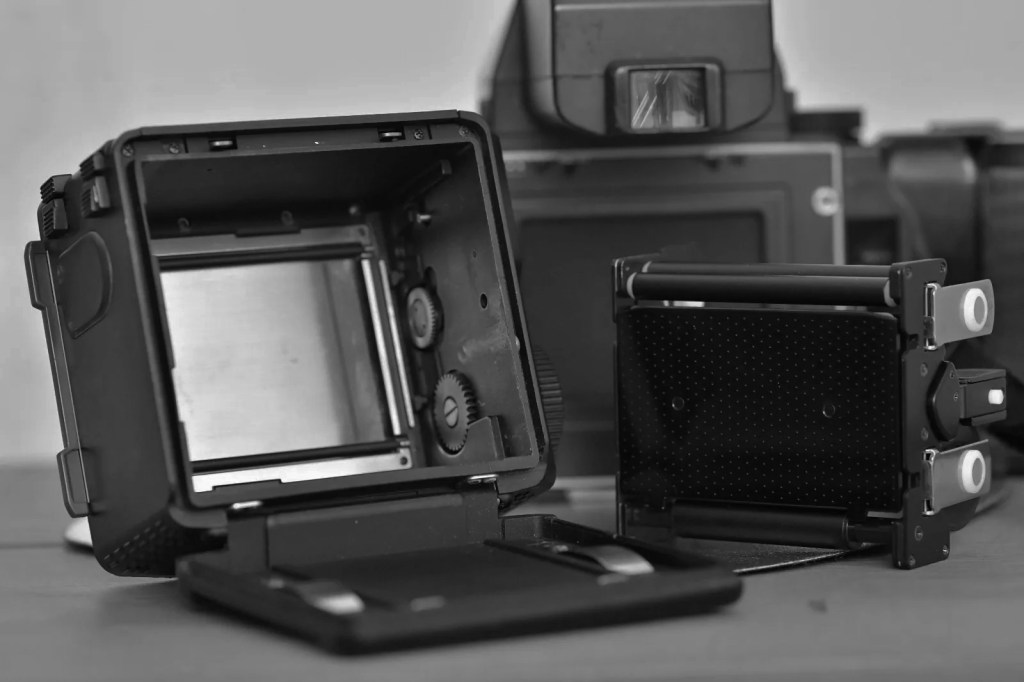
Likewise, loading and changing film is a bit more complicated than on a Pentacon Six or Fujica 645, but once you get used to it, it becomes perfectly manageable in the field.





Leave a Reply