


Introduction
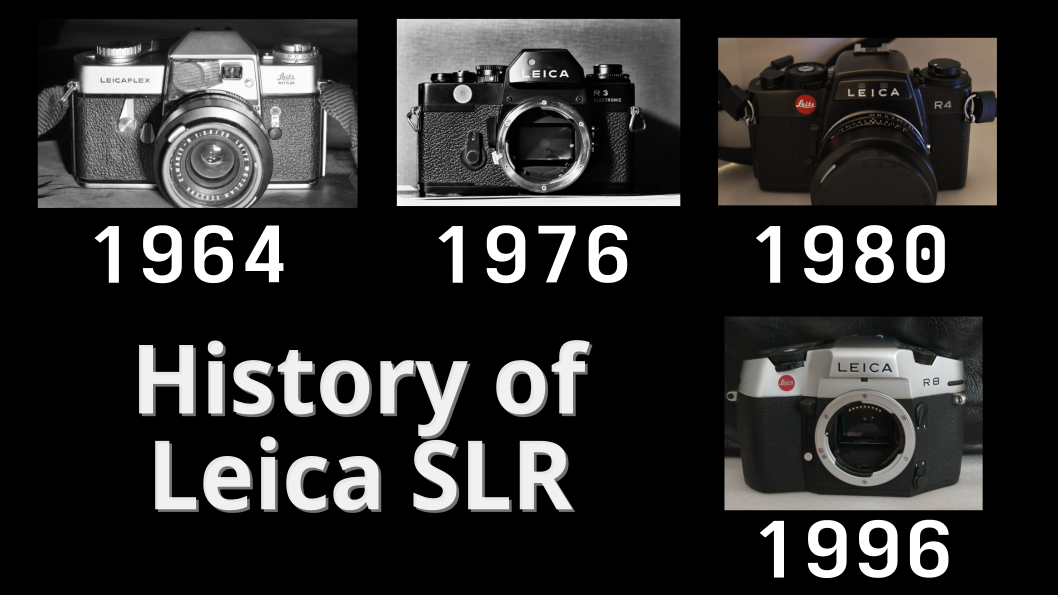
By chance, I have held every generation of Leica SLRs in my hands, from the fat Leicaflex, to the compact R, and finally the baroque R8 and R9.
This post does not pretend to cover every detail, but to give you an overview of the historical reasons that directed Leica design decisions and how these cameras compare to others.
Leica Starts Making SLRs
While Leica was visionary with its 35mm rangefinders, the same cannot be said for its SLRs.
Leica did not anticipate that people would abandon rangefinders for the more versatile SLRs that allowed them to use telephoto lenses and shoot close-up or macro photography.
Leica released an SLR only five years after the success of the Nikon F.
The Leicaflex (1964)
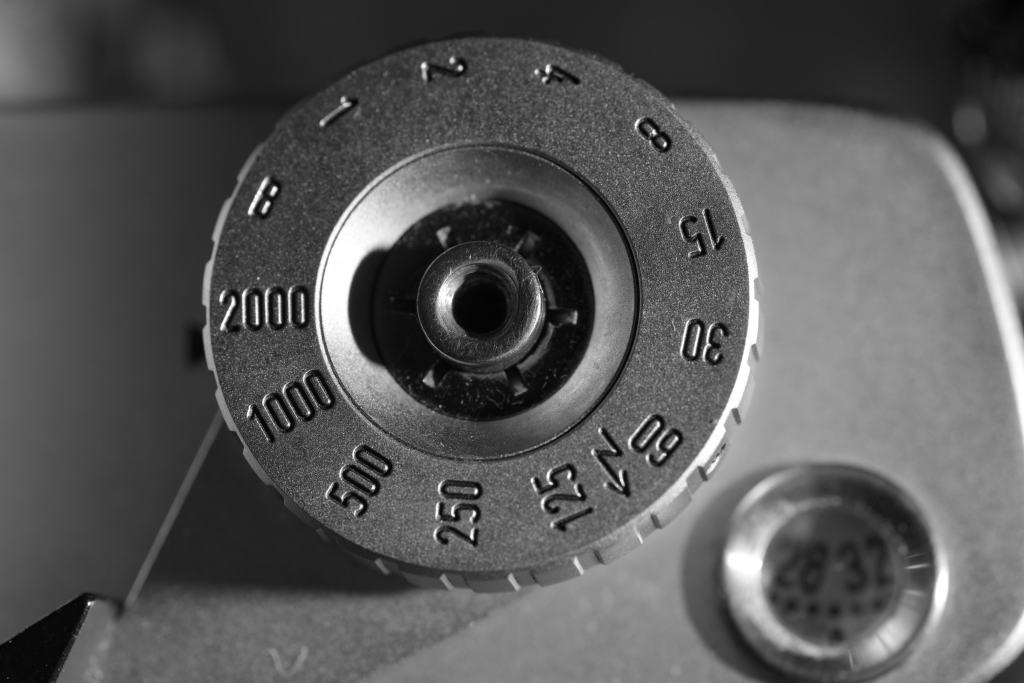
A Heavy but Well Engineered and Crafted Camera
Instead of copying what Nikon or Pentax did, Leica came up with its own interpretation of what an SLR should be.
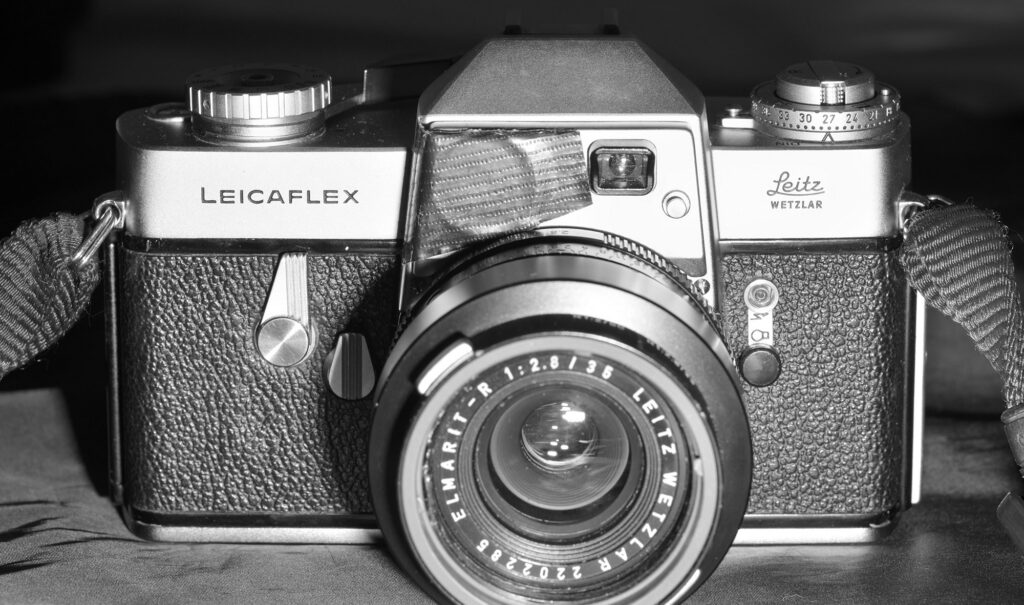
The Leicaflex released in 1964 is surely quite unique and recognizable. This original shape will be kept until the failure of the SL2.
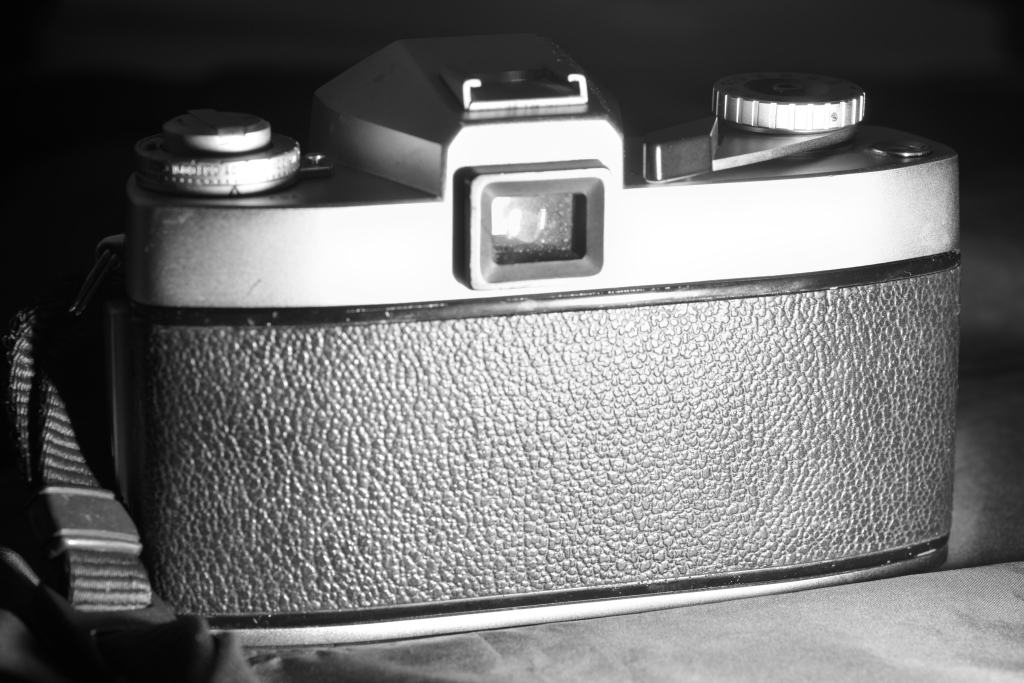
The camera is quite fat and heavy, but once you have it in your hands, everything is perfectly balanced and the mechanisms go very smoothly.
The Leicaflex from its first version in 1964 to the SL2 in 1974 had a purely mechanical philosophy. A battery was required only for the lightmeter.
They had very decent performance, but we cannot say that they were very innovative compared to their competition (no titanium curtain like the Nikon F and F2, not as compact as a Pentax, and no auto mode or electronic shutter unlike Pentax in the early 1970s).
The Leicaflex, and leica cameras in general, was not intended to compete with Nikon or Pentax, but rather to be a luxurious camera aimed at a wealthy clientele and enthusiasts.
The 1964 Leicaflex
When I owned my 1964 Leicaflex, I was often confronted with a choice: should I take the Nikon FT2 -essentially an economical version of the Nikon F- or take the Leicaflex?
Most of the time I took the Nikon FT2. I found it simply much more usable and agile while shooting.
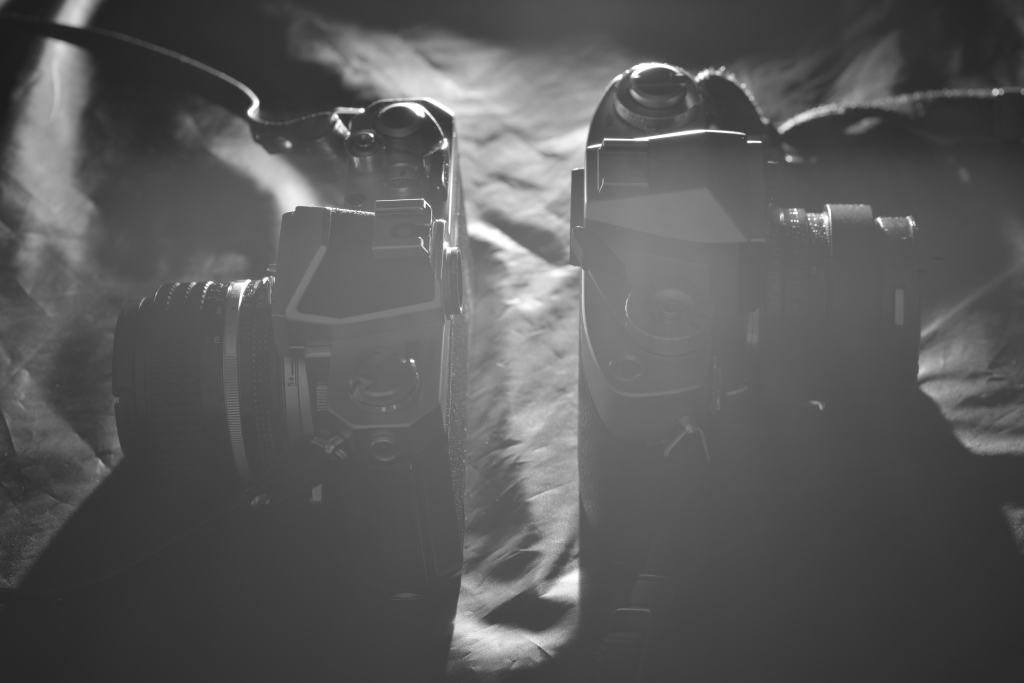
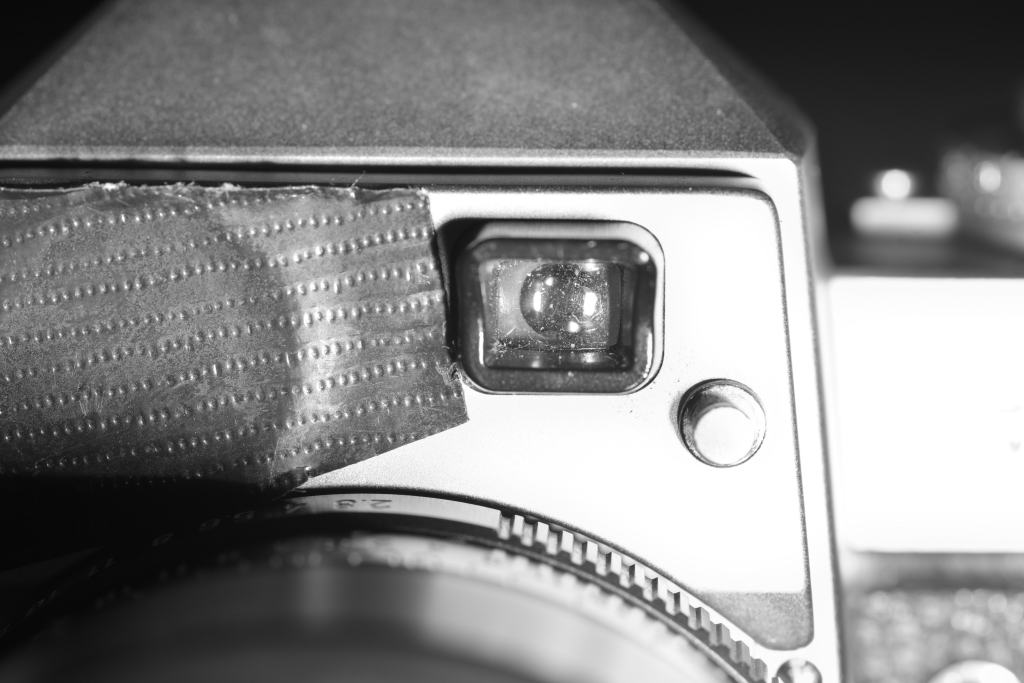
The only reason why I took the Leicaflex was night photography, because of its stability. And only because of its stability. Because the viewfinder is the worst I have ever seen from an SLR camera. It didn’t have a split-image rangefinder, and outside the circle to do the focusing at the center, everything always seemed in focus.
Personally, I encountered a lot of difficulties focusing with this camera.
Leica decided to do this to have the brightest viewfinder at that time. But it was very bad in terms of usability.
Thankfully, they corrected this with the SL and SL2.
Still, I had the impression that Leica tried to do things its own way with the Leicaflex while people were only asking for a decent camera to enjoy their lenses.
The Failure of The Leicaflex SL2
And that leads us to the failure of the SL2. For different reasons, and notably because the production costs were high, the SL2 ended up being more than twice as expensive as a Nikon F2.
And it became even worse when you look at the specs of the camera, because the Nikon F2 was simply better.
People shunned the SL2 for that. Who could blame them? At some point you don’t care about having a camera carefully handcrafted by German workers, you just want a tool to take pictures.
Paying twice as much for a less capable camera, even if you really want to use Leica lenses, made no sense.
A New Era With the Leica R3 (1976)
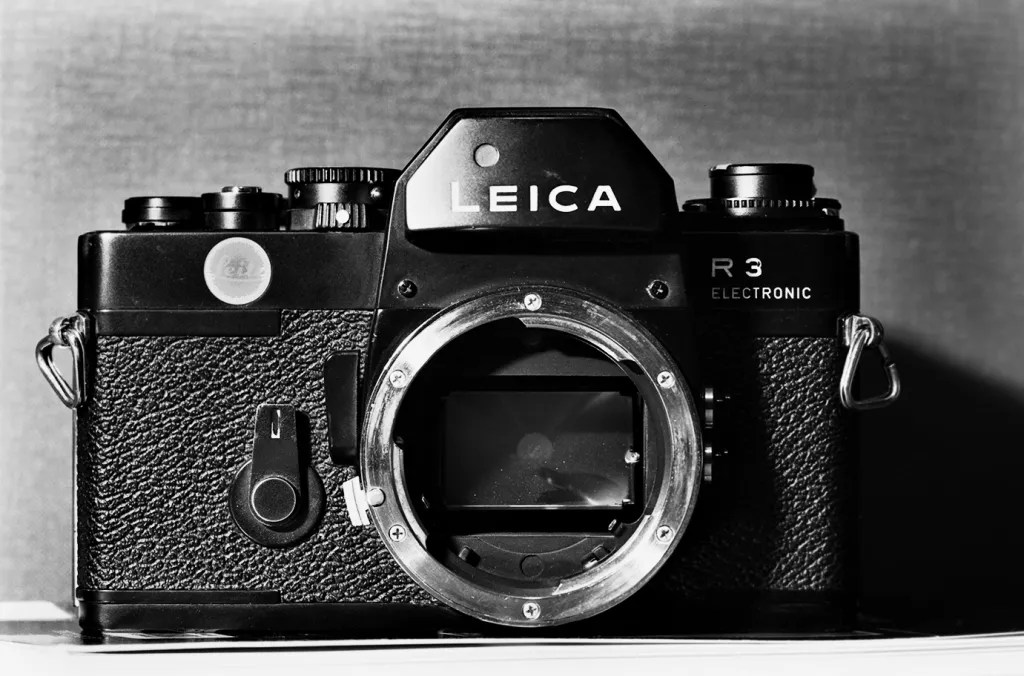
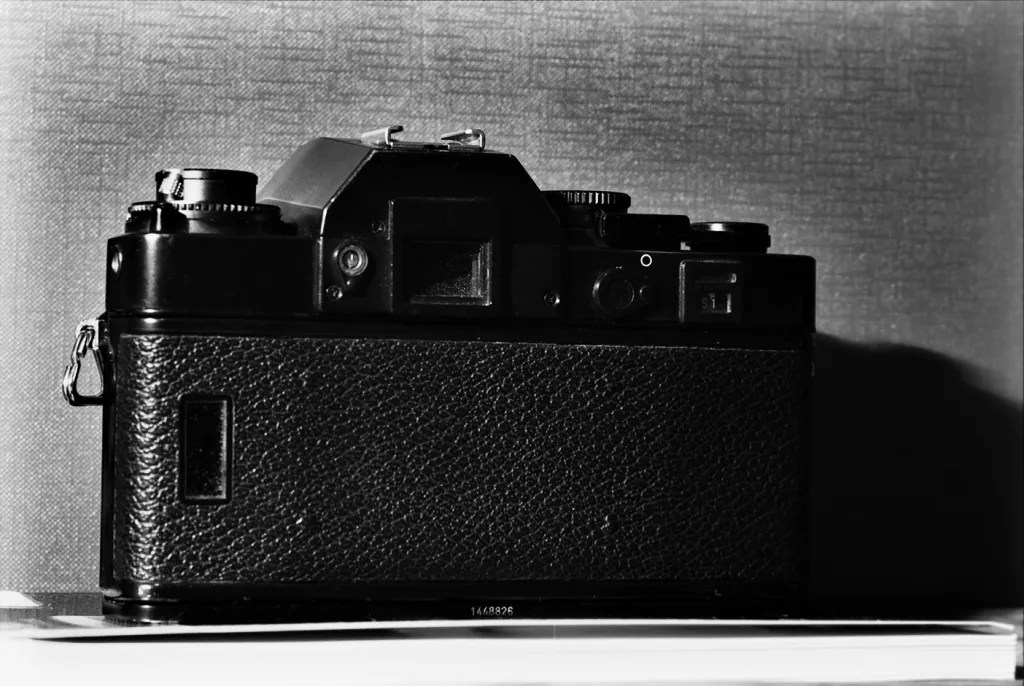
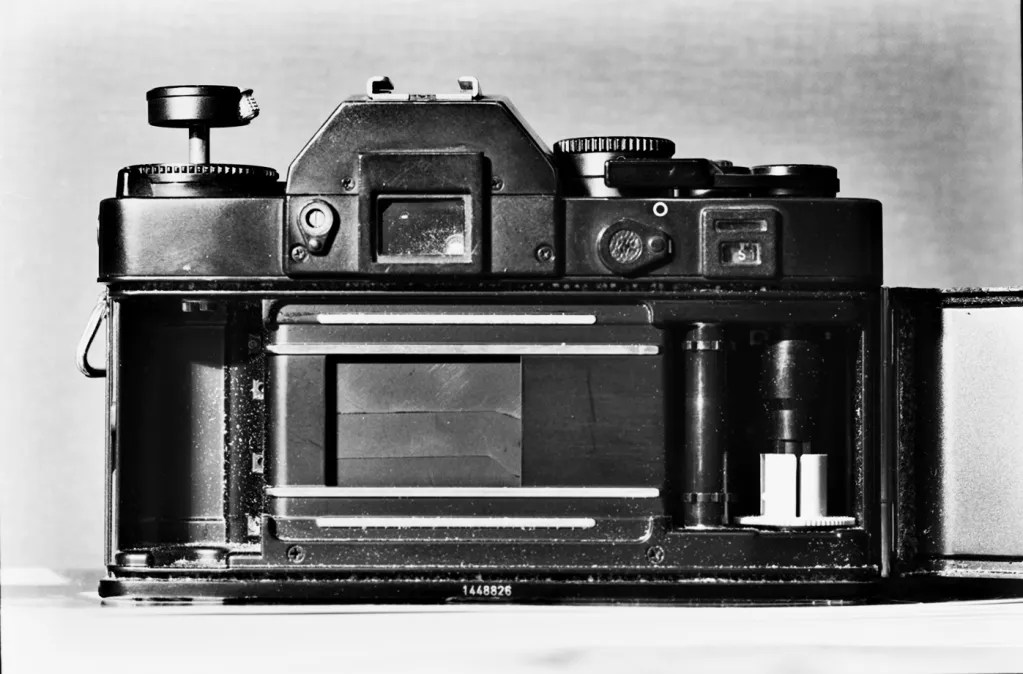
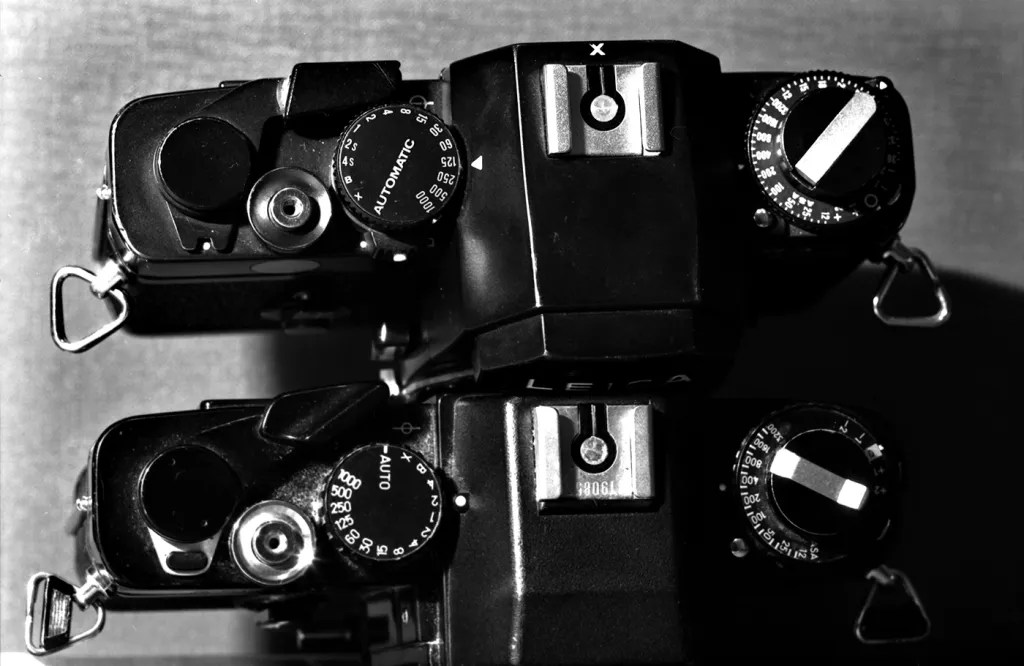
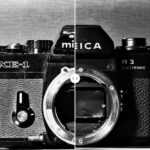
Fortunately for Leica, they reacted quickly. Instead of designing a new camera from scratch, they just asked Minolta, whom they were partnering with at that time, to use the design of the 1974 Minolta XE-1.
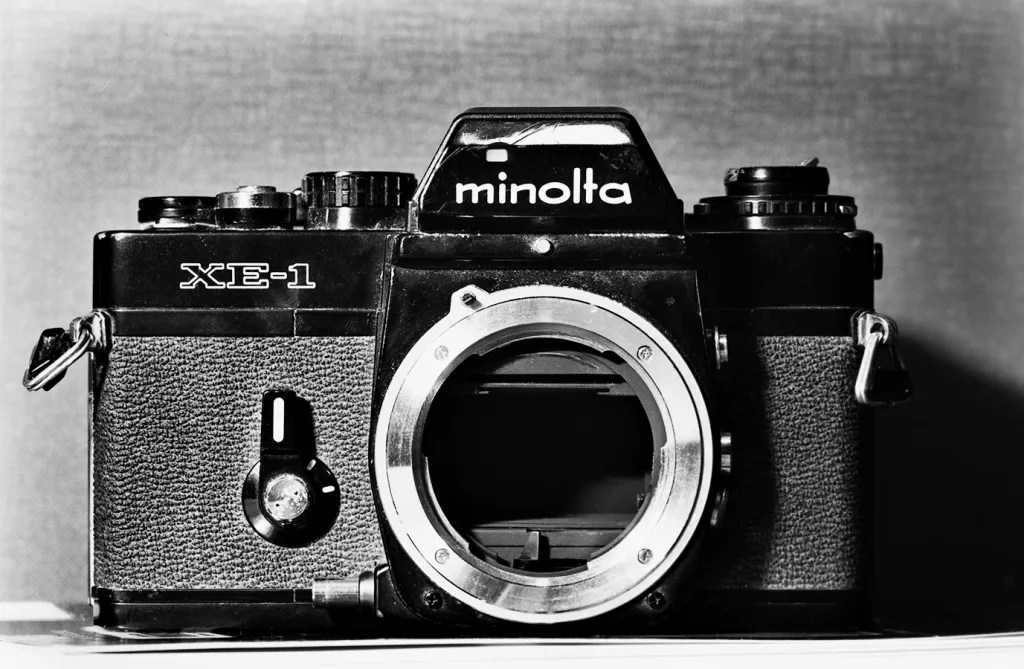
Unlike the SL2, the XE-1 was perfectly adapted to what the photographers wanted at that time: it was compact, had automatic modes, and integrated the higher-performance Leitz-Copal metallic shutter. And more importantly, its production costs were reasonable.
At the same time, Leica also started to produce its cameras in Portugal, where labor costs were lower.
Basically, Leica just took the chassis of the XE-1, used finer materials, better optical parts, and different electronics, named it the Leica R3 and released it in 1976. Only two years after the Leicaflex SL2.
Still, despite these modifications, the Leica R3 inherited the rudimentary and angular chassis of the XE-1 and thus looked and felt more like a Minolta than a Leica.
But this camera sold for an equivalent price of a Nikon F2 -which is a joke when you think of how close it is to a Minolta XE-1- which put Leica back on track.
R4 (1980) to R7(1992): The Golden Age of Leica SLRs
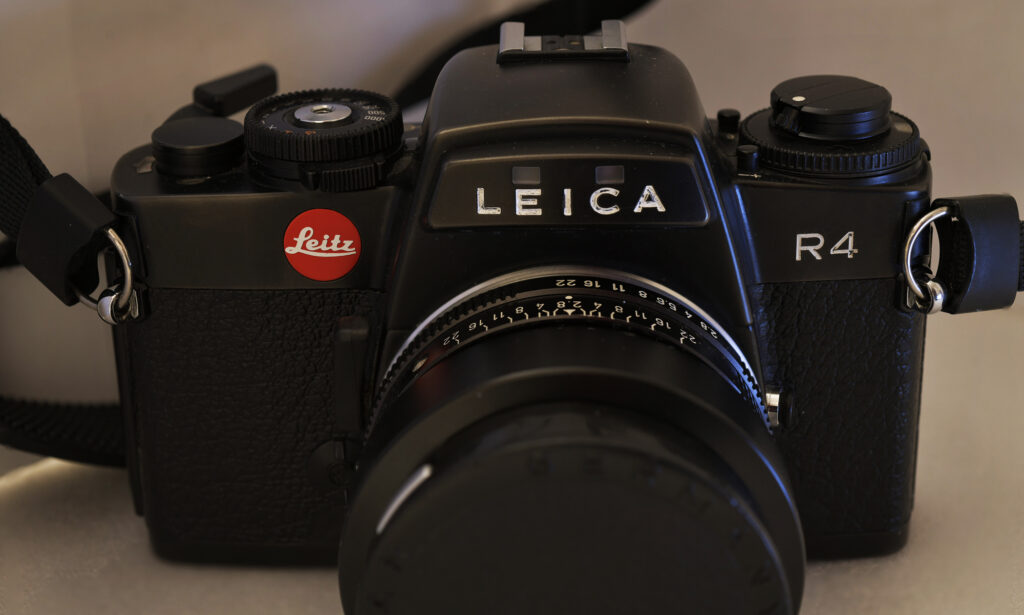
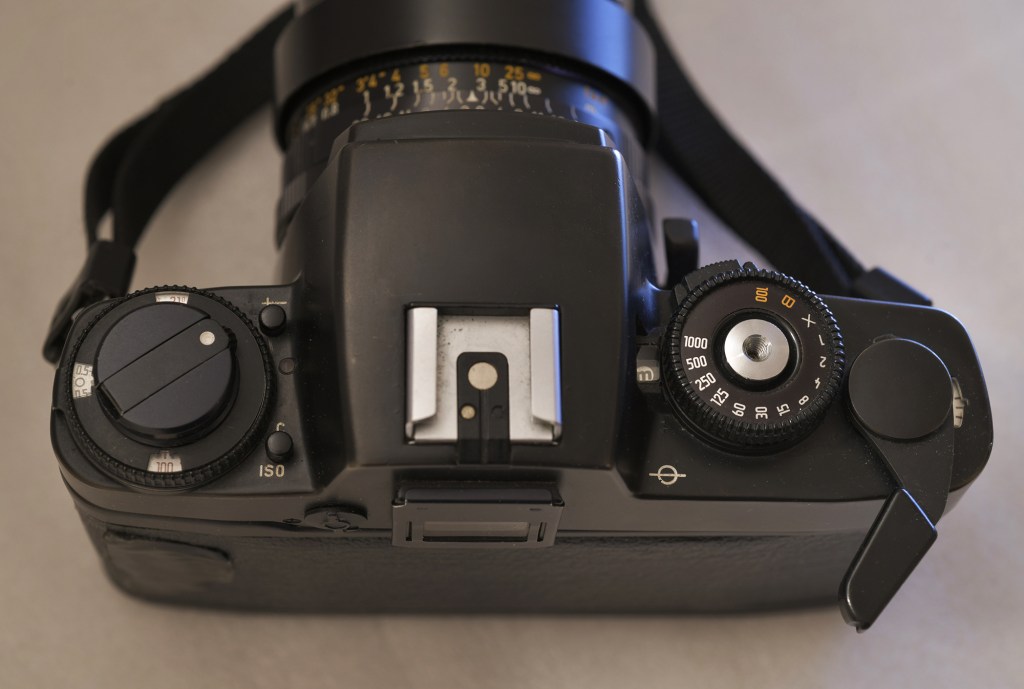
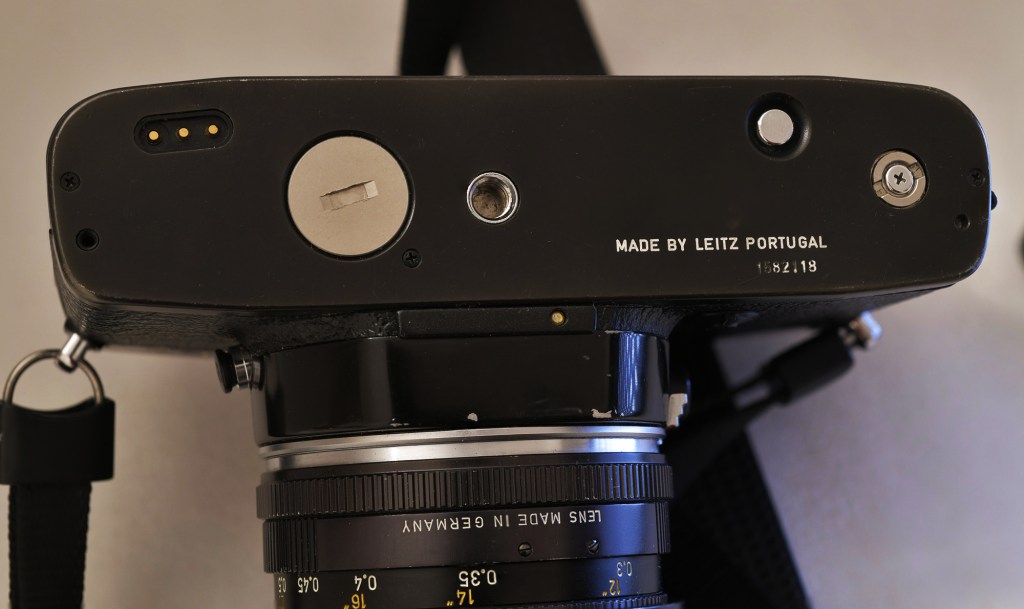
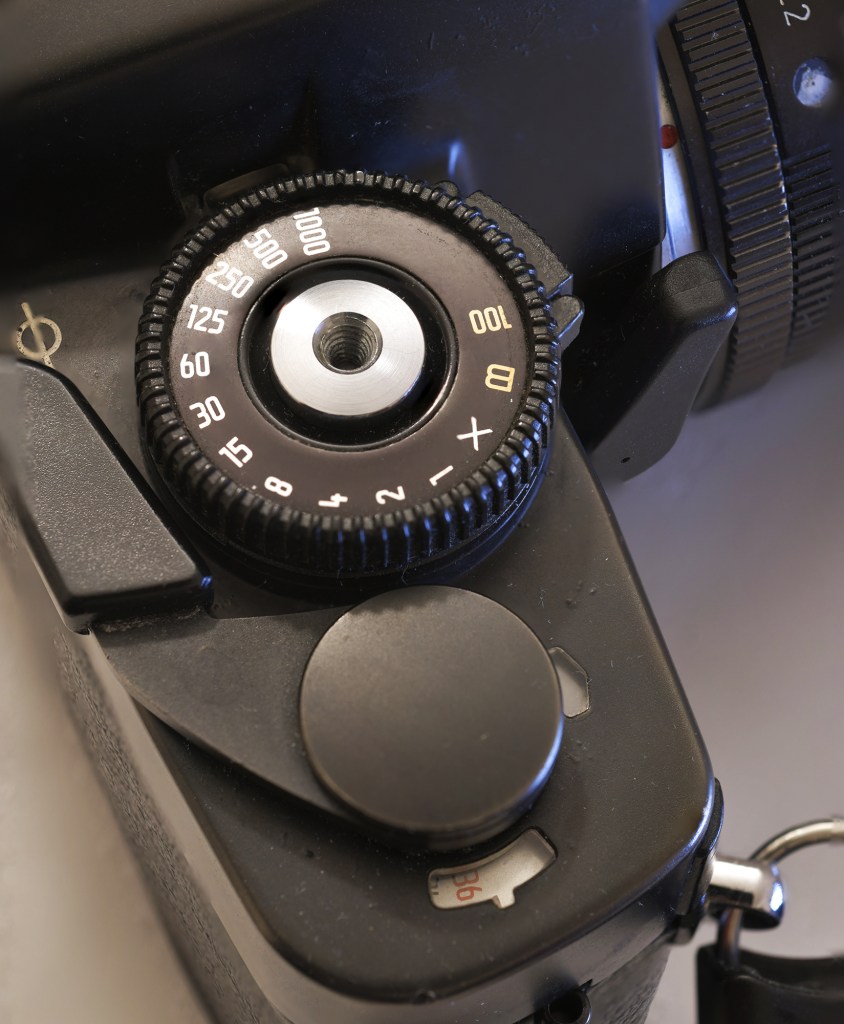
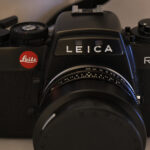
The R4 was developed jointly with the Minolta XD-7. Despite that, Leica regained its identity. The camera is a lot more refined, it is shaped like a Leica and feels like a Leica. Despite some reliability issues with the first R4’s unit, this camera validated the strategy of Leica and was a commercial success.
There is not much to say about the Leica R4, it is shaped in the spirit of the compact 35mm SLR of its time such as the Nikon FM or FE, with the meticulous attention to build quality, weight balance and mechanical smoothness of a Leica.
The cameras that followed the R4 until the R7 (1992) kept the same philosophy. They were very close in terms of shape without any major evolutions in terms of specs either.
But still, there is one thing you should definitely avoid with these cameras and lenses.
It is going outside and framing bad photographs. For only a fraction of the price of your gear, you can access the contact sheet posts on ElectroCroissant and learn composition and creative process. It’s only 8 dollars a month and it will improve your photographs much more than the best high end camera. Think about it.
Read an excerpt of the first contact sheet.
A Change of Philosophy in Camera Manufacturing
We can also note a change of philosophy. While the Leicaflex was made entirely in Germany, the circuits and shutter were now produced in Japan and sent to Portugal. Leica was basically following the new international organization of work, relying on suppliers more competent than them in specific domains.
The Failure of the R8 and R9 (1996)
At the begining of the 1990s, Leica was losing momentum with the R7, which was clearly outdated compared to its competition. So Leica had to take a major step forward to regain traction.
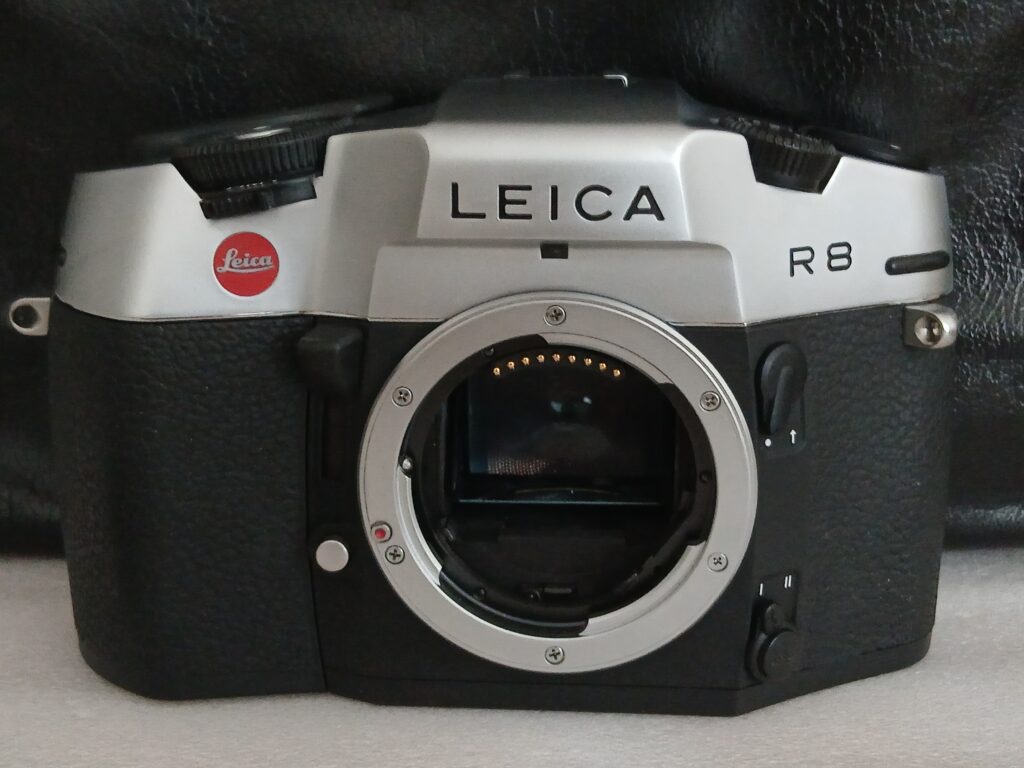
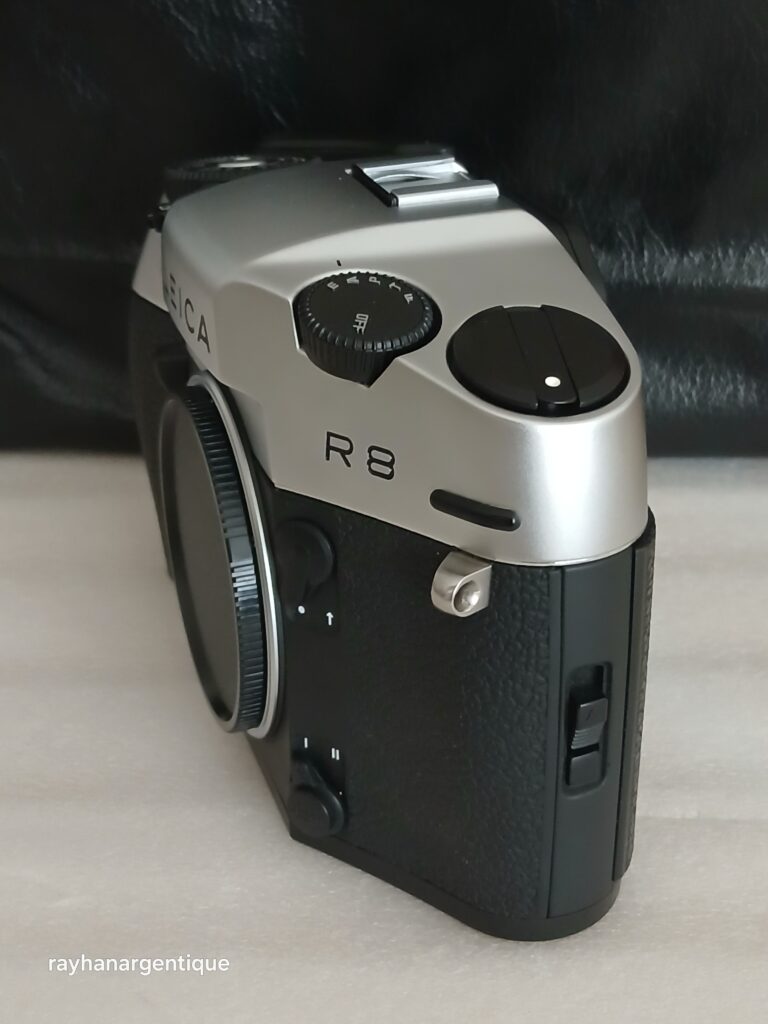
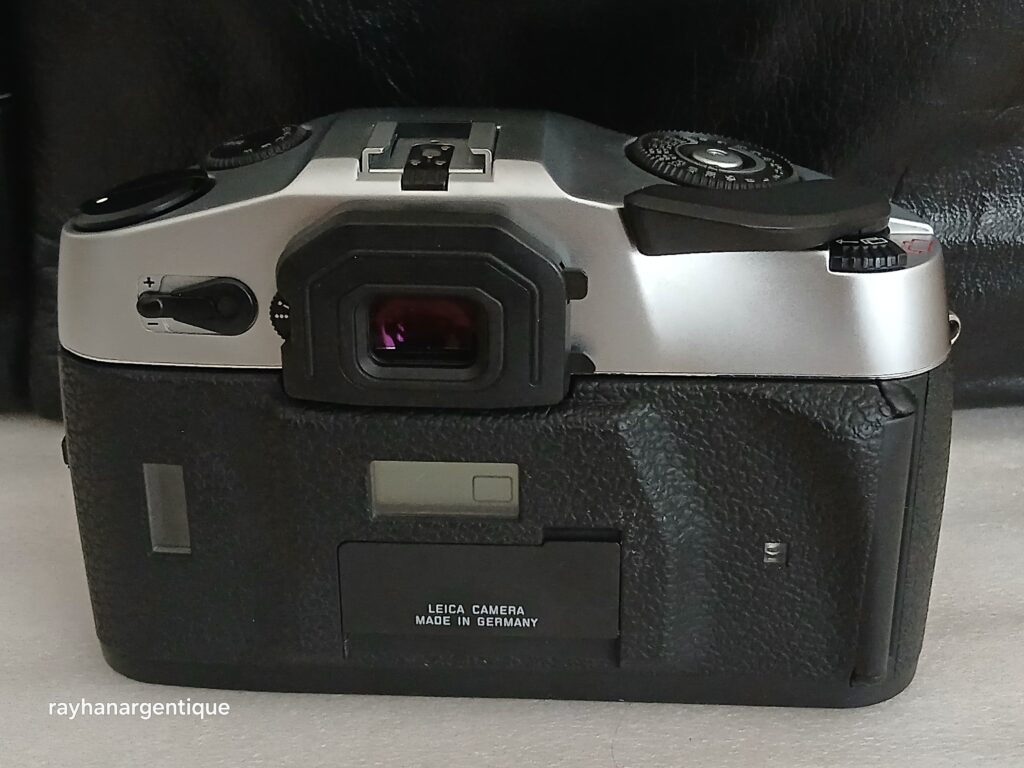
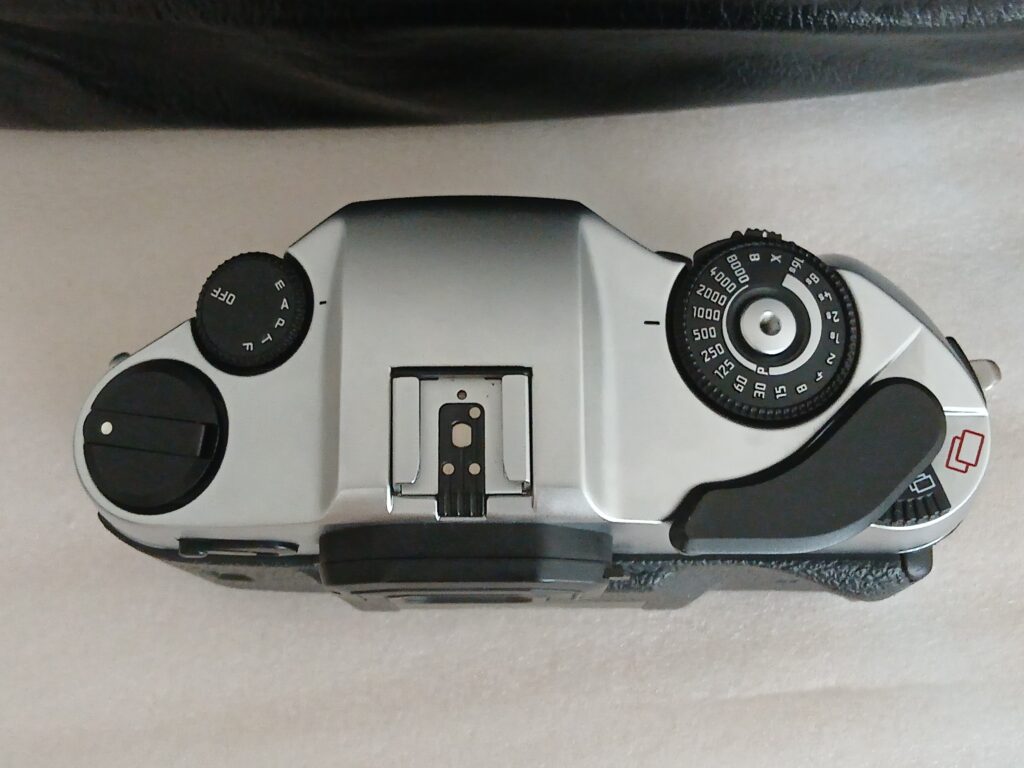
At this point of the story you might think that Leica had understood that it was dangerous to be too original and that it was better to partner with a big manufacturer instead of offering a camera with inferior specs compared to its competition.
No, they had not.
Even if there was a huge technical gap with the R7 (from 1/2000 to 1/8000 of a second, emergence of a matrix metering), the R8 lacked a functionality that Minolta, Pentax, Nikon, even Sigma and Contax offered: autofocus.
But why is the camera so big then? It doesn’t even have a motor to advance the film.
I would call it a designer fantasy. Of course the camera is pleasant to handle. Of course its size allowed it to offer a beautiful large viewfinder and a high-performance shutter.
But in the end, I don’t see the point of using this bulky object of curiosity instead of a much more compact Leica R4.
As expected, this big expensive camera lagging behind technologically, which even has some reliability issue on the R8 version -stuck battery cover, mechanisms that jam if the tripod plate screw and others from what I read- was not a commercial success.
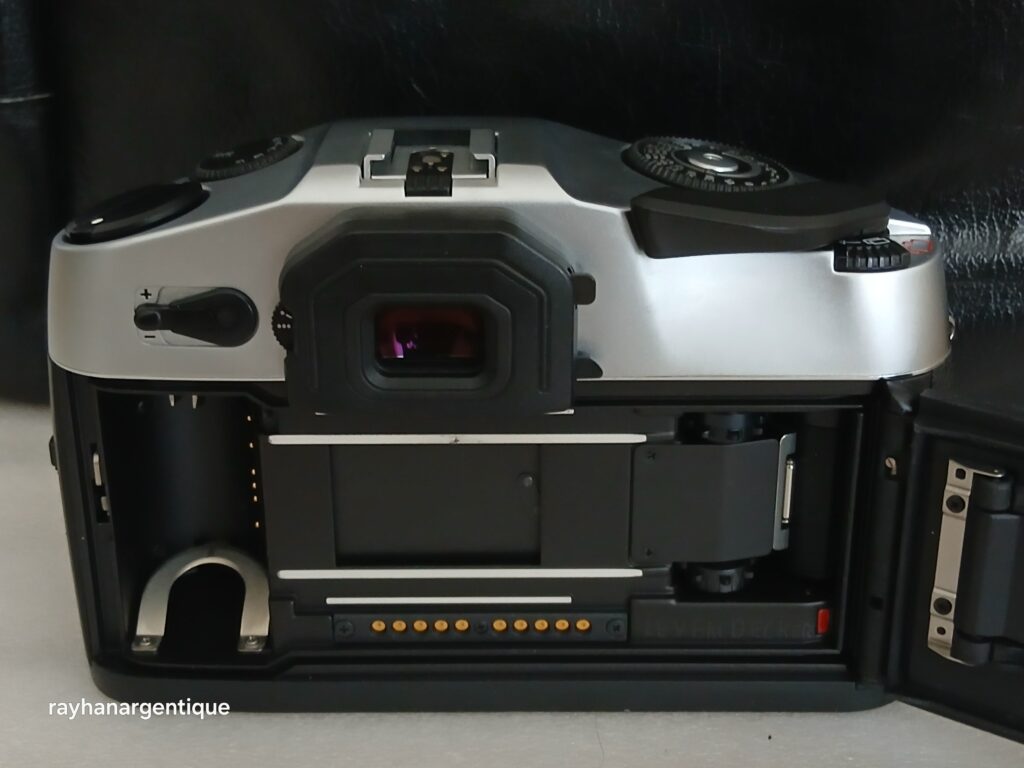
Unlike Kodak, Leica also anticipated the emergence of digital photography. The R8 and R9 were modified to be a modular camera where you can switch from analog to digital by changing the back.
The problem was that the digital back that would only arrive eight years later was not the right option. All other manufacturers decided to do a 100% digital camera and didn’t use a modular system.
We can mock Leica for these kinds of decisions, but the fact is that Leica is quite a unique brand in the photography industry. It is a small company compared to Nikon and Canon for example. Unlike them, they could not afford at that time to design and maintain a new camera every 2 or 3 years.
The End of Leica SLR Camera Range
The failure of the R8, then the R9 -which was more an enhancement of the R8- killed the R series and almost Leica. It prompted Leica to focus its attention on its rangefinder cameras.







Leave a Reply